Journal
Flowers and Birds: Two Ways of Looking at Gapyeong Begonia Bird Park
Change your eye level among flowers, and give birds time to move on their own terms.
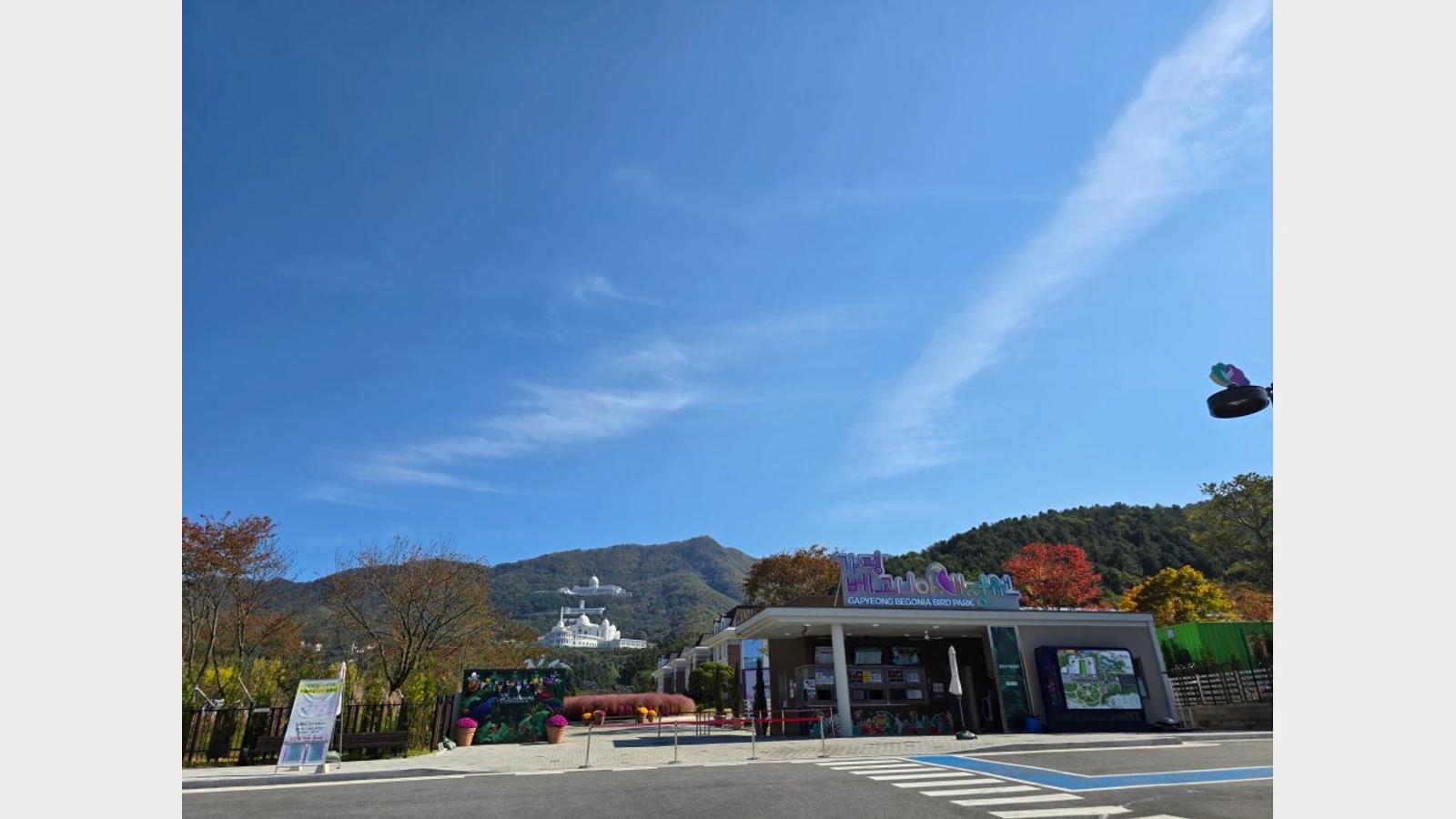
At Gapyeong Begonia Bird Park, give flowers and birds different kinds of attention. A planted display allows you to compare colours, heights and paths. A bird cannot be expected to turn towards your camera or perform on request. Plan this outing around a change of pace: first explore how plants fill a greenhouse, then slow down to watch animals without demanding a response. The park includes indoor flower and bird areas as well as outdoor gardens. Before setting off, ask your companions where they would like to spend time, rather than trying to fit every advertised encounter into the day.
The park is in Seorak-myeon, Gapyeong County. Save its Korean name, 가평베고니아새정원, and the map pin in the operator’s directions. The homepage gives 28 Misari-ro 270beon-gil for directions, while the business address in its footer uses number 30 on the same road. The facility name and official pin are more useful than relying on the number alone. Chiong Art Center is at 300 Sumogwon-ro in Sang-myeon, requiring a separate journey. Treat the park, lunch and the return journey as substantial parts of the day; sharing a county name does not make two places a continuous neighbourhood walk.
Confirm your intended date and last admission directly with the operator on 031-584-4477. When checked on 13 November 2026, the homepage listed a closure on the second Wednesday of each month, while the FAQ said the park opened every day. Admission-cutoff information also differed between pages. Rather than select one version as definitive, ask about the day you plan to visit. The website displays standard and seasonal admission prices separately, so check which rate and purchase method apply. A discount panel is not evidence that the same price applies throughout the year.
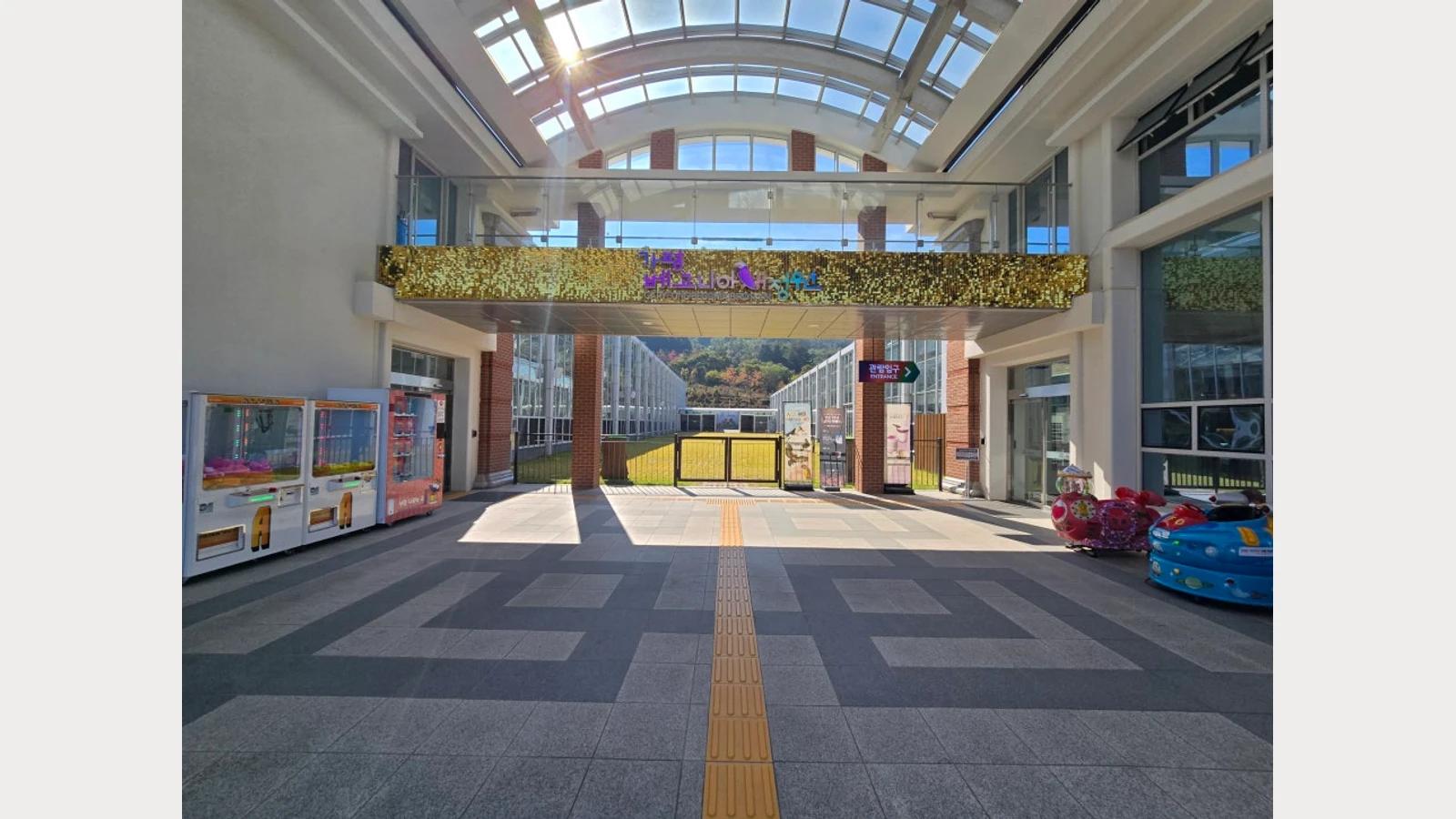
At the entrance, locate the flower area, bird area and outdoor gardens. Gyeonggi Province’s introduction describes a visit proceeding through the Flower Zone before the Bird Zone; use that as an initial plan and follow the actual directions on the day. Agree with children about keeping voices low and avoiding sudden movement near animals. Someone who is uncomfortable around birds need not join every close encounter. Ask staff where that person can pause and where the group can meet again. Establishing a meeting point makes different interests easier to accommodate without continually rushing one another.
The height of looking
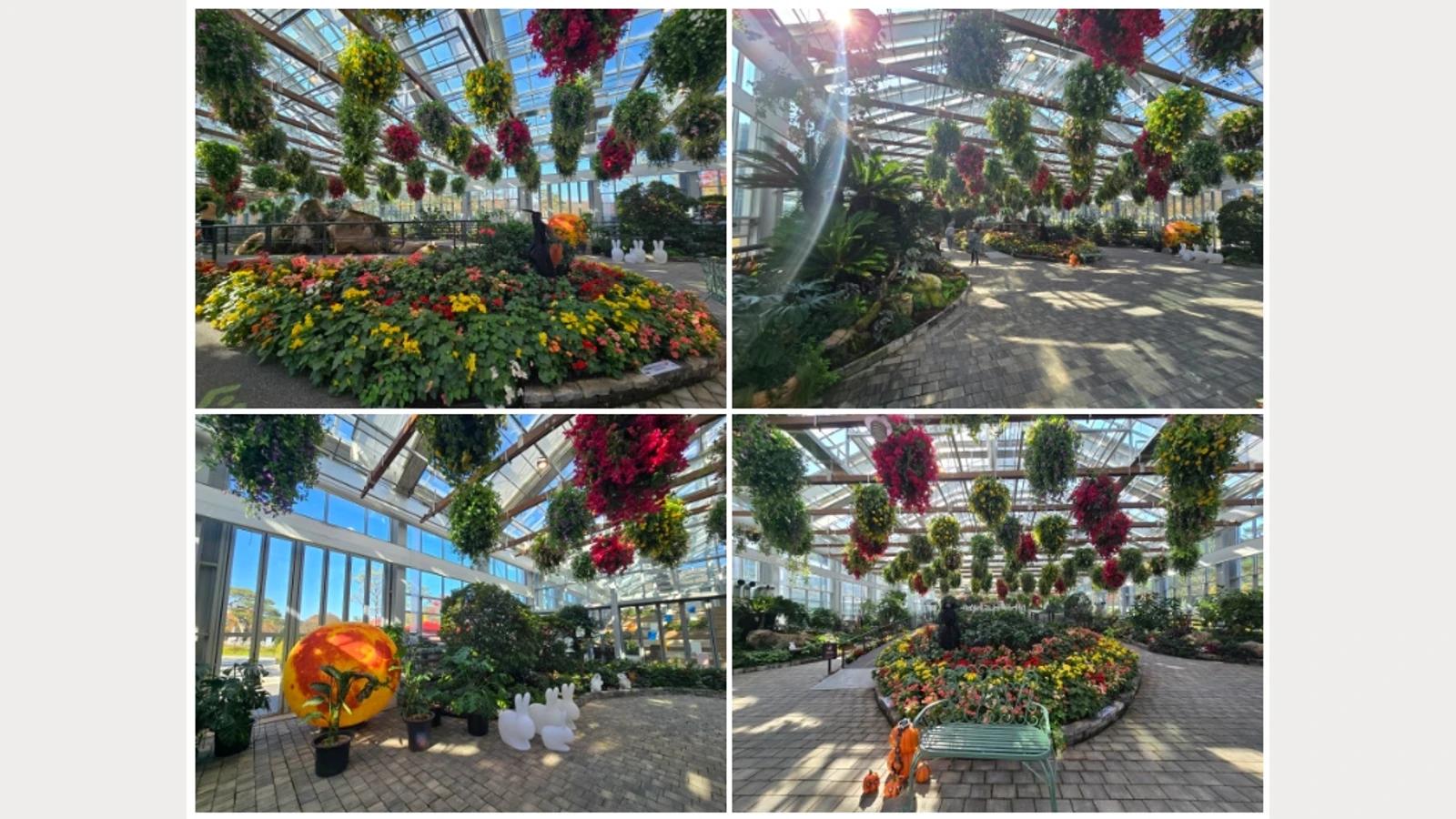
In the Flower Zone, start with the relationship between planting below and planting overhead. The operator identifies Begonia Hill and hanging flowers as features of the space. The photographs show red and yellow blooms gathered in low beds, with trailing plants suspended beneath the roof. A path remains between these layers. Look along that opening before moving in visually towards an individual flower. This reveals how the planting guides attention through the greenhouse and helps distinguish a place to stop from a passage others need to use. A broad view can explain more than a succession of flower close-ups.
Next, compare the edges around the flowers with the structure above them. In the photographs, brick-coloured borders contain the beds while the fine lines of the glazed roof repeat overhead. Begonia Hill suggests a display organised through changes of height rather than a flat carpet alone. Visitors who enjoy plant names can match labels to the actual planting. Others can compare the height of the beds and the width of the open route. Keep hands away from flowers and trailing stems. A small change of position within the permitted path is enough to see how one layer conceals or reveals another.
A different pace around birds
On entering the Bird Zone, shift attention from colour arrangements to behaviour. The operator describes large parrots in its Welcome Zone and other birds in its Exploration Zone. A species listed on the website is not a promise that an individual will be visible in the same place throughout the day. Read the label, find a permitted viewing position, and notice the direction of a beak or the way feet hold a branch. A bird facing away or remaining still is still doing something worth observing. Avoid clapping or tapping a barrier to obtain a better pose. Share a small observation quietly instead.
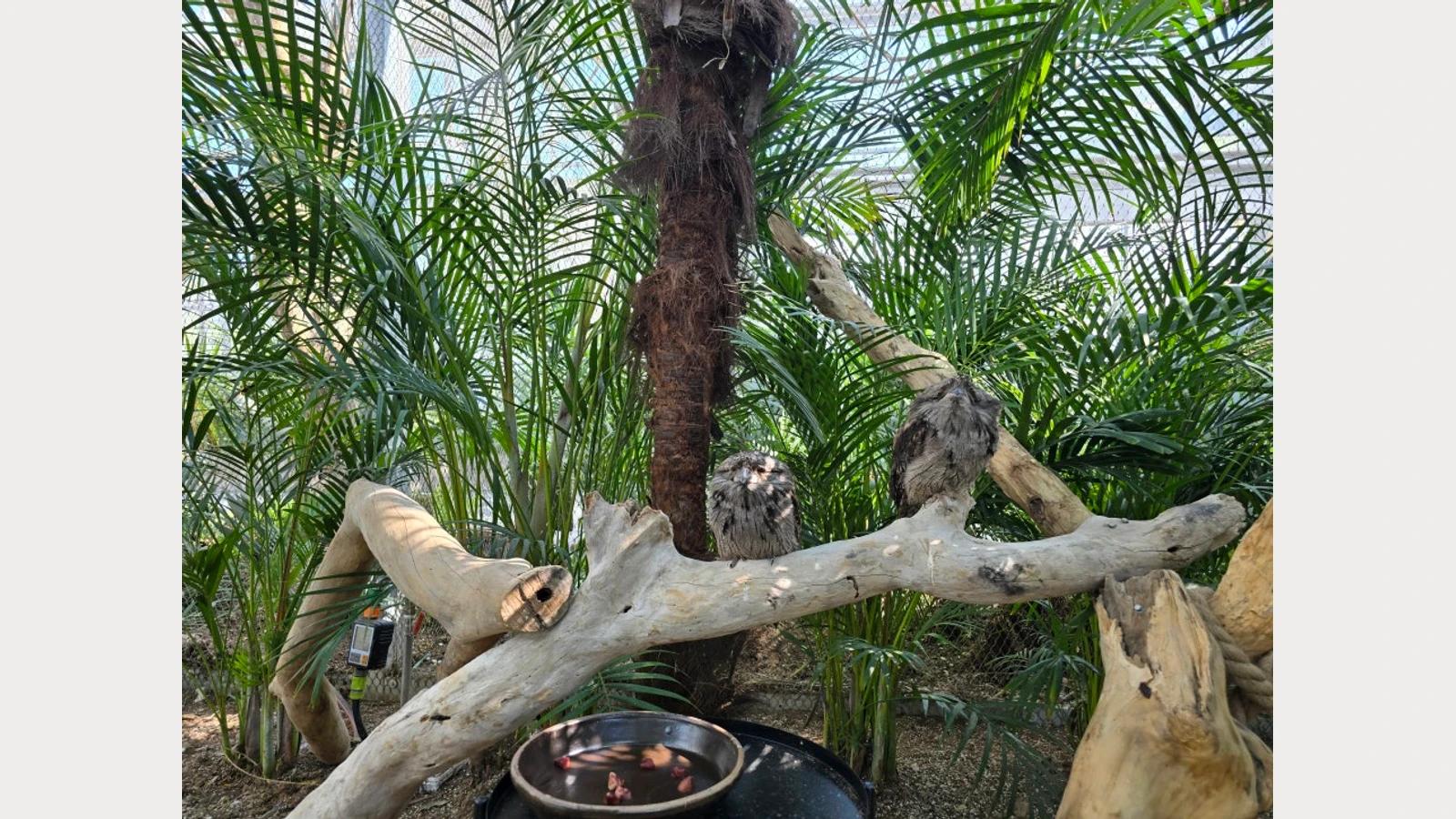
Branches and leaves can be as prominent as the animal among them. One photograph places a thick trunk, a pale horizontal branch and fine green foliage in different directions. Let your eyes narrow their search gradually, and use the enclosure’s label to identify a bird rather than guessing from a photograph. With children, allow time to look without turning the search into a noisy contest. Do not reach through planting or beyond a barrier to find an obscured animal. Looking at an empty branch for a moment is compatible with a visit that gives animals room to move on their own terms.
The Penguin and Waterbird Zone offers another arrangement of levels. In the photograph, water, low ledges, grey rockwork and rising branches sit beneath a glass roof. Consider where a penguin stands in relation to the water, rather than filling every frame with the animal alone. That wider view retains the setting that a close-up can lose. It does not guarantee a dive or any other particular behaviour. If a feeding session or explanatory talk is central to your plans, ask staff about that day’s arrangements and viewing position. Follow the operator’s instruction to turn off flash, and leave room for people beside you.
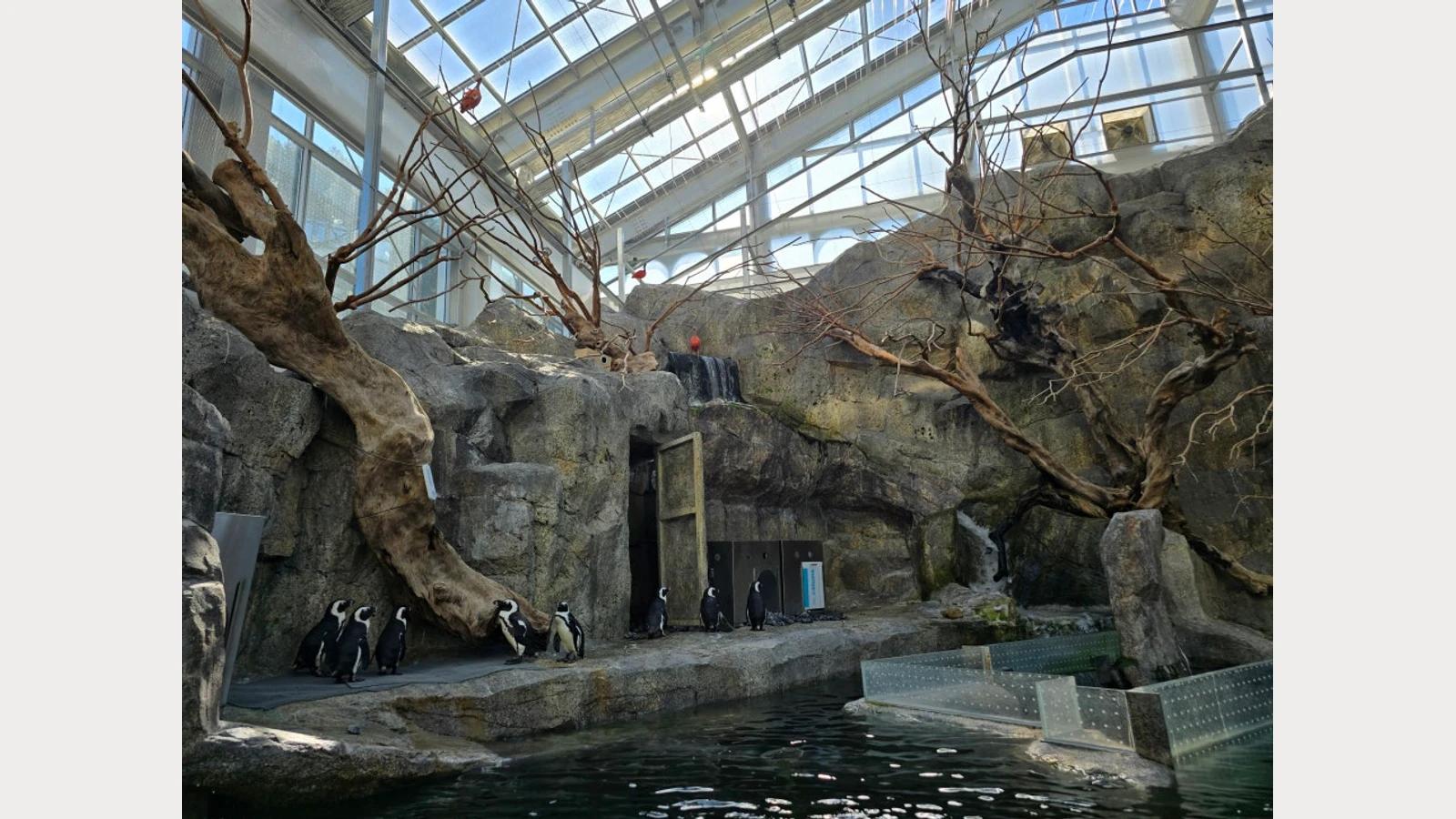
Choose feeding activities separately from watching. The website advertises several encounters, but participation and the animals involved depend on current arrangements. Use only the food and method authorised by staff; do not bring outside food or transfer leftovers between activities. The operator prohibits food in the Flower and Bird Zones and does not admit outside animals. Companions who prefer to observe need not buy an encounter. A visit can be memorable because of one behaviour watched patiently, without measuring success by the number of animals approached or fed.
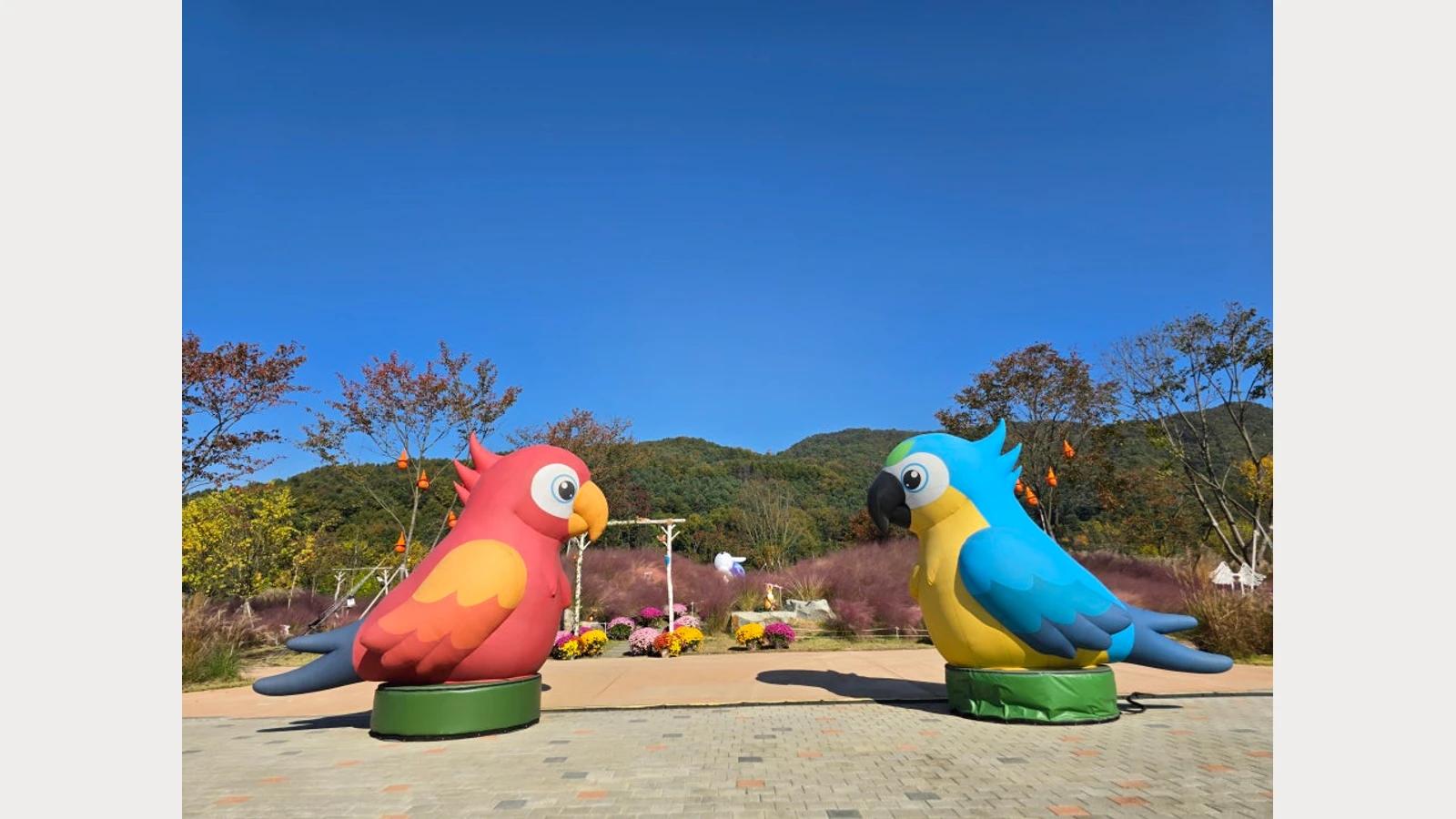
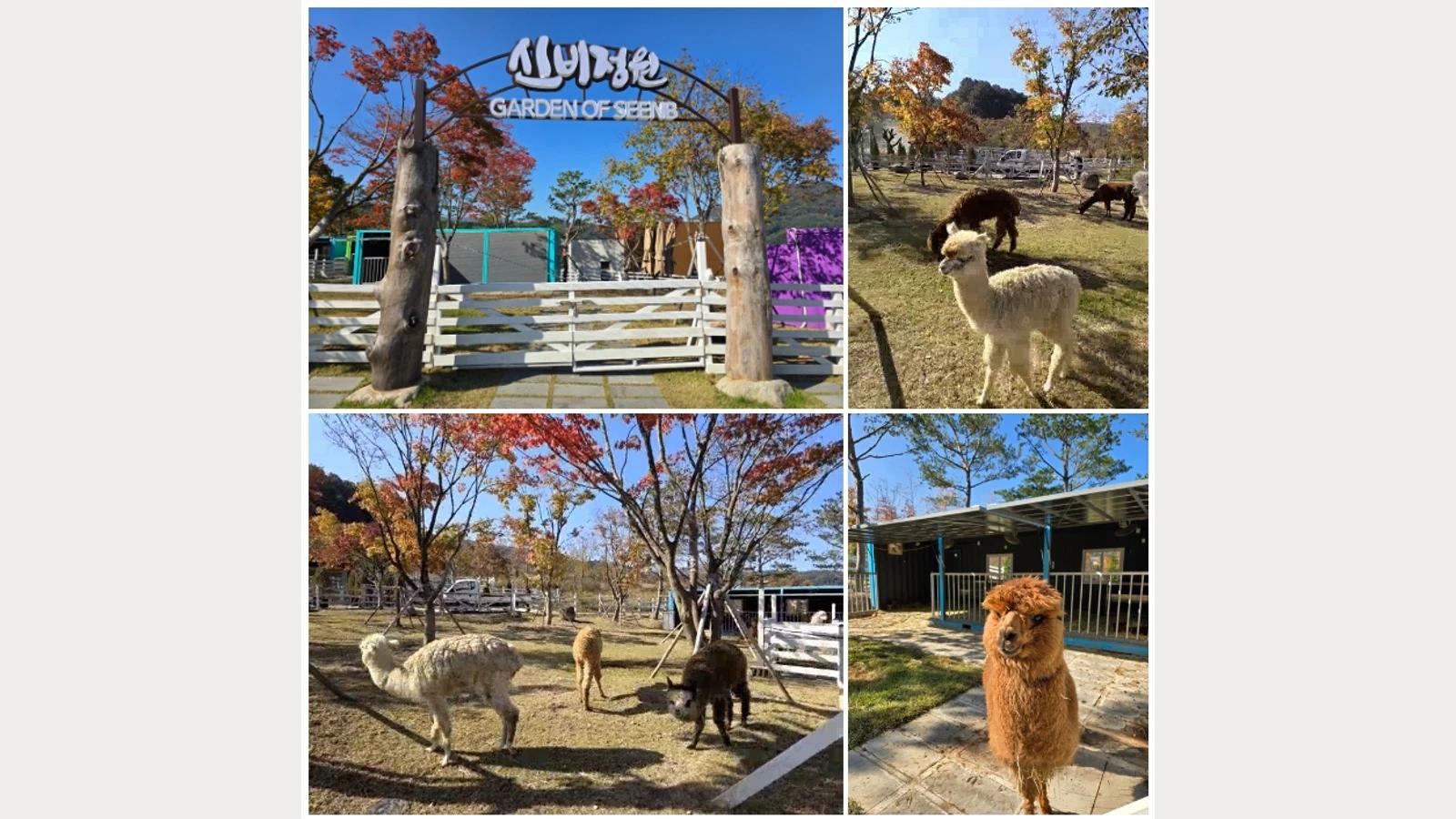
Outside, notice how the background and light differ from the indoor displays. The red and blue parrot sculptures face one another in a fixed pose, in contrast to the unpredictable movement of living birds. They offer a recognisable place for a group photograph or a pause. If you want to see the alpacas in the outdoor garden, follow the permitted viewing line and current opening arrangements. Select outdoor sections according to weather and the group’s energy. Check the year and dates of any seasonal event displayed on the website instead of assuming an older promotion describes today’s flowers or programme.
Use a break to compare what you have noticed. Before using a café or other sales facility, establish that it is open and where eating is allowed. A seat beside planting in a photograph need not be available during your visit. Having lunch before entering or after leaving can prevent hunger from setting the pace through the exhibits. Check a nearby restaurant’s current opening, menu and allergy information directly. Choose on the basis of whether the group needs a seated meal and how much travel remains afterwards; there is no need to invent a description of flavours before ordering.
Public transport travellers should resolve both the final connection and the journey back. Reaching a station on the Gyeongchun Line does not by itself deliver you to this facility in Seorak-myeon. Consult the operator’s directions and Gyeonggi Bus Information for current stops and services. Keep the Korean facility name and map pin ready if taking a taxi. Drivers should check the official approach and parking information. If travelling with a wheelchair or stroller, ask specifically about slopes and steps between the entrance, chosen indoor areas and toilets. The presence of a greenhouse does not establish access across the entire site.
Before leaving, name one scene that stayed with you. It may be planting hanging below a roof, or a bird that remained still between branches. At Chiong Art Center, carry that attention towards the shade beneath hanok eaves and the edges of the garden. Looking at a line overhead and the landscape beneath it reveals how a garden is shaped by open space as well as flowers. Plan a separate visit using Chiong’s introduction and visitor guidance. The patience practised around birds, and the change of eye level prompted by suspended planting, offer a specific way to look again at a hanok courtyard.