Journal
From Cheongpyeong Lake to the Windows of Petite France
Change the scale of your attention, from a long waterside horizon to a single window frame.
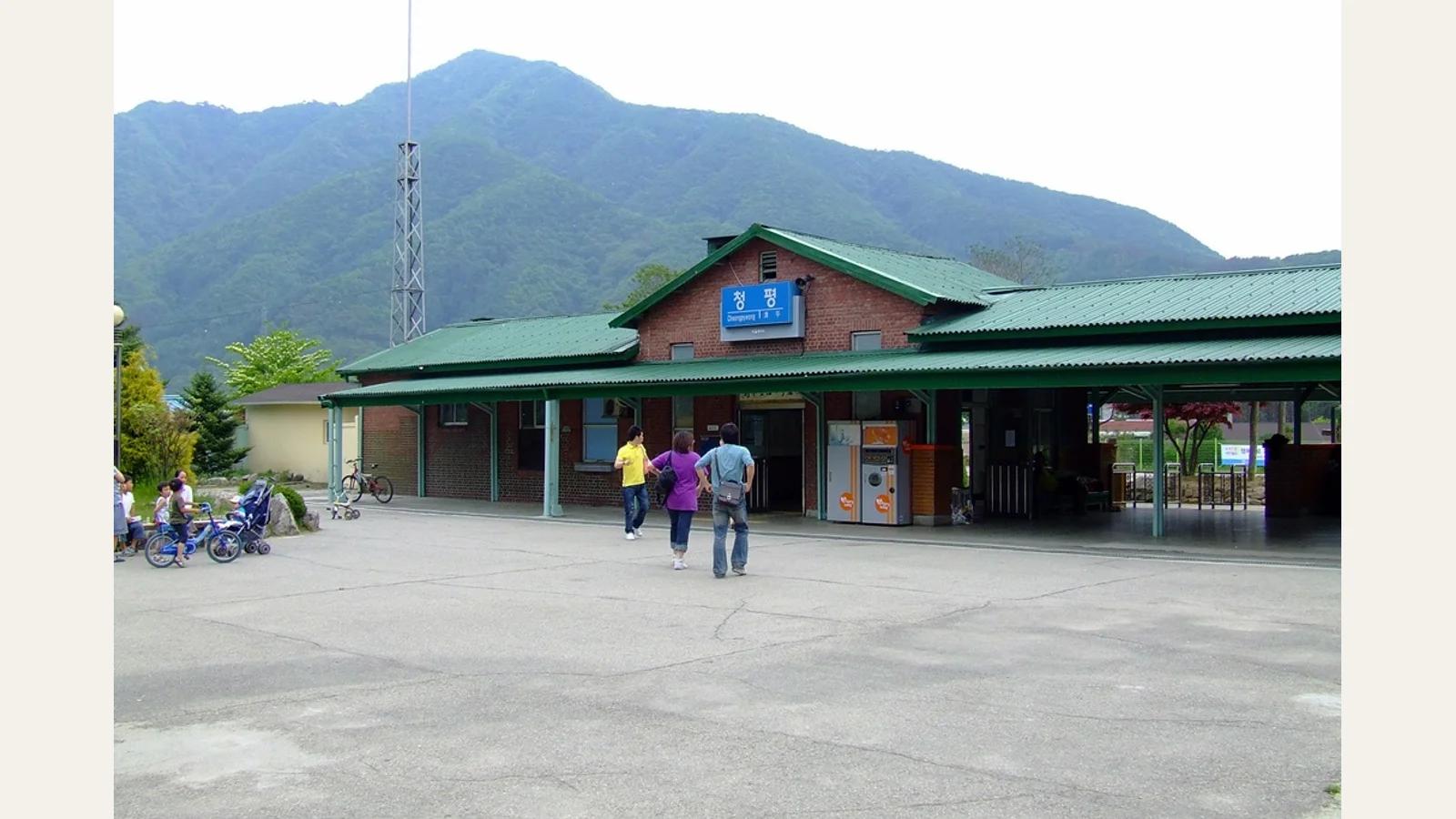
A day around Cheongpyeong can become a long list of roadside stops. Give it a more definite purpose: compare the broad layers of a lake landscape with the small divisions of a colourful village. Petite France provides the main visit, while photographs of Cheongpyeong Lake help explain its setting. You do not need a complete circuit of the water or every exhibition room. This plan suits companions who enjoy looking at buildings together and want a clear point at which to finish. It also makes optional stops genuinely optional, rather than obligations that leave lunch and the journey home to chance.
Start with two separate addresses. Chiong Art Center is at 300, Sumogwon-ro, Sang-myeon; Petite France is at 1063, Hoban-ro, Cheongpyeong-myeon, Gapyeong-gun. Save the Korean destination, 쁘띠프랑스, alongside its address. These places belong to different parts of a Gapyeong itinerary, so establish the actual transfer before deciding how much sightseeing fits. A departure from Chiong and an arrival by rail require different arrangements. This is a visit to plan around your transport, rather than an extension of a short neighbourhood walk.
If travelling by train, treat arrival at Cheongpyeong Station and arrival at Petite France as separate stages. Check the available onward bus or taxi arrangements for your travel date, including where you will board on the return. No individual bus departure or frequency is verified here. A thin line beside a lake on a map is not evidence of a continuous walking path. Identify roads, pedestrian space and actual pickup points separately. If you have chosen a return train, reserve the transfer margin first, before assigning the remaining time to exhibitions or photographs.
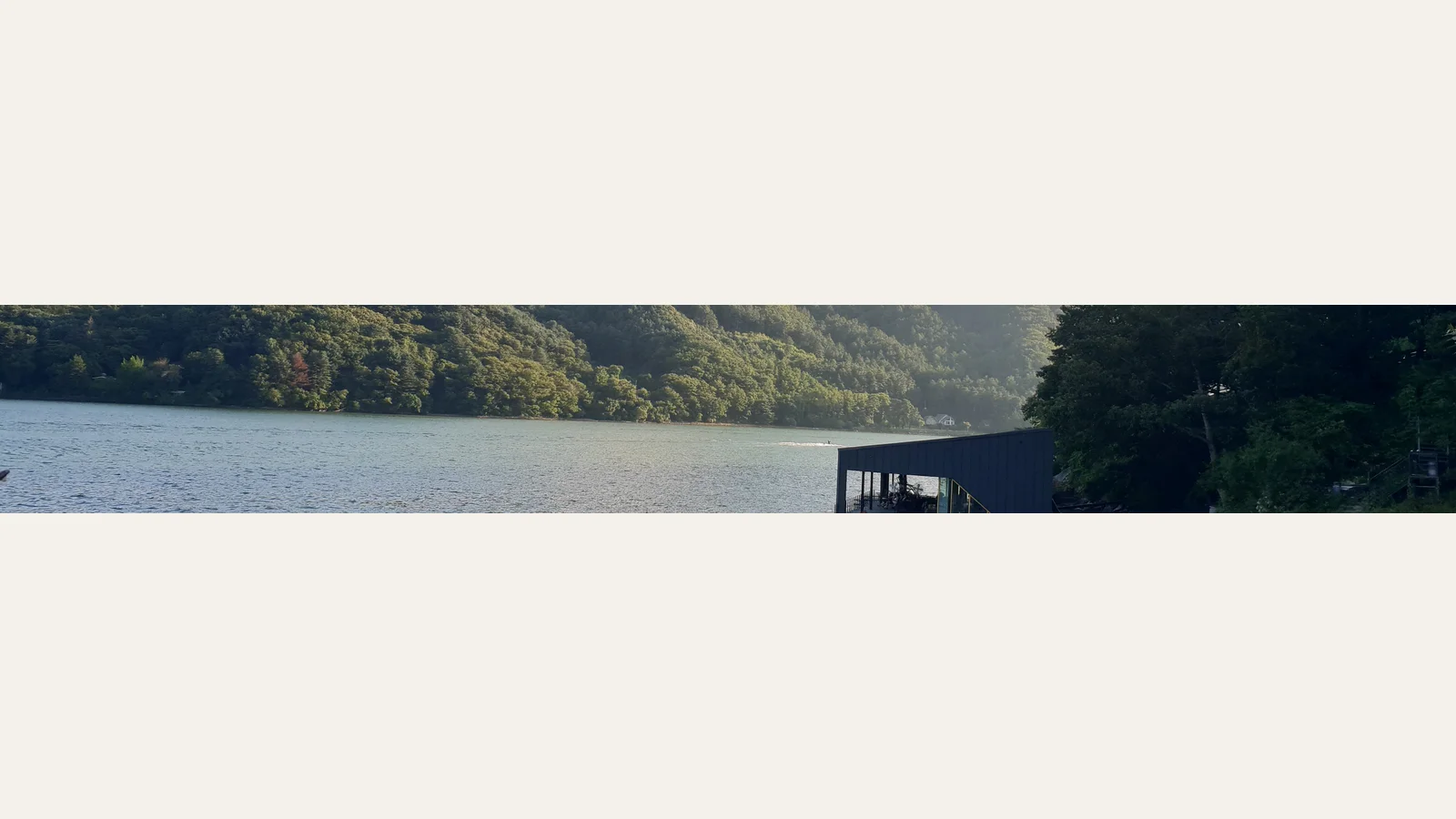
In the lake photograph, notice how the low surface of the water runs beneath several overlapping slopes. The near shore is darker than the distant ridges. Looking at these layers gives the landscape depth without requiring a summit or a complete waterside walk. Only pause outdoors where a lawful, suitable visitor stopping place has been established. Do not pull onto an arbitrary road shoulder to reproduce a photograph. If no appropriate stop fits your journey, use the image and map to understand the setting and continue to the village. Reaching the water itself is not a condition of enjoying this day.
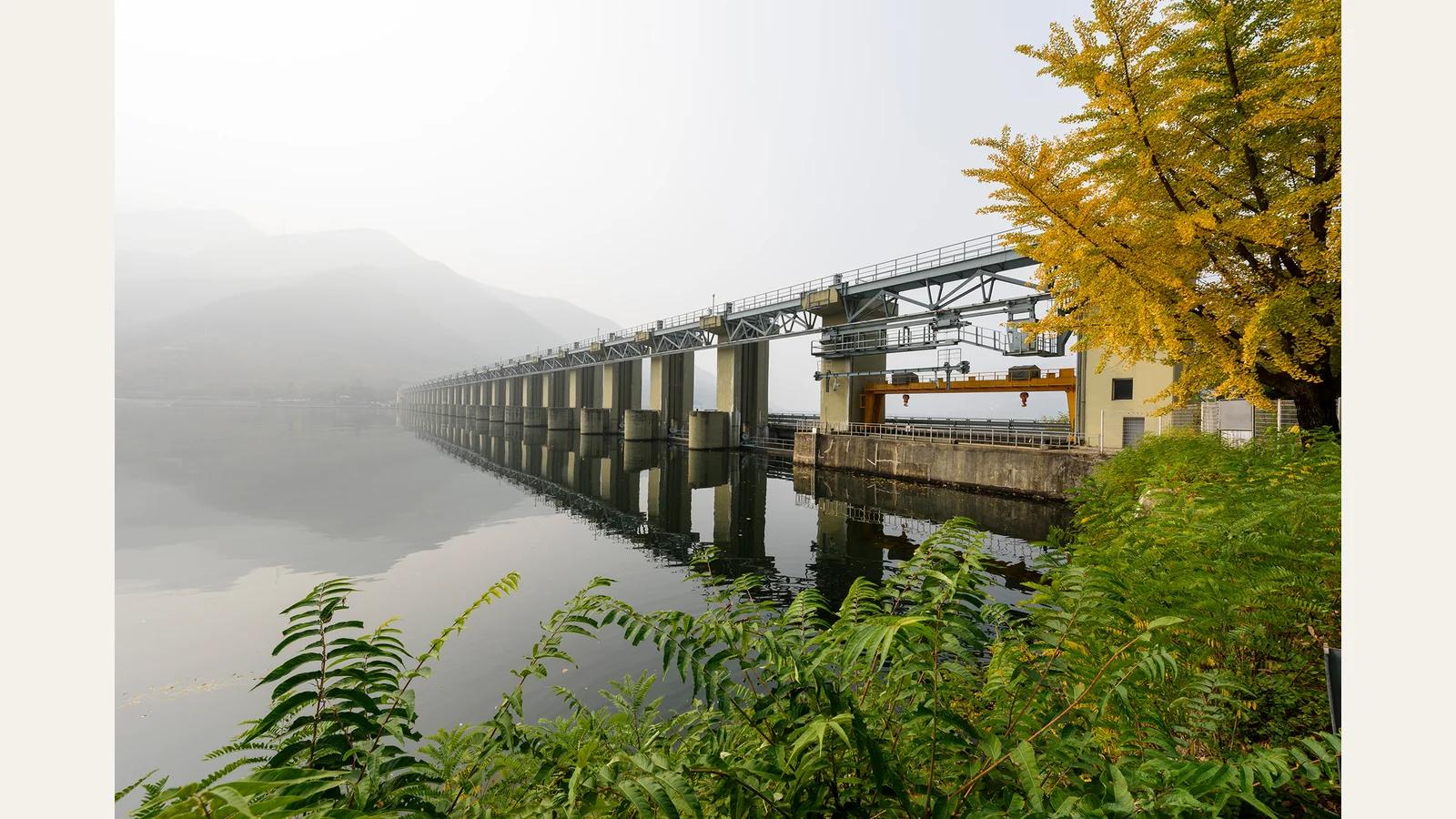
The dam photograph introduces another sort of line: repeated supports and a horizontal structure across the water. They contrast with the uneven mountain outline. Here the dam is context for the landscape, rather than a proposed visitor attraction. This article makes no promise of entry to the facility or access to the photographer’s position. Keep the visual comparison in mind instead. At Petite France, a similar question becomes smaller and more personal: how do roofs, stairs and walls organise a hillside into places to look and move through?
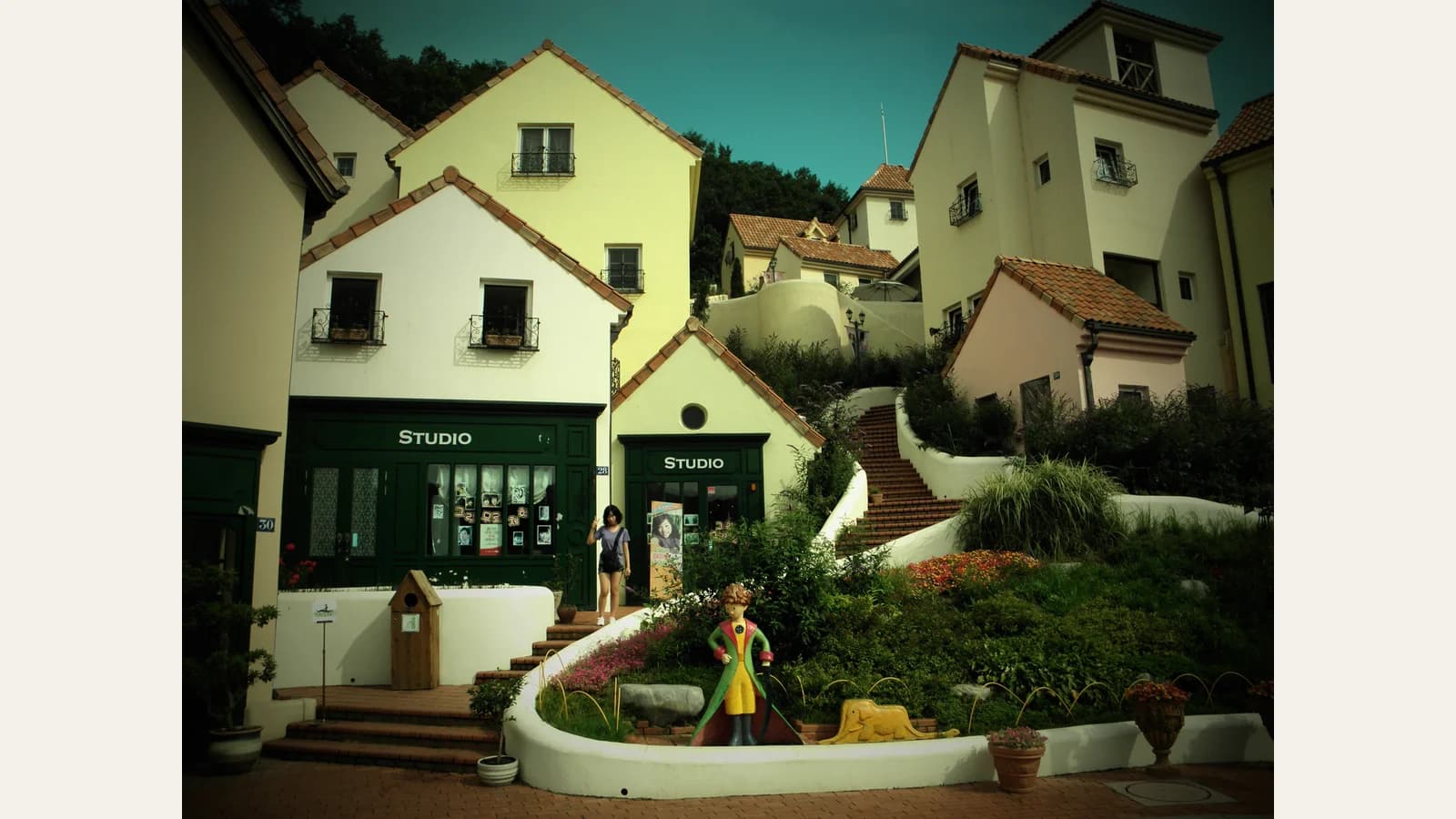
Petite France is a French cultural theme space created in Gapyeong, rather than an old French settlement. Knowing that distinction lets you enjoy its compositions without treating them as a complete account of French architecture. Korea Tourism Organization lists a Saint-Exupéry memorial hall and a French housing exhibition among its cultural elements. Begin with the current visitor map and choose one available interior. The proposed sequence is an approach to looking, not a verified shortest or step-free circuit. Let the signs and the needs of your companions determine the actual connecting route.
Outside, choose a single wall before trying to fit the whole village into a frame. Count the rows of windows and follow the point where a red roofline changes direction. In the photographs, pale pink and white façades stand clearly against a dark wooded slope. A frame with more sky makes the roof outlines prominent; a lower viewpoint draws attention to stairs and doors. Decide which relationship interests you before taking several versions of the same picture. Companions might each select a different window, then explain why it caught their attention.
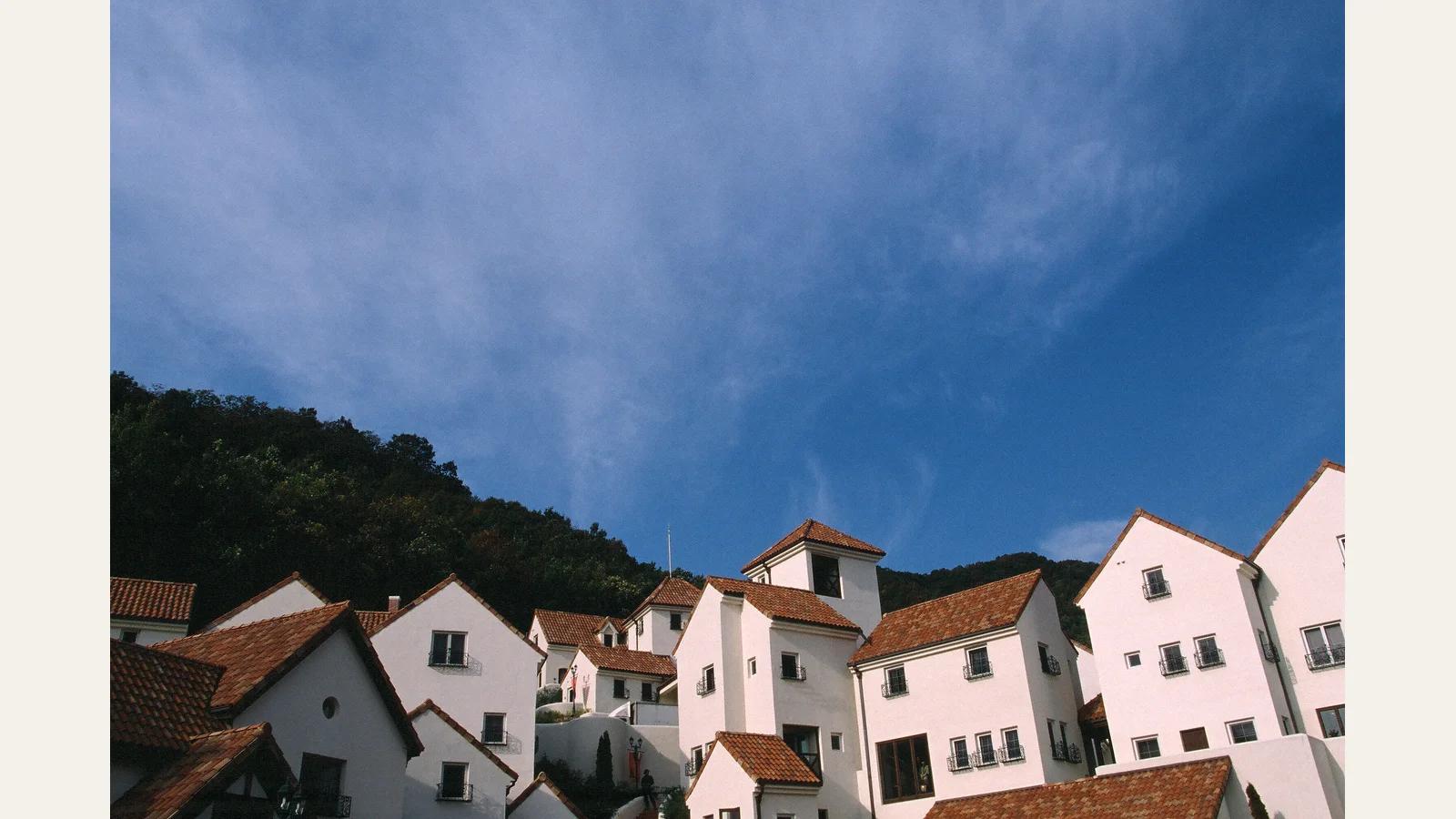
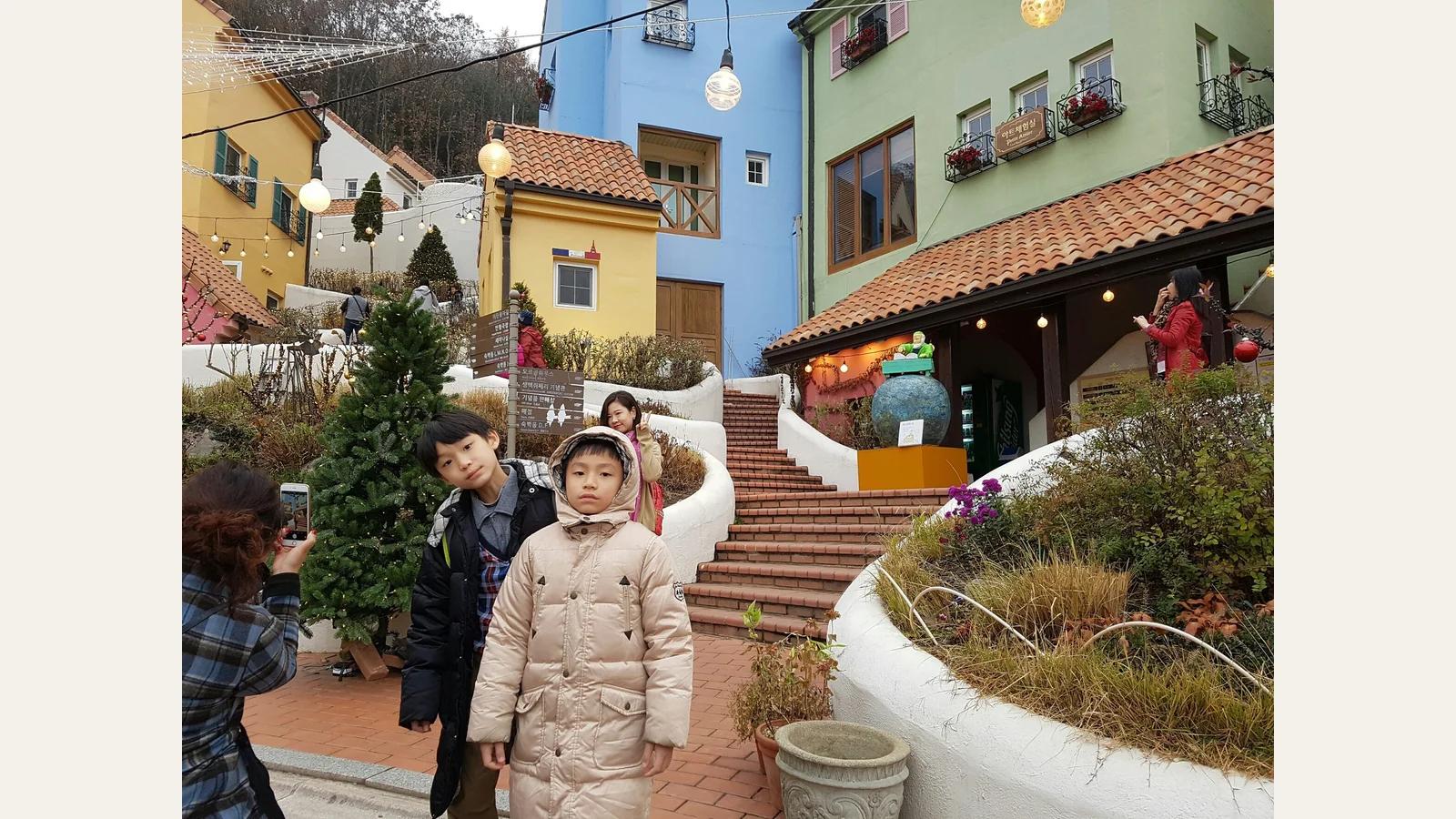
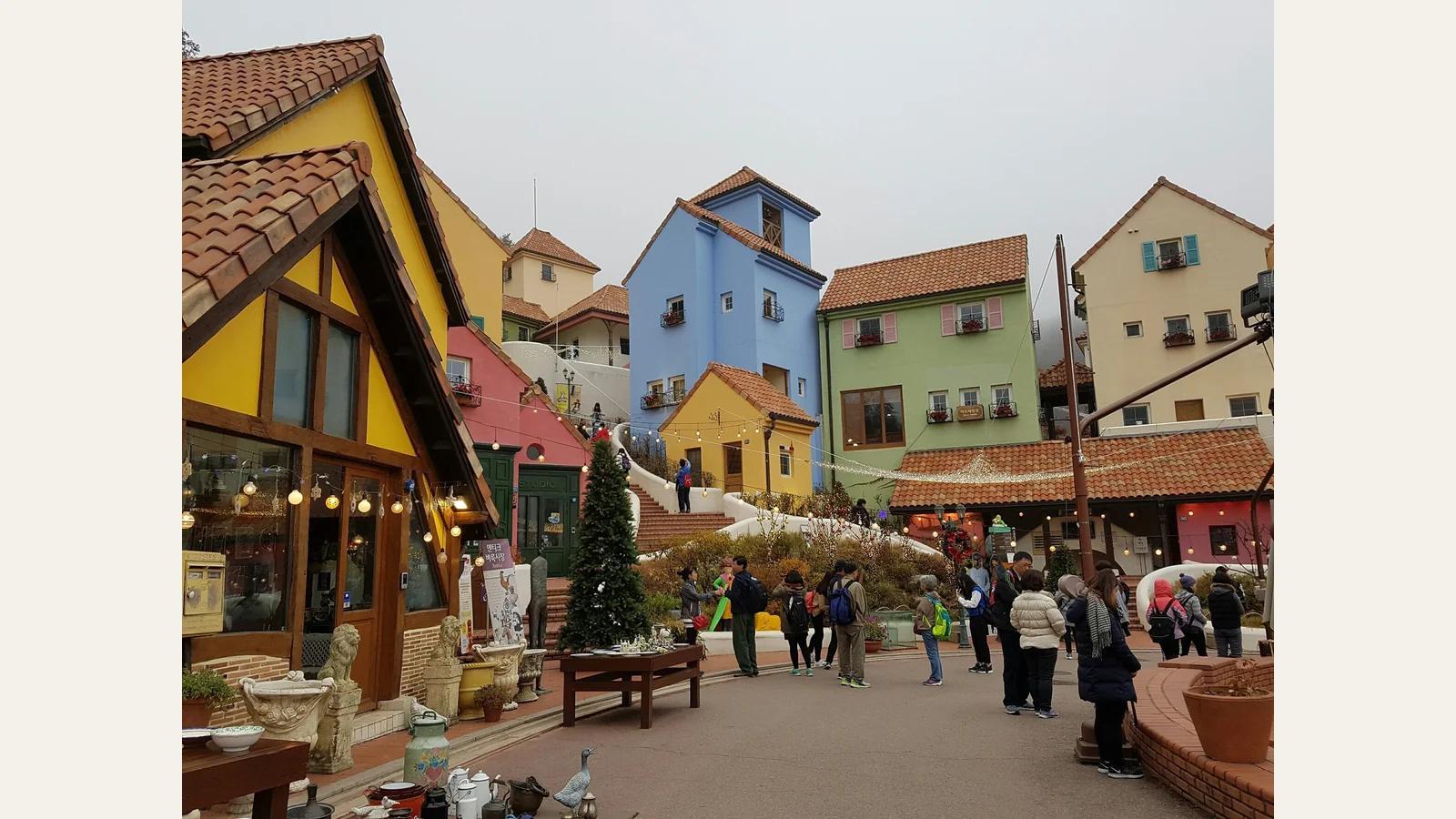
Around the courtyard, look for the boundary between colours. Yellow and blue walls sit close together, with terracotta rooflines connecting separate building shapes. Stairs join the upper façades to the lower open space. Keep the steps clear while choosing a viewpoint, and use a place where you can pause without obstructing others. A high viewpoint is not essential: looking up reveals overlapping roofs, while an open courtyard makes the widths of neighbouring façades easier to compare. Adapt the visit to the walking your group can comfortably manage, rather than assuming every upper section must be reached.
For an interior, ask whether your companions are more curious about domestic objects or about an author and his story. The housing exhibition invites attention to the relationship between furniture, windows and the arrangement of a room. A Saint-Exupéry-related space offers a different starting point through its labels about the writer and his work. Follow the display instructions; objects that resemble household furnishings are not automatically available to use. A listed exhibition does not establish that every room is open in the same form today. Make the final choice after reading the entrance information.
Visitors whose priority is a performance should check the day’s programme before committing their time. For this architecture-led visit, there is no need to delay lunch or the return transfer simply to wait for a show. Use the operator’s current notices and on-site schedule for any performance decision. November plans should allow suitable outerwear and comfortable footwear without promising a particular stage of autumn colour. Alternate an outdoor observation with one available interior, then shorten the visit if the weather or anyone’s energy makes that sensible. A smaller visit still preserves the purpose of the day.
Choose where lunch belongs before setting off: in Cheongpyeong before the visit, or after sightseeing on the return journey. A café or shop visible in a photograph does not verify its present menu or opening arrangements. Check the business you actually intend to use, including whether it serves a meal rather than snacks. This matters particularly for children or companions who need a predictable meal time. No tasting experience, restaurant price or particular flavour is claimed here. Leaving room for food and a seated pause is a practical way to keep the architecture visit enjoyable.
Before leaving, return to one colour that first attracted you. The lake image offered horizontal layers of water and mountain; the village offers smaller layers of windows and roofs. A blue wall or the direction of a staircase can be enough to discuss together. You do not need to account for everything in the grounds. Recheck your route back to the station or original departure point, and let that journey complete the day. Adding another attraction is optional, especially when fatigue would turn a clear, focused visit into an exercise in catching up.
After looking at the boundaries between colourful walls and roofs in Cheongpyeong, consider how the timber columns and windows of Chiong’s hanok divide views of a courtyard. A garden seen through a small frame and an open yard create different compositions within the same setting. Reading these spaces together is a way to notice how buildings hold an outdoor view. Consult Chiong Art Center’s introduction and visitor information when arranging an actual visit.