Journal
One Activity and a Village: Planning a Visit to Edelweiss
Separate admission from participation, choose a subject that interests your group, and leave space to explore the village together.
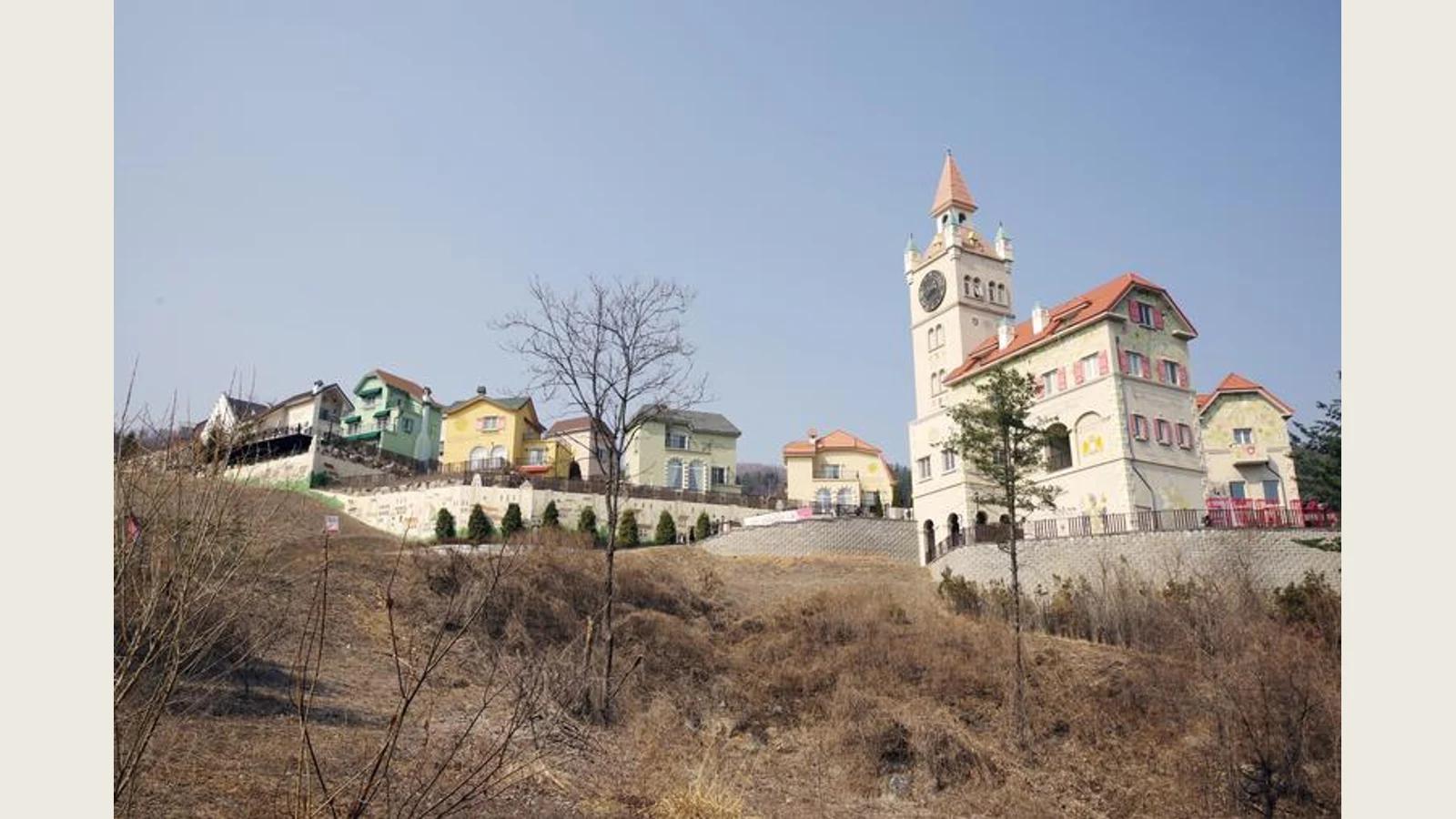
Before visiting Edelweiss Swiss Theme Park, agree on one thing your group wants to do. You might be interested in how cheese or coffee is made, or prefer a few exhibitions and time together among the village buildings. The choice changes how you use the day. Located in Seorak-myeon, Gapyeong County, Edelweiss takes a Swiss village festival as its theme. Approach it as a constructed setting for exhibitions and play. A useful plan begins with checking participation arrangements at the entrance, gives one exhibition your attention, then leaves room to walk through the open lanes.
Save the attraction’s Korean name, 에델바이스 스위스 테마파크, along with Darakjae-ro when planning your journey. Official listings differ on the final address number: Gapyeong County gives 226-44, while the Korea Tourism Organization lists 226-57. Confirm the visitor entrance on your map rather than relying on the number alone. Both sources give 031-5175-9885 as the contact number. Chiong Art Center is at 300 Sumogwon-ro in Sang-myeon, a separate destination. Being within the same county does not establish a walkable connection between them.
The Korea Tourism Organization listing checked on November 10, 2026 shows opening hours of 9am–6pm and no regular closing day. Detailed visitor information could not be confirmed on the operator’s website. Before setting out, ask about actual opening, last admission and the exhibition rooms available on your date. If an activity is the reason for your visit, check it separately. The county page distinguishes admission from activities but retains inconsistent price tables, so this guide does not promise a final ticket price. Ask for admission, participant charges and materials separately when working out your budget.
For a public transport journey, distinguish reaching Seorak-myeon from reaching the park entrance. A route ending at Gapyeong or Cheongpyeong railway station still needs an onward connection. Check the arrival point, transfer arrangements and return service for your actual travel date. If you plan to use a taxi for the final leg, establish how you will arrange the return pickup too. Drivers should follow the parking and pedestrian entrance instructions on arrival. This itinerary does not assume a particular bus connection or journey time: settle the return journey before beginning the visit.
Choose the exhibition, then decide on participation
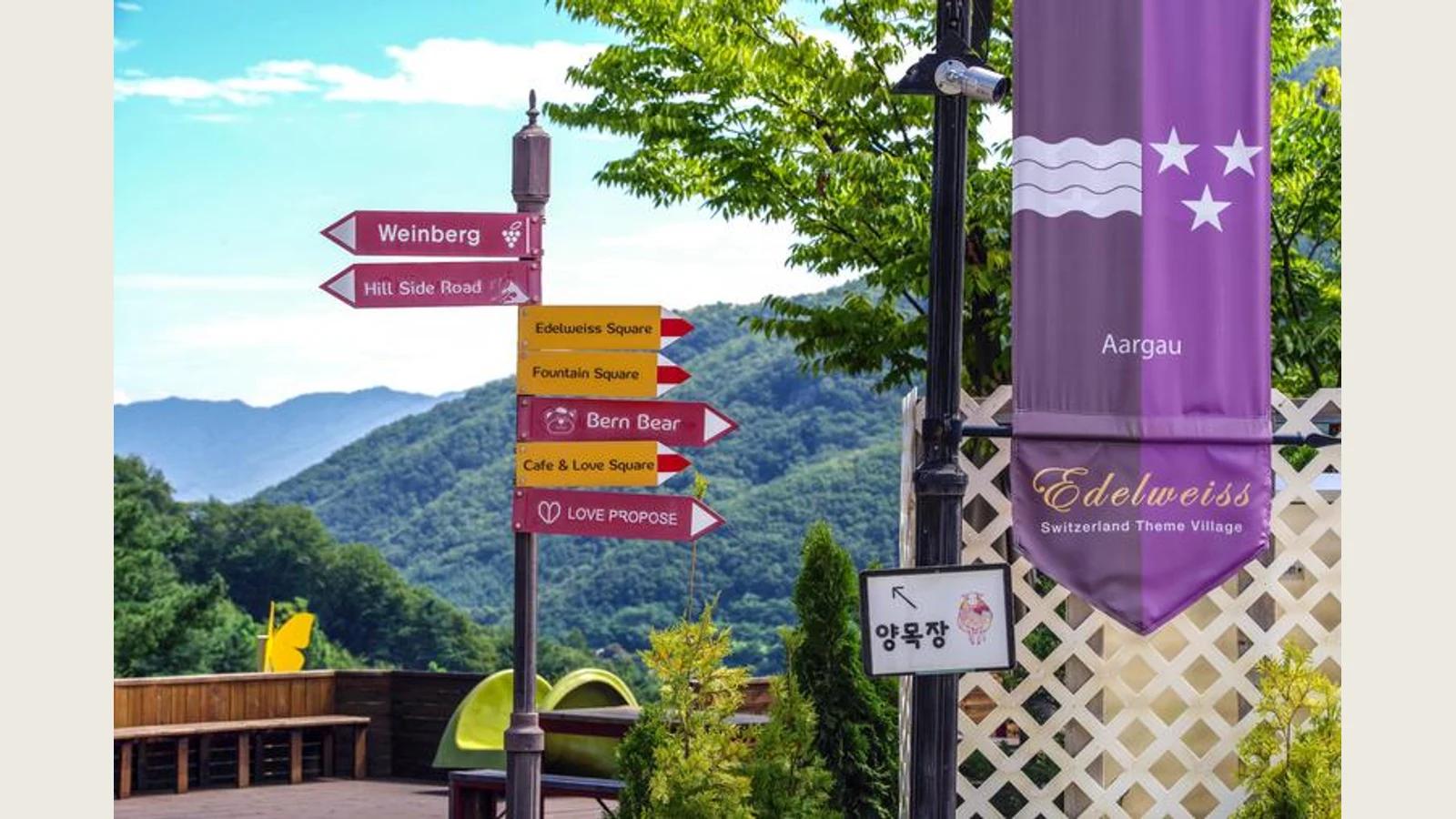
At the entrance, find out which exhibitions are open and which activities require a separate application. For an activity you want to join, ask where and when to gather. If only one child will participate, clarify accompanying-adult requirements and where the rest of the group can wait. When a session fits, use the interval beforehand for a nearby exhibition. If it does not, switch to a visit based around displays and the village. Make this decision early. The colourful directional signs suggest plenty of possibilities, but the day’s route should follow the current site map and open areas.
Coffee and cheese offer two starting points for visitors curious about food. Gapyeong County describes the coffee museum as using dioramas and related objects to explain origins, distribution and the process behind a cup. It describes the cheese museum as an introduction to cheese history and production. Rather than hurrying through both, start with the subject that interests your companions. A child who does not drink coffee need not follow the adults’ preference. The transformation of milk into another food may provide a question everyone can discuss.
Inside a display, try connecting the beginning and end of a process. Use the labels to distinguish raw materials from the finished product and identify where human work enters the sequence. Establish whether a machine is a working device or an exhibit before expecting a demonstration. Afterwards, try explaining the process in three steps. An unanswered step can remain a question. A museum named after food does not establish that tasting or lunch is included, so keep meals in the plan. Flavour and aroma are for people who actually receive and try a product to describe.
For hands-on participation, compare the arrangements before choosing the result you would like to take home. The county introduces cheese, chocolate, clay and coffee activities; that list does not guarantee a session for individual visitors on a particular day. Ask about duration, age requirements and whether children need help. For food activities, discuss ingredients you need to avoid and ask what will actually be used. If an item can be taken away, listen to packaging and storage instructions. When the desired activity is unavailable, an exhibition visit remains an option. There is no need to force the rest of the day around securing a session.
Leave time for the lanes and the return
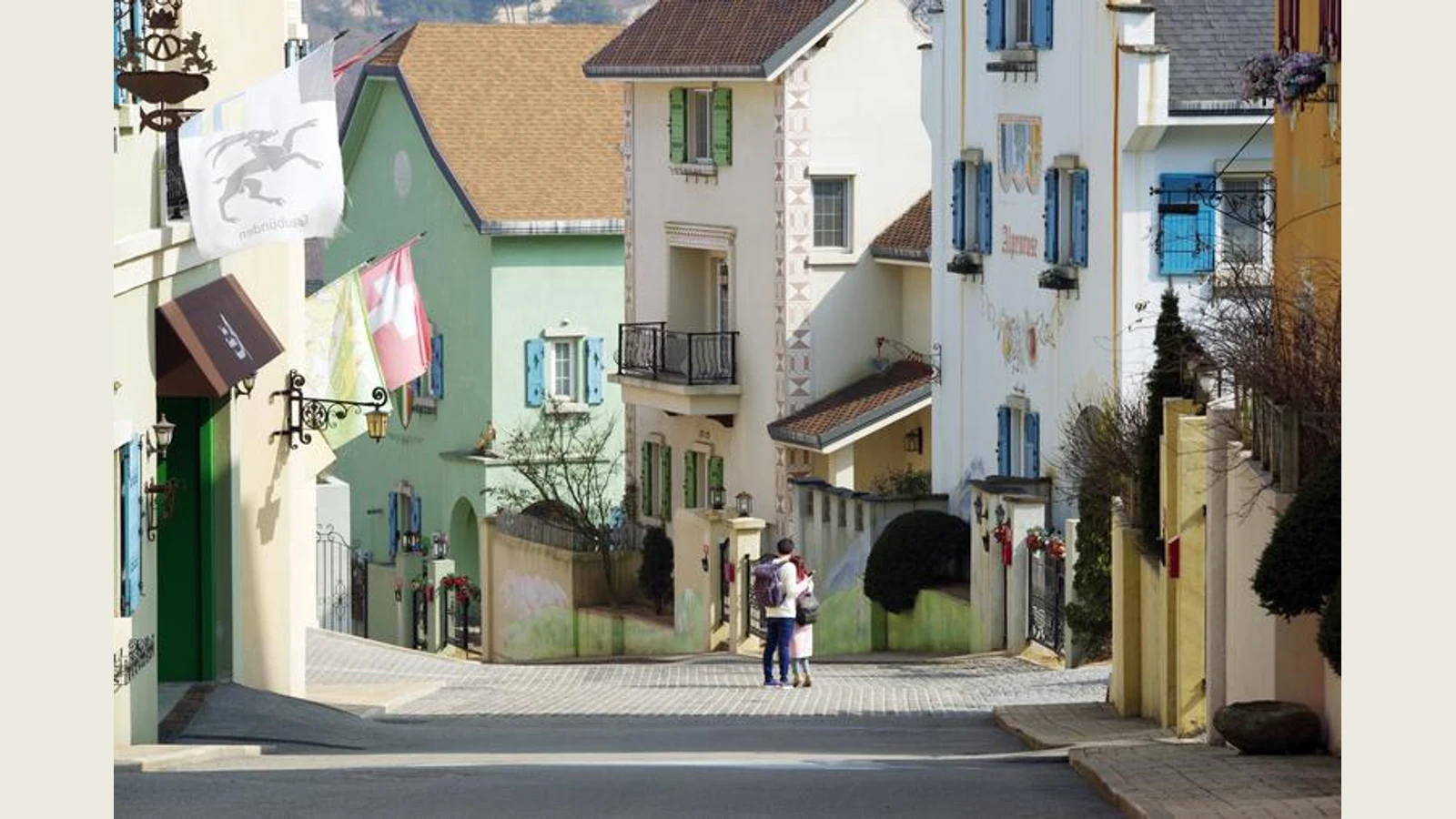
After your exhibition or activity, take a walk through the lanes that are open. The photographs show pale green and cream buildings lining a narrow street, with balconies, windows and eaves overlapping at different heights. Include the direction of the lane in a picture as well as a person against a wall. While someone takes photographs, another companion can check the onward route. This gives both photography enthusiasts and people who simply want to walk a part in the visit. Check doors and signs directly, and leave spaces that appear private alone.
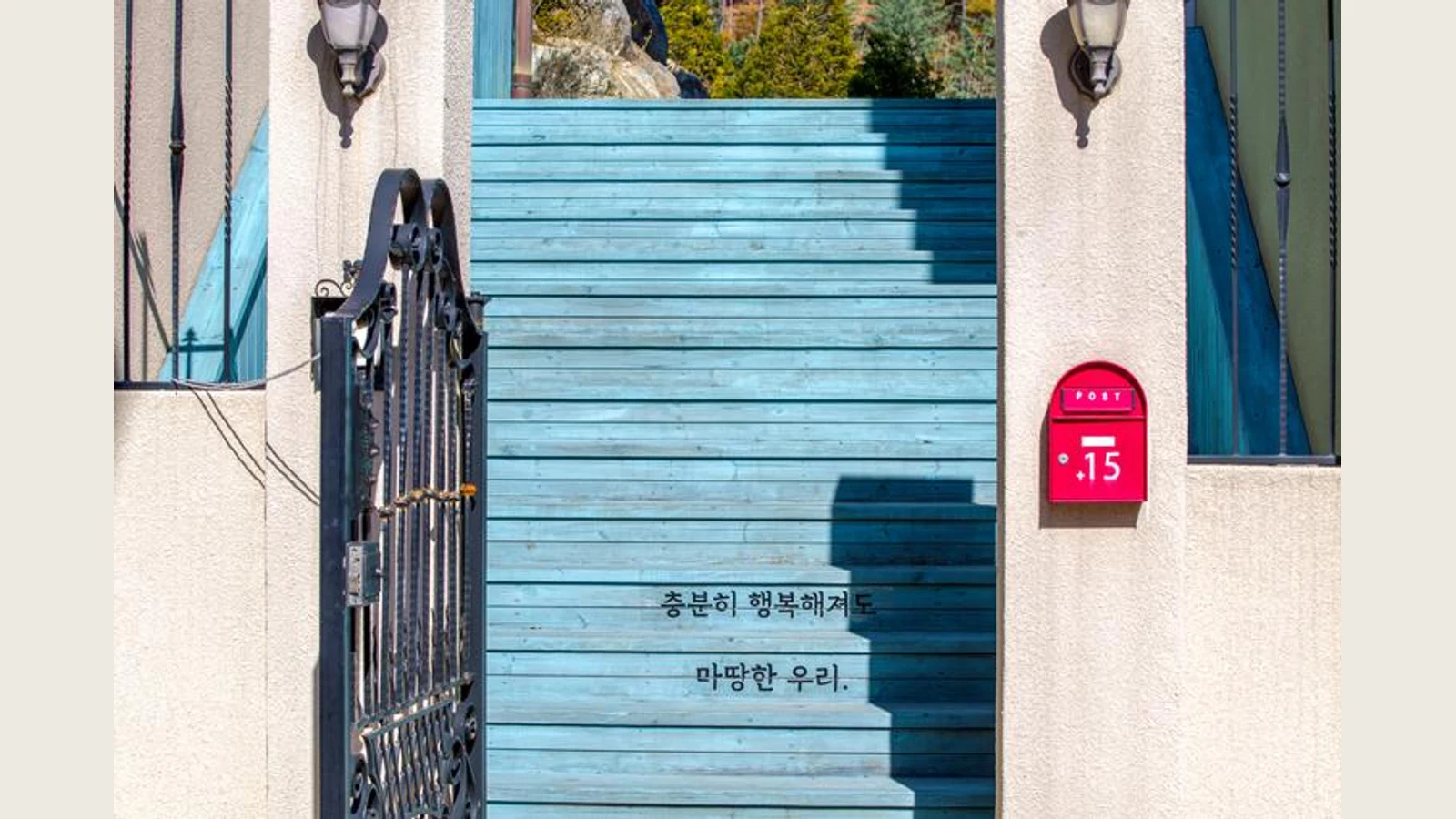
Steps and slopes are practical parts of this setting. The photograph of a blue staircase shows a change in level, but it need not become a compulsory stop. Wheelchair and stroller users should ask specifically about gradients, a route avoiding stairs to their chosen exhibition, and toilets. The tourism organization lists designated accessible parking; this alone does not establish access throughout the grounds. Confirm a workable area at the entrance and choose a route the group can manage together. A high viewpoint need not determine whether the outing succeeds.
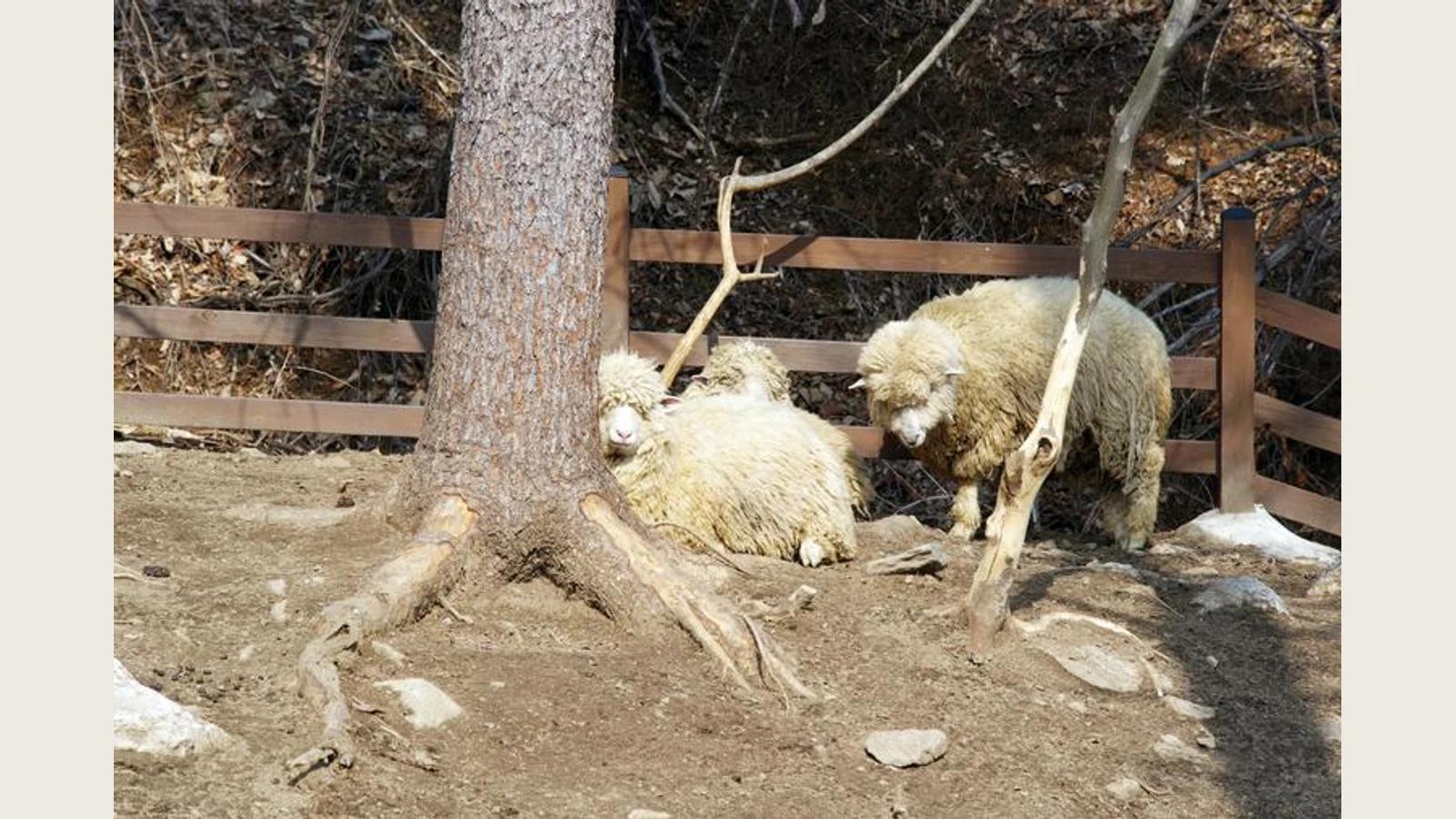
Leave seeing sheep as an optional part of the visit if that interests your children. The tourism organization introduces a sheep enclosure. In the photograph, sheep rest beside exposed tree roots with a timber fence behind them. When animal viewing is available, first identify the boundary between people and animals and follow staff instructions about feeding. Explain beforehand that watching quietly without feeding is also a choice. Decide after hearing the day’s arrangements instead of promising an encounter before leaving home. Afterwards, find somewhere to wash hands and keep snacks outside the animal area.
Give lunch its own place in the itinerary. A coffee or cheese exhibition does not necessarily provide a meal. Decide whether to eat before admission or find an open restaurant in Seorak-myeon afterwards. If you hope to eat inside, check actual food service, the menu and rules on bringing food. A child waiting for an activity may be more comfortable eating first. At the restaurant, ask about portion size and heat rather than inferring them from menu photographs. Separate food to share from anything a companion needs individually.
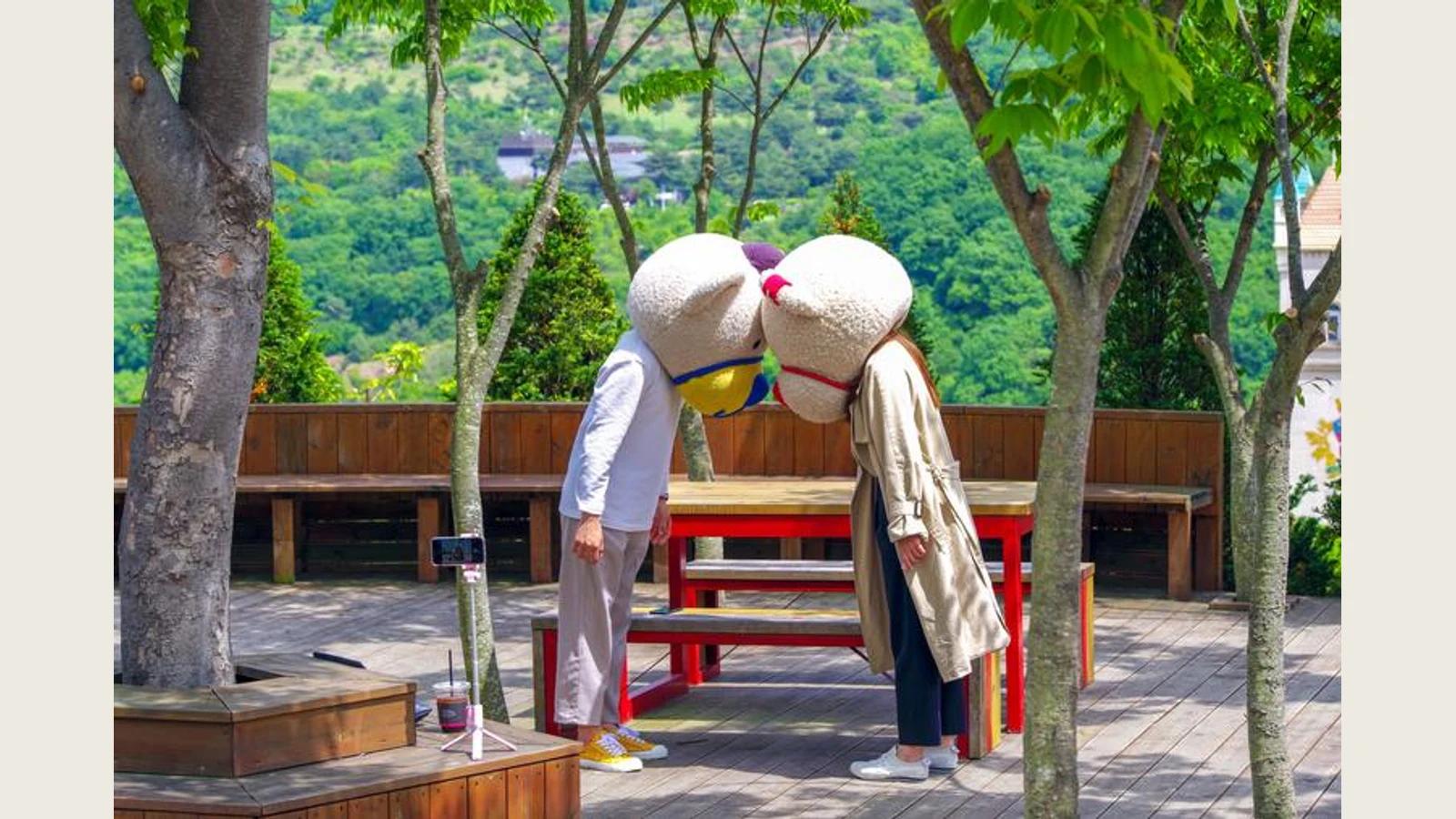
Before leaving, choose one staged scene for a small storytelling exercise. In the photograph of two figures leaning towards each other beside a red bench beneath a tree, their facing heads and different hairstyles suggest a conversation. Ask a child what the figures might say, without presenting an invented tale as the attraction’s history. Keep information learned in exhibitions distinct from stories you make together. Then return towards the entrance and confirm your transport. Add another destination only if the remaining time and the group’s energy allow it. Understanding one subject and sharing a story can give the day substance without counting every building.
Carry that interest in figures and their setting to Chiong Art Center’s ceramics, hanok and garden. When looking at a vessel, notice whether a timber column or the open courtyard behind it becomes part of how you see the object. A park staging images of Switzerland and an art space within a Korean hanok need not share a history. They can prompt a common question about how placement changes a story. Consult Chiong’s introduction and visitor guidance when planning that separate visit. The distinction you practised between understanding an exhibit and making your own story offers a way to connect the two spaces.