Journal
Reading Remembrance: Two Memorials in Gapyeong
Follow a change in scale, from four national emblems on a wall to a regiment’s name on a small stone.
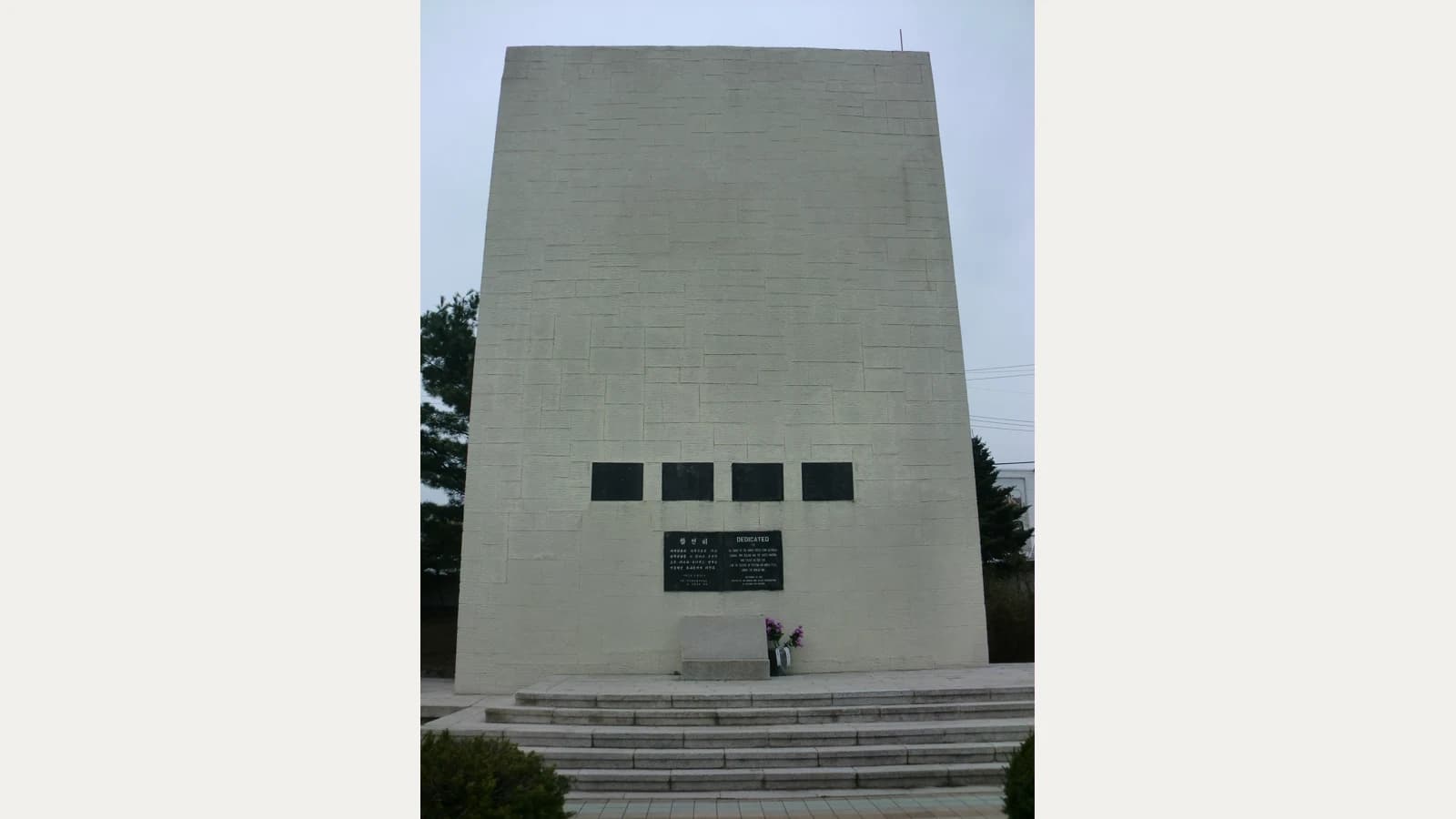
A memorial can become a brief photograph stop unless you decide what you want to understand before arriving. For this Gapyeong outing, follow a change in scale: from four national emblems on the Commonwealth Memorial to a particular regiment’s name in the Canadian memorial garden. Begin in Gapyeong-eup, then add the garden in Buk-myeon if transport and the return journey work for your group. This is a cultural visit for people who would rather spend time with a few inscriptions than collect a long list of attractions. Leave room to read, pause and compare what each place asks visitors to remember.
Save two separate destinations. Gyeonggi Province places the Commonwealth Memorial in the park in front of the Gapyeong-eup administrative welfare centre, at 365-1 Eupnae-ri. The Korea Tourism Organization locates the Canadian monument beside the road in Igok-ri, Buk-myeon. They are not different sculptures within one park. Map the transfer from Gapyeong Station to the first memorial, the onward journey to Buk-myeon and the return separately. Chiong Art Center is at 300 Sumogwon-ro in Sang-myeon, so an outing from Chiong also requires a deliberate journey between districts. Keep the Korean destination names with your map pins.
English histories often use Kapyong for the battle, while current travel maps use Gapyeong. Saving the Korean names helps connect those references with places on the ground. Canada’s Department of National Defence describes the April 1951 battle and the defence by the 2nd Battalion, Princess Patricia’s Canadian Light Infantry. At the memorials, distinguish the year, place and unit named in each inscription. A statement about service throughout the Korean War has a different scope from one about a particular battle. You need not memorise every engagement to make this visit worthwhile; begin by establishing whom each monument commemorates.
Whom does the wall remember?
At the Commonwealth Memorial, look at the relationship between the broad pale wall and the small emblems near its base. Australia’s Department of Veterans’ Affairs identifies it as a memorial to those who served in Australian, Canadian, New Zealand and British units during the Korean War. From a distance it reads as one large surface; closer viewing separates the countries and the dedication panels. Ask a companion which emblem caught their attention, then turn to the inscription. Reading after looking gives the monument a more specific meaning than its size alone can provide.
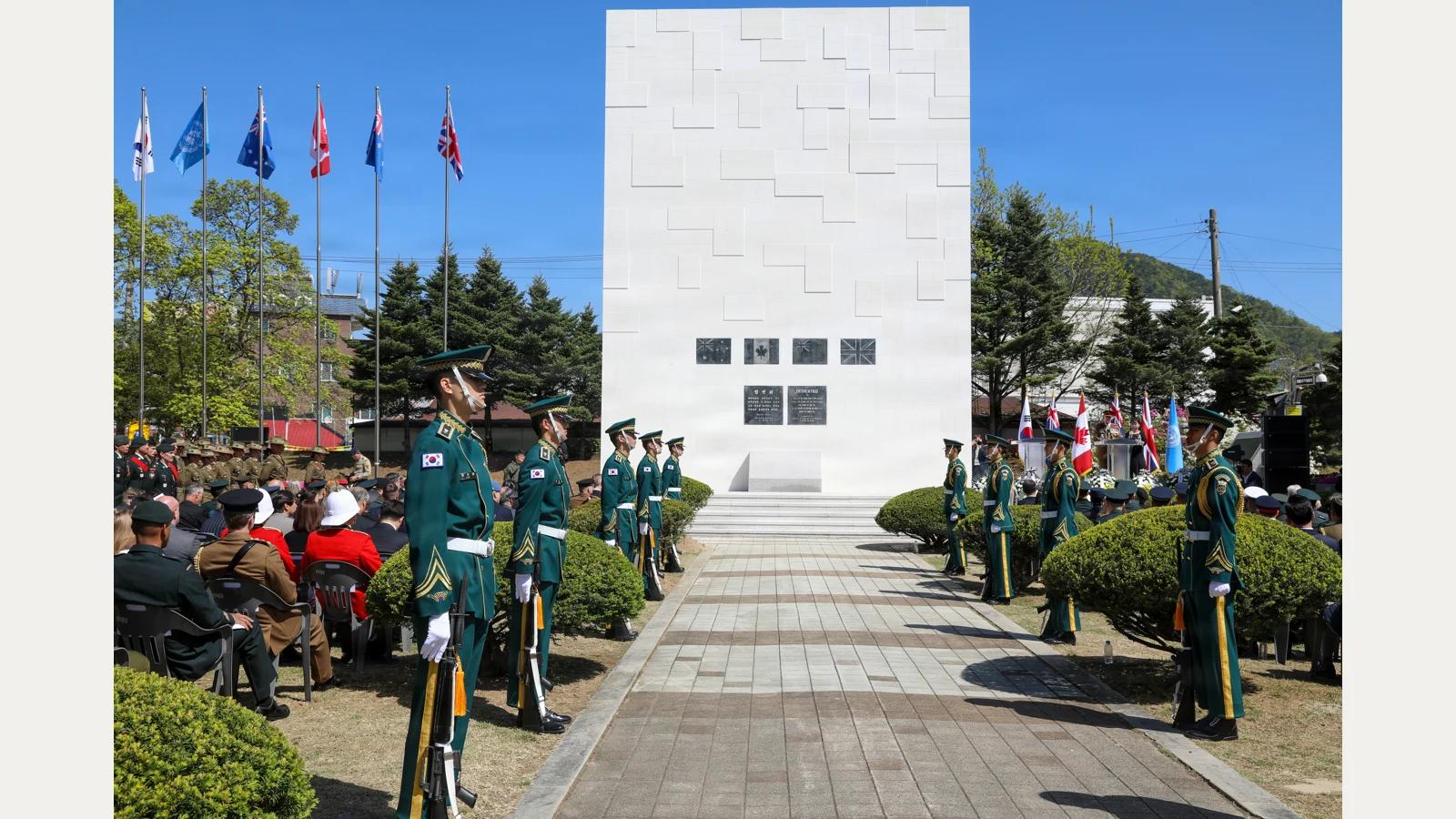
The ceremony photograph shows how the space before that wall accommodates people. A central passage and steps organise the view, with attendees and flags arranged on either side. Gyeonggi Province records a seventy-fifth-anniversary commemoration here on 24 April 2026. The two ceremony photographs in this article belong to that April commemorative context; they do not advertise an event for a November visit. On an ordinary visit you can choose your own reading distance. During a service, give priority to participants and the organisers’ directions. The most useful place to stand is not always the place that makes the most symmetrical photograph.
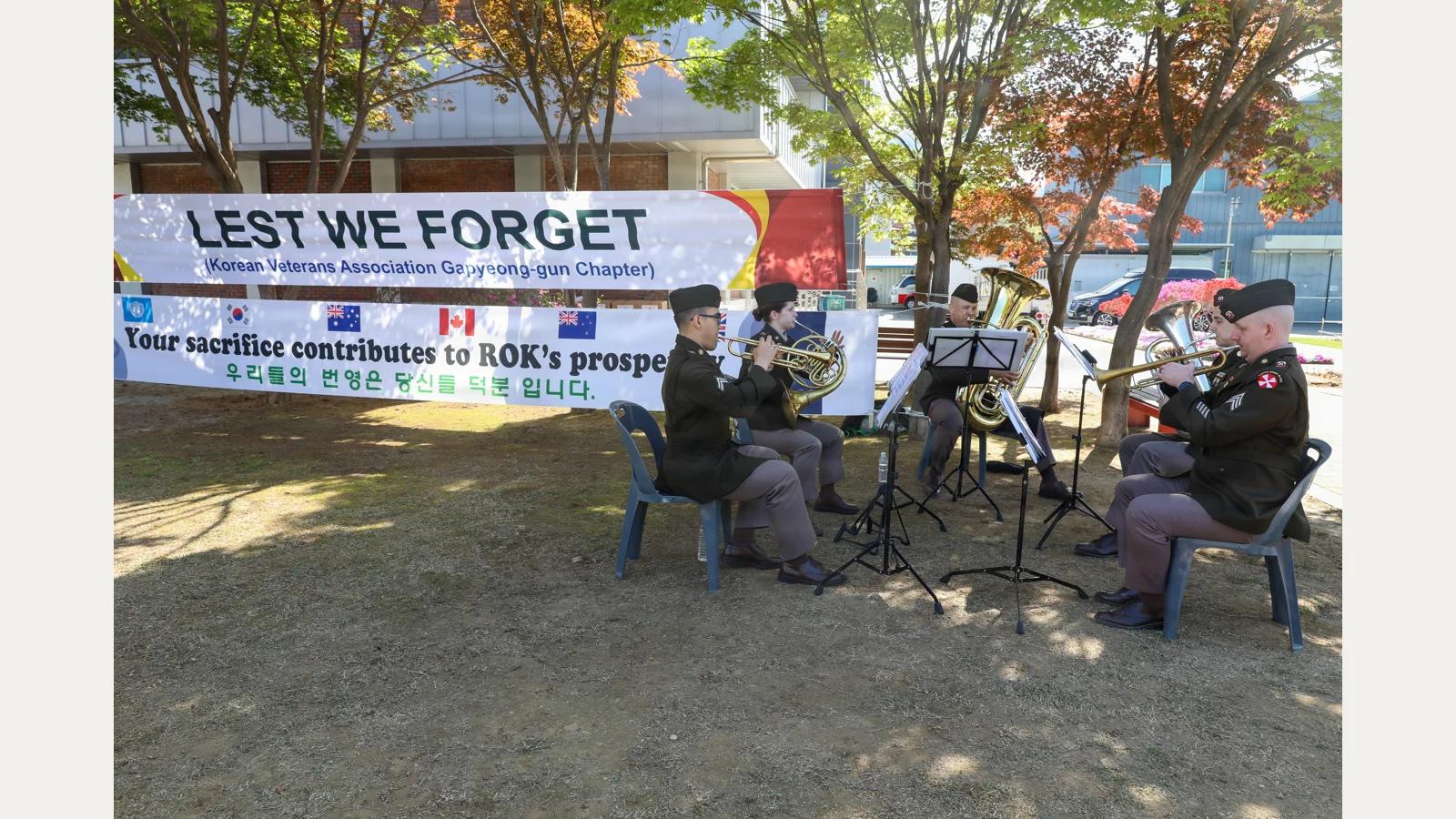
Another image brings attention down to musicians seated beneath trees. Brass instruments, dark music stands and a white banner occupy a smaller space beside the monument. Remembrance involves people gathering, as well as words preserved in stone. A photograph cannot tell you what someone felt or establish which music was played, but it can show the arrangement of seats and gestures. With a child, discuss why people face the same direction rather than turning the battle into a game. You can start a thoughtful conversation without inventing the names or private stories of the people pictured.
After the first memorial, make lunch and the onward journey explicit choices in Gapyeong-eup. Check the return connection before ordering if you intend to continue north. Decide whether your group needs a seated hot meal or something lighter, and verify the actual business you choose. A pause at an outdoor inscription and a rest over food serve different needs, particularly for children or anyone uncomfortable standing for long. Keep the meal in a separate setting where conversation can unfold. If the transfer is inconvenient, a careful visit to the first memorial can be the centre of the day without adding the second.
Names and languages in the garden
For the northern stop, save 캐나다전투기념비 together with Igok-ri. Veterans Affairs Canada calls it the Canadian Korean War Memorial Garden. At the entrance, take in the arrangement before heading for the central monument. The wider photograph shows steps, a long railing and memorial stones among trees. A railing in a picture does not establish a suitable entrance for every visitor: check changes in level and the actual surface for the person using it. Notice where the garden meets the roadside and how you will leave. That practical boundary matters as much as the arrangement of the stones.
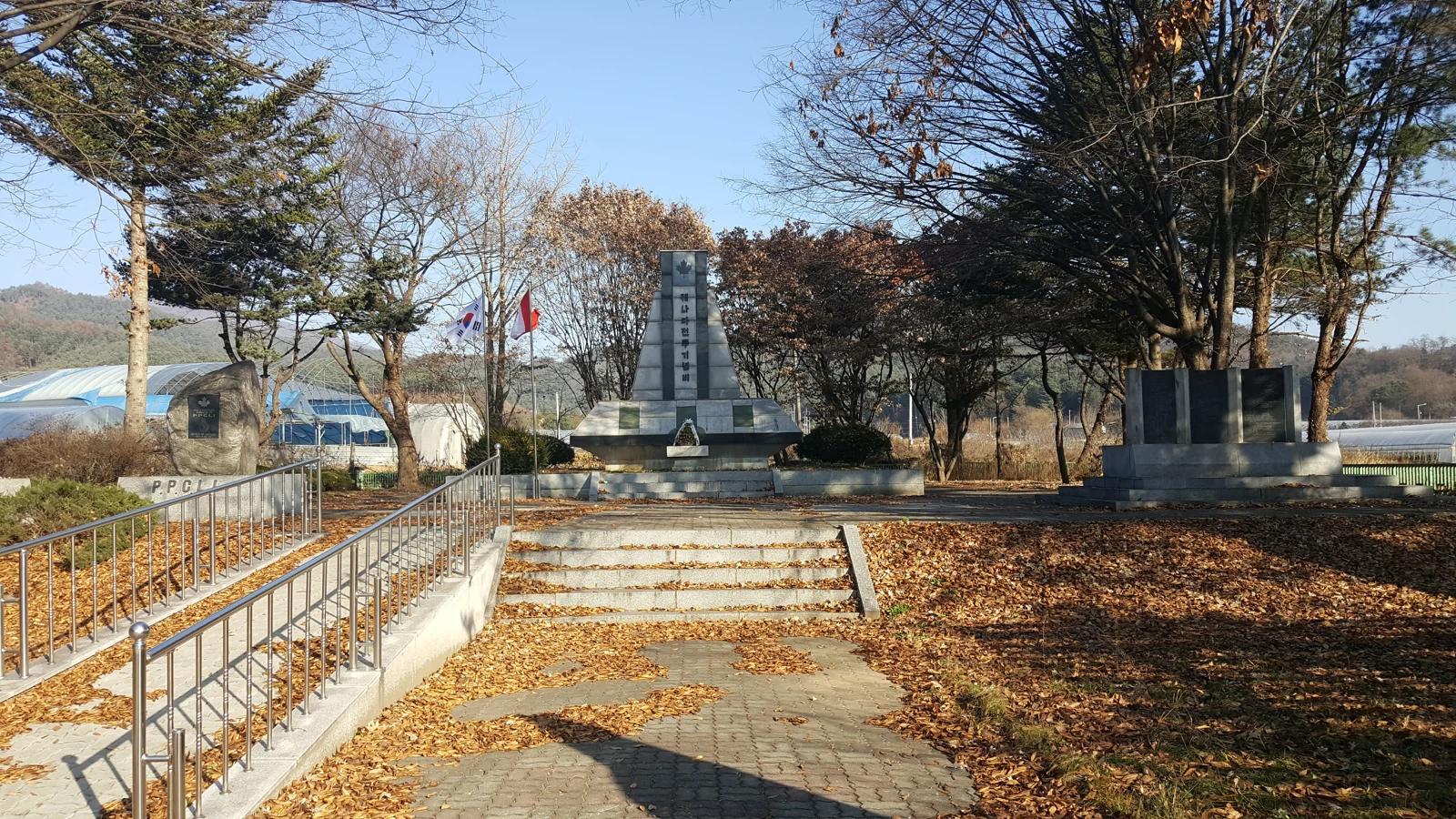
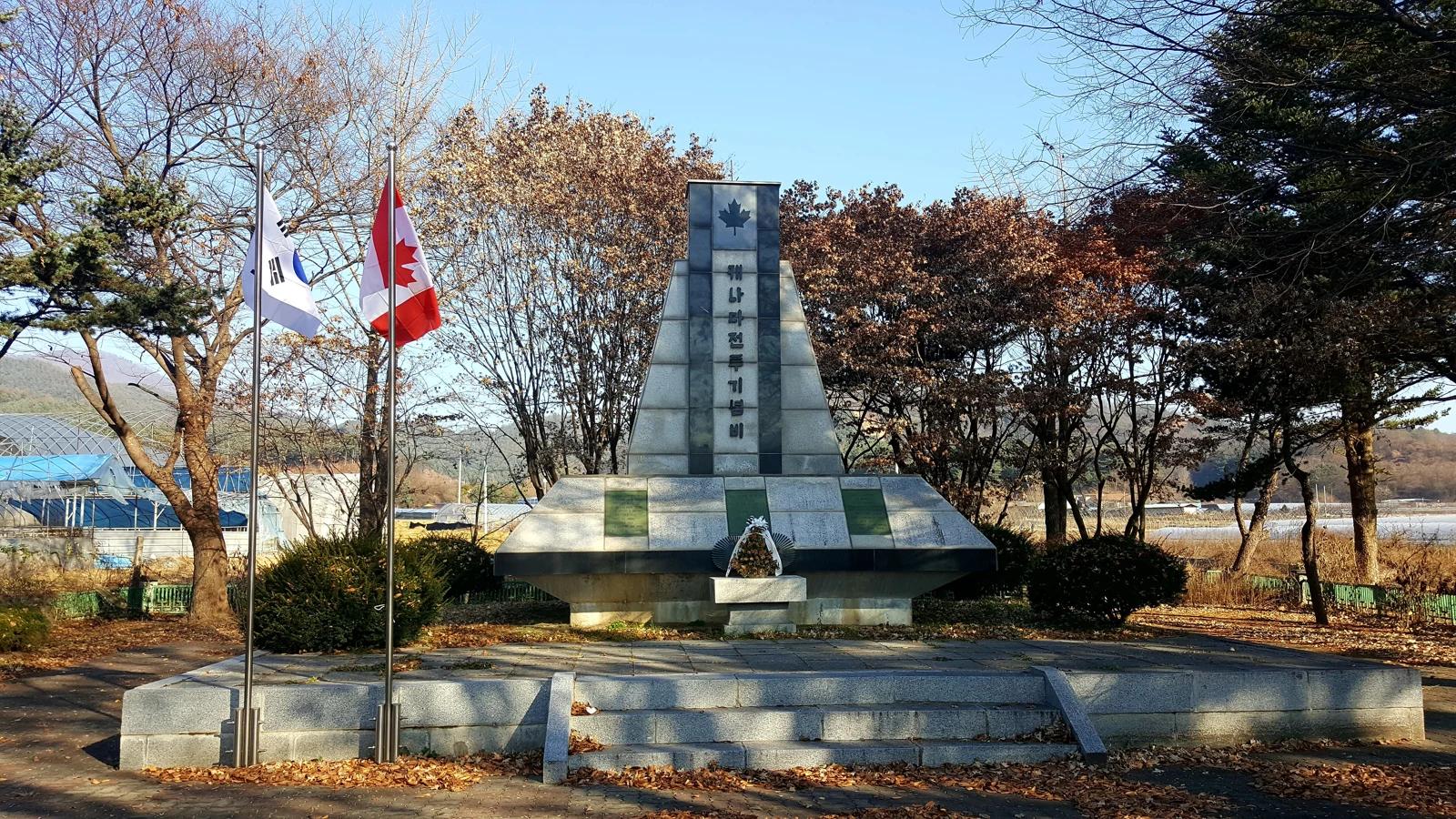
The central monument has a broad stepped base and a narrower upper profile. The Korea Tourism Organization records its initial erection in 1975 and rebuilding in 1983. Those dates offer a reason to consider a memorial as something maintained and renewed, rather than fixed at one moment. In the photograph, trees, flagpoles and low planting place the stone within a garden. Read the explanations provided before assigning meanings to decorative shapes. Look at the text near the base, then step back to understand its place in the larger structure. This is a simple way to combine reading with observation.
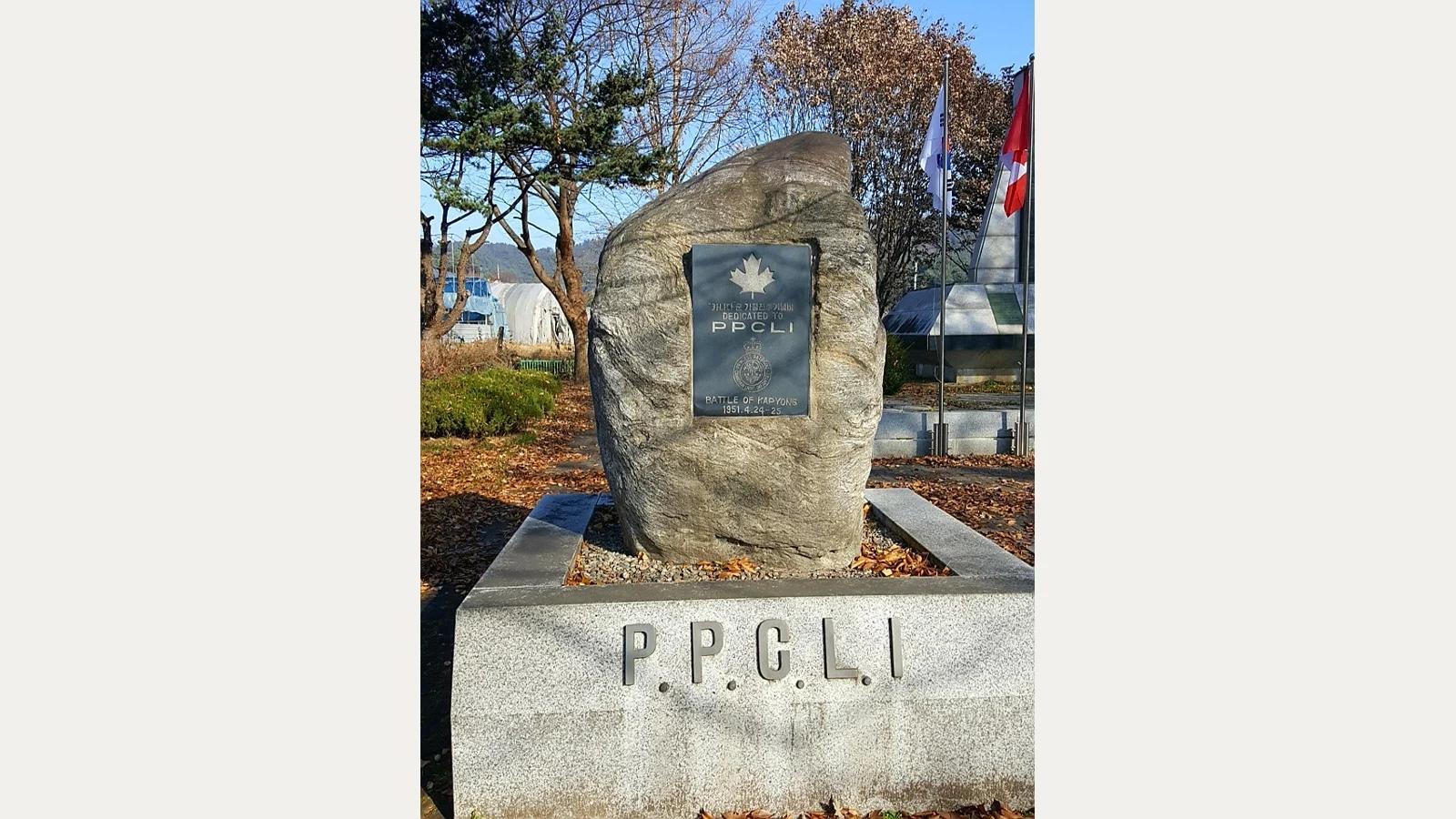
A smaller stone marked PPCLI narrows the focus to Princess Patricia’s Canadian Light Infantry. Veterans Affairs Canada distinguishes this regimental cairn from the main monument and a record of participating units in three languages. In its photograph, a maple-leaf emblem and dark plaque meet the rough edge of the stone. The shift from national identity to one regiment is worth noticing. If the lettering is difficult, note the abbreviation you can recognise and compare it with the official explanation later. You can follow that change in scale without touching the plaque or placing anything on the stone.
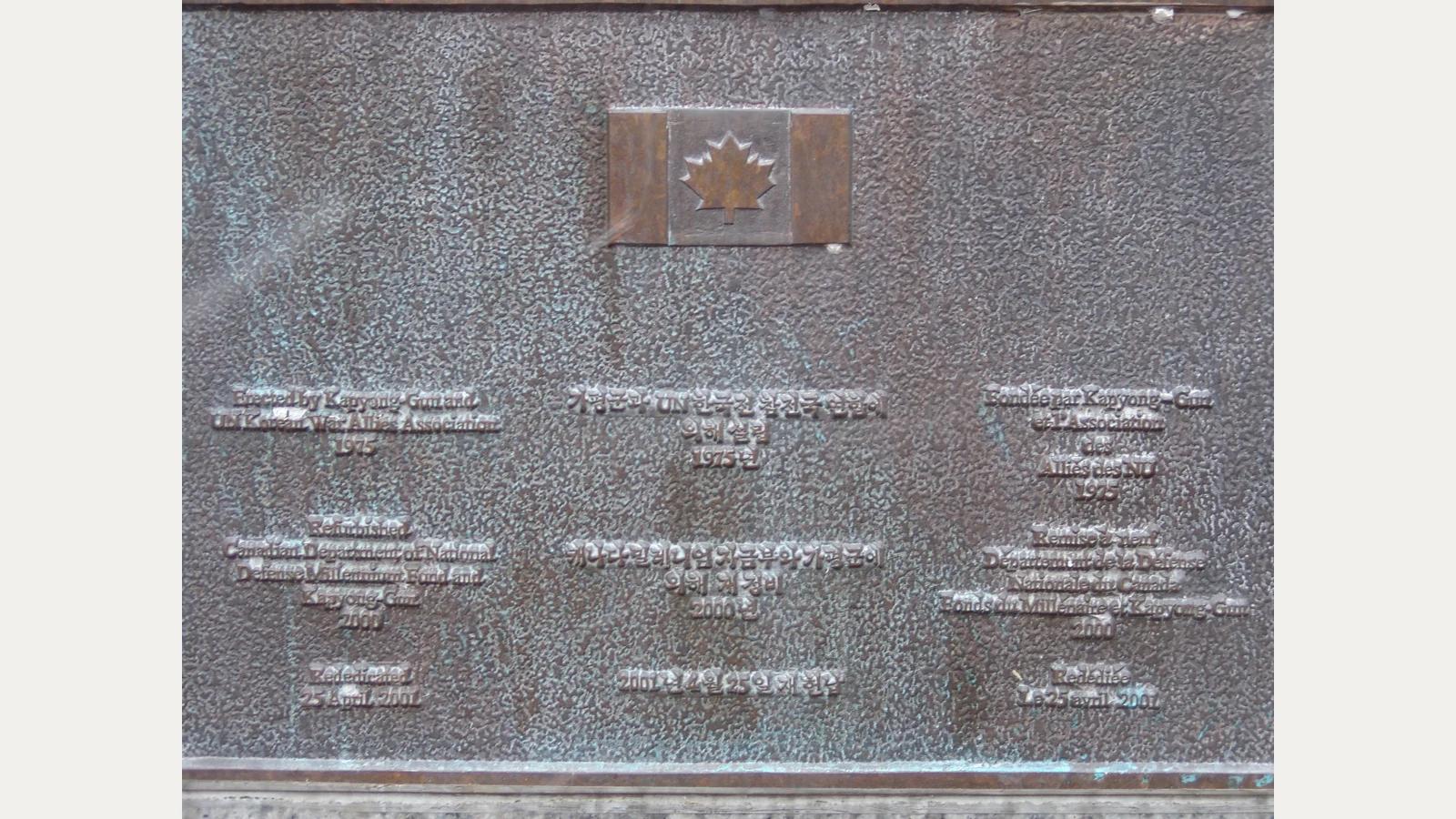
The Korean, English and French unit records invite different readers into the same account. Treat an unfamiliar language as part of the explanation, rather than background decoration. The detail photograph shows blocks of lettering beneath a maple leaf; small text should be checked against the official account instead of guessed from the image. Find a date or proper name you can read and compare how another language presents the same subject. With companions who know different languages, exchange one thing each person understood. The exercise is about the intended audience of a memorial, not a test of translation.
Veterans Affairs Canada also describes scholarships for local students and their help caring for the garden. That connection extends remembrance into community life. It is not a visitor programme or an invitation to seek out students or enter school activities. Stay within the publicly available memorial setting and let the published account add context to what you see. Afterwards, ask which name or phrase you would explain to someone who was not there. Choosing one gives the visit a lasting subject beyond the photographs, while leaving other people’s experiences their own.
Leave room for a considerate visit
On a two-stop day, road travel may take more effort than the viewing itself. Consult Gapyeong County’s bus information for the relevant stops and return services before departure. This article does not establish a continuous walking trail or a particular bus connection between the memorials. Drivers should distinguish the map pin from a permitted parking place and avoid relying on a roadside stop. If rain, wind or fatigue changes the plan, return to town and leave the second visit for another day. In November, put outdoor reading earlier in the itinerary so that daylight helps with lettering and footing.
For photographs of your own, consider one overall view and one inscription that interests you. Keep other visitors’ faces and private acts of remembrance out of the centre of the image. Do not climb a base or move a wreath to improve a composition; consult the official text if a panel is hard to read. Moving between the whole monument and a particular unit’s name gives the visit more substance than a summary of victory and defeat. Before adding another walk or meal, confirm the address and transport for your return.
After moving from four national emblems to a small regimental plaque, bring that attention to the words beside objects at Chiong Art Center. A memorial and an artwork have different purposes, yet both can reward looking beyond an immediately striking shape. When considering ceramics within the hanok and garden setting, take time for a title or information about the maker where it is provided, before deciding what the object resembles. Consult Chiong’s introduction and visitor guidance to plan that separate visit. Giving a small name its share of attention connects these settings without making them tell the same story.