Journal
Two Tempos of a Railway Day: Gapyeong to Gyeonggang
Between a station for catching trains and a station for pausing, find two different rhythms in Gapyeong’s railway landscape.
At Gapyeong Station, your attention goes to the departure board. At Gyeonggang, a small station beside a recreational railway, it can settle on the edge of a platform or a row of jars outside a low building. A day linking these places offers two ways of experiencing a railway: transport that gets you somewhere, and a journey whose changing view is the point. Take the Gapyeong railbike course as the main activity, returning to its starting place before lunch. This suits companions interested in trains and the spaces around them, without requiring a mountain walk or a collection of unrelated sightseeing stops.
Save two separate destinations: the working railway station, 가평역, and the Gapyeong railbike boarding point, 가평 레일바이크. The operator gives the latter address as 14 Jangteo-gil, Gapyeong-eup, Gapyeong-gun. Stepping off an ordinary train does not put you beside the recreational bikes. Allow a separate transfer and follow the meeting instructions for your selected departure. Chiong Art Center is at 300 Sumogwon-ro in Sang-myeon, another part of the county. If starting there, plan the actual journey into Gapyeong-eup before choosing a riding time. A shared county name says little about the practical connection.
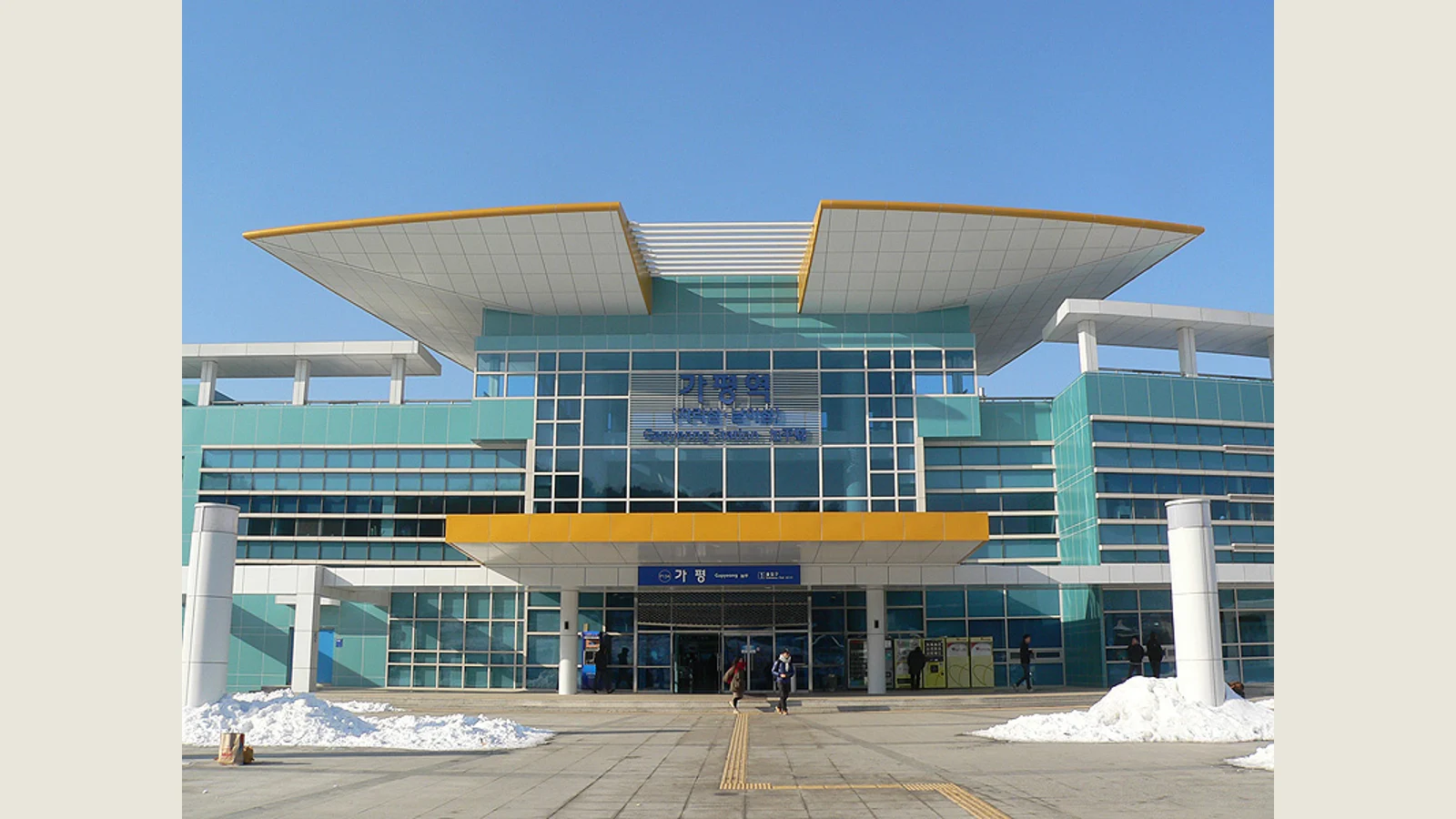
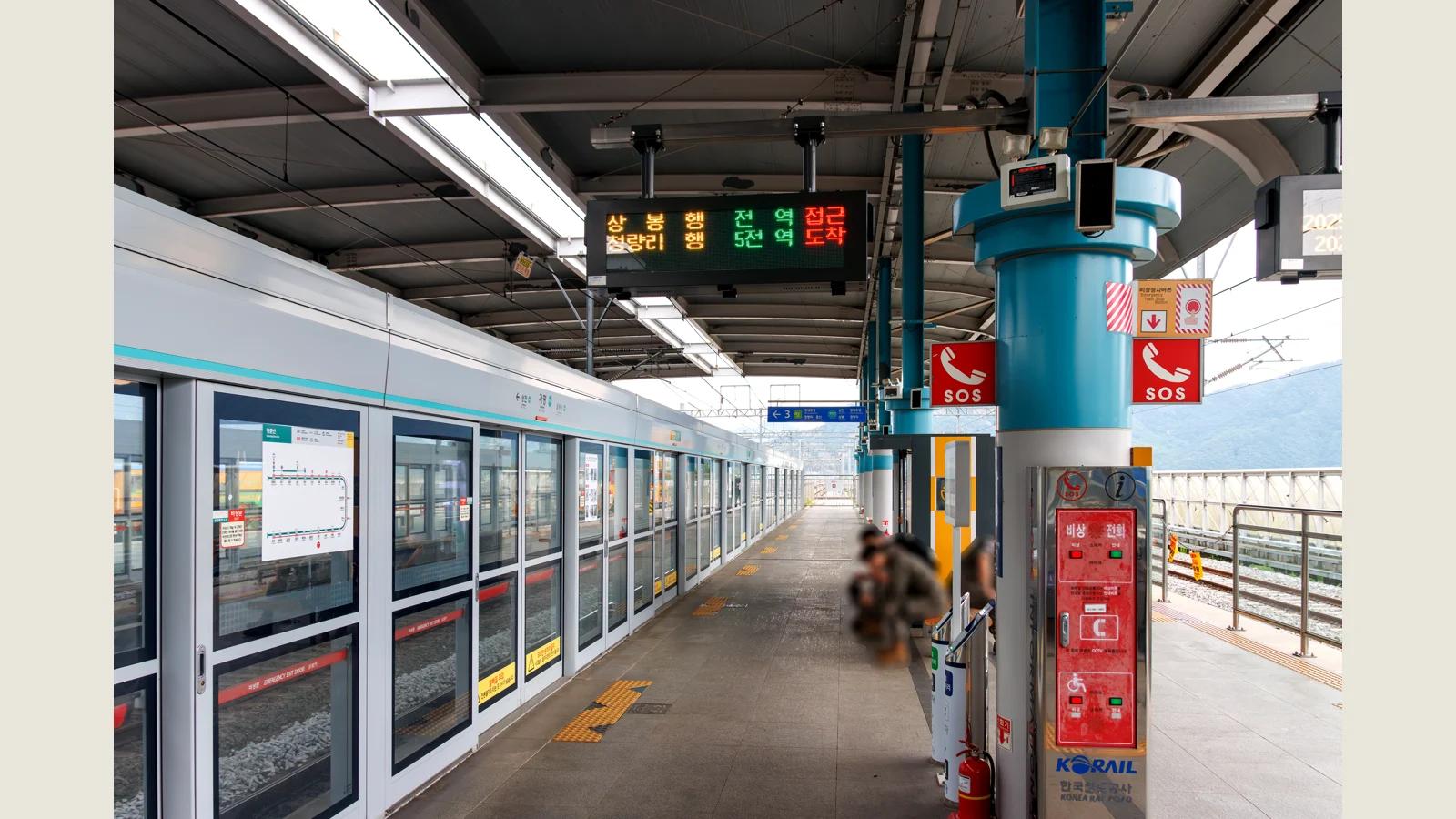
For a rail arrival, establish how you will travel home before filling the afternoon. Check the ticket requirements and departure information for your chosen service with the railway operator; do not assume that an ITX-Cheongchun ticket and a local Gyeongchun Line journey are interchangeable. Keep time for the final transfer back to the station. In the platform photograph, glass doors, information boards and turquoise columns repeat along the concourse. They organise people moving towards the next train. That provides a useful starting point for comparing a larger working station with the compact layout at Gyeonggang. Observe from an appropriate waiting place and keep circulation clear.
The word to check on your railbike selection is Gapyeong. Gangchon Rail Park presents Gapyeong, Gyeonggang and Gimyujeong as separate courses. Its Gapyeong course runs from the Gapyeong boarding point to a turnaround at Gyeonggang Station, an eight-kilometre round trip. The Gyeonggang course starts at Gyeonggang and turns at the Bukhangang railway bridge instead. Seeing the same station name in two descriptions does not make the departures interchangeable. Across the river, Gyeonggang Station is at 57 Seobaek-gil, Namsan-myeon, Chuncheon, outside Gapyeong County. For the day proposed here, choose the course that leaves from and returns to Gapyeong. Establishing that direction is more useful than remembering the park company’s name alone.
From a train ticket to a shared bike
Count seats as well as people. The operator distinguishes two-seat and four-seat bikes and directs a group of three to a four-seat vehicle. This differs from buying individual places on a train. Recheck the course, date, departure and group size on the actual selection screen, which is also where availability becomes relevant. If travelling with a small child, ask about the applicable accompanying-child conditions and any procedure at the ticket office. Decide which companions will share a vehicle if the group needs more than one. Those small arrangements leave more attention for the landscape once the ride begins.
The Gapyeong introduction describes a motor that engages when you pedal. Electric assistance is a reason to consider the activity, rather than proof that it will be equally comfortable for everyone. Anyone concerned about getting into the seat or remaining seated should discuss the actual arrangements with the operator first. Follow staff instructions on spacing and stops, secure loose belongings and keep your body within the vehicle. A camera should not become a reason to stop independently or lean out. Reducing the amount of walking and confirming that the ride suits a particular companion are separate decisions.
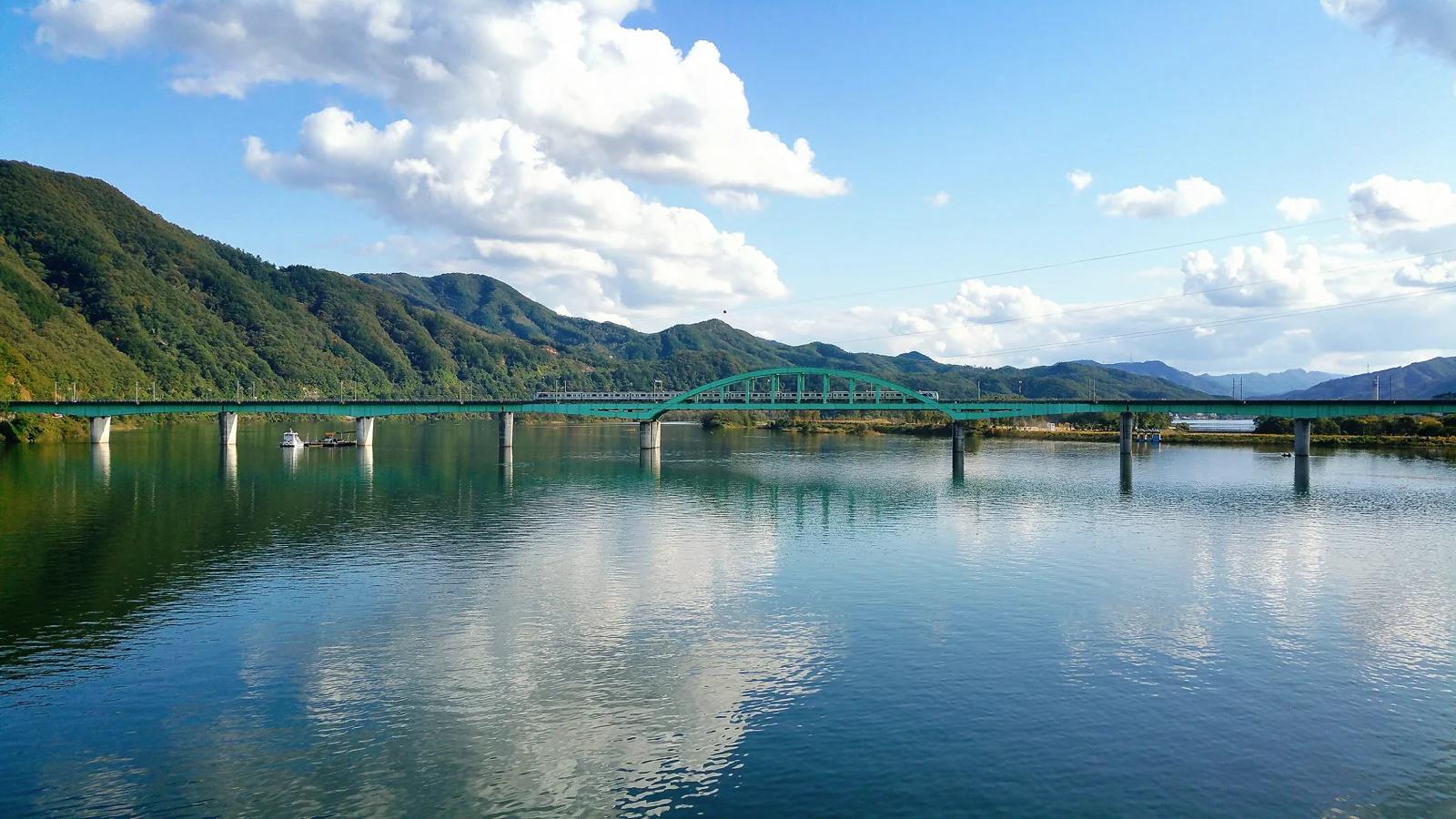
At the river, notice the bridge’s repeating supports before trying to photograph the whole panorama. The photograph below looks from Gyeonggang road bridge towards the railway bridge and the Bukhangang. Green triangular steelwork and its reflection sit between irregular mountain outlines. You need not seek out that photographer’s position to use the comparison. From your permitted riding position, consider how a nearby support divides the distant view. Near structures seem to pass quickly while the mountains appear to move slowly. That difference in scale gives the river crossing something to discuss even when the camera stays in a bag.
The operator names both a zelkova tunnel and a cherry-tree tunnel along the Gapyeong course. A tree name on the route is not a promise of blossom in November. Look instead at the height of the branches and the width of light between the trunks. If leaves remain, enjoy their colour; if they are sparse, the relationship between branches and rails becomes easier to see. Leave room in the plan for the actual weather and operating instructions rather than depending on a peak-foliage date. Keep an outer layer available: sitting outside can feel different from walking briskly to the boarding point.
Give the small station your attention
At Gyeonggang, shift your attention from the passing view to the ground beside the station. The platform photograph separates gravel, sleepers, rails and a low walking edge into lines with different intervals. Which lines guide a vehicle, and which establish where people wait? The station photographs help explain the arrangement of a former passenger-railway space; follow the operator’s current visitor boundaries and turnaround instructions for the actual stop. Empty-looking track is not an invitation to enter or cross it. Even a short pause offers enough to notice in the relationship between the platform and the rails.
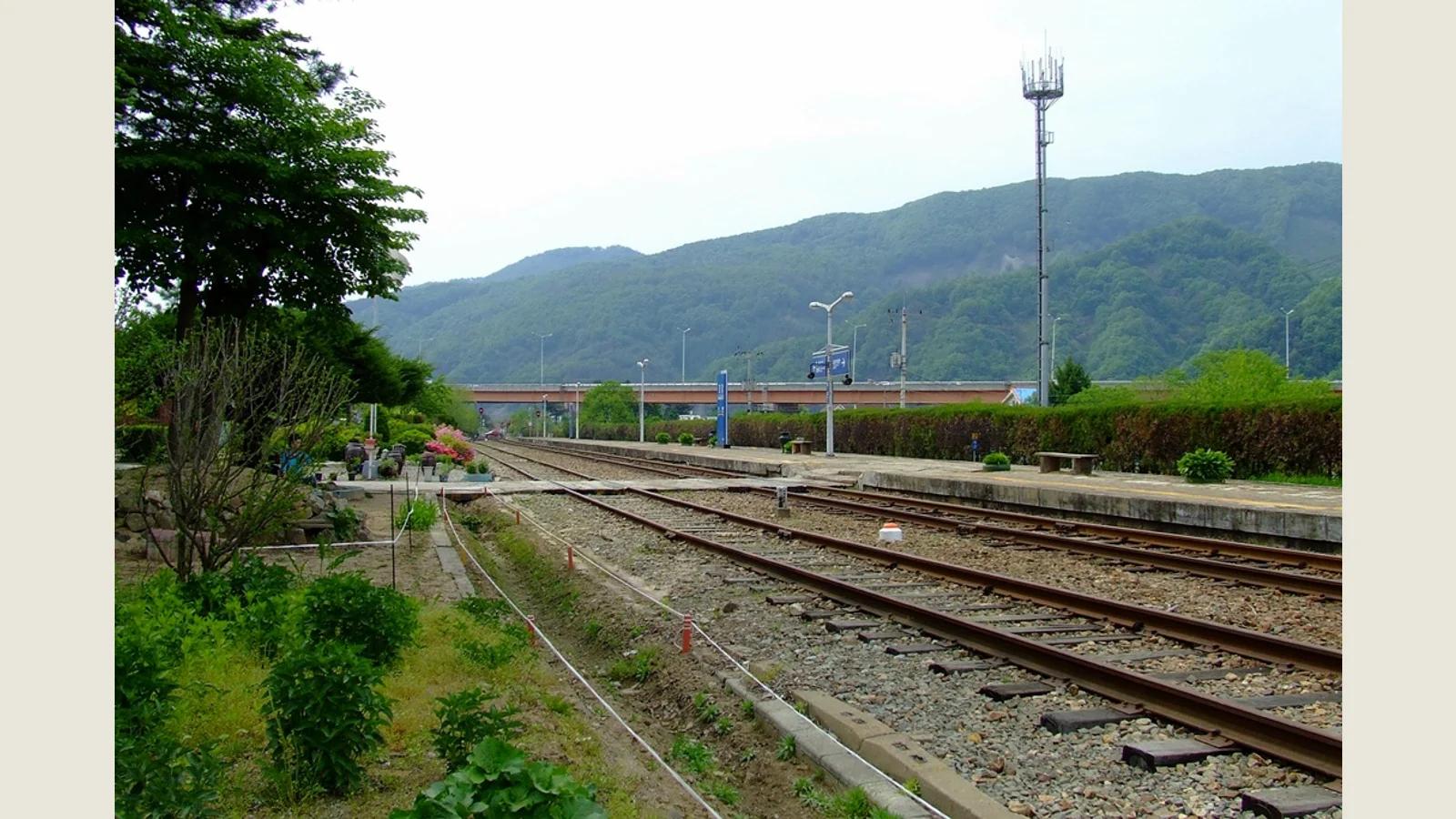
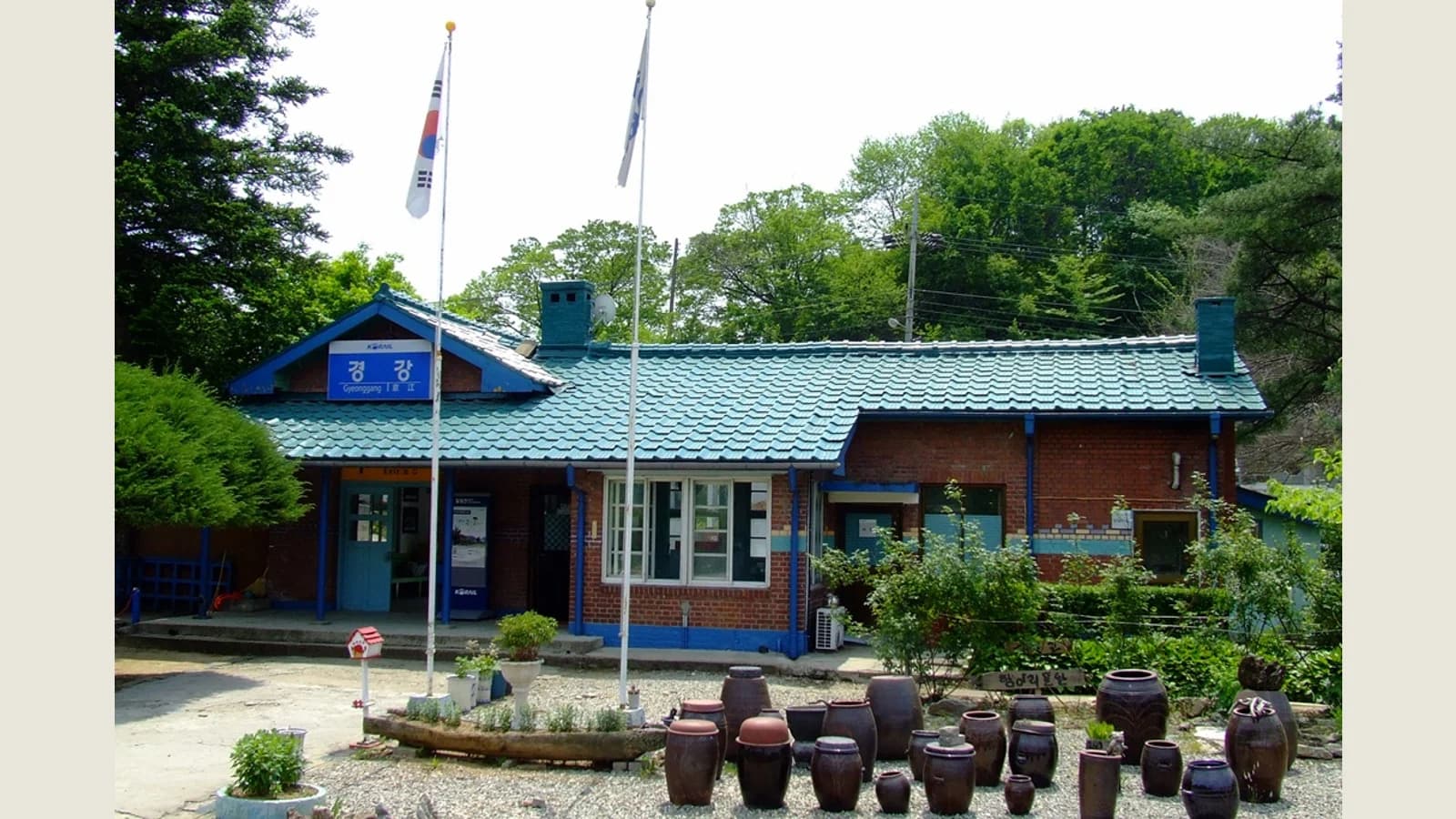
Look next at the low building beneath its blue-green roof. One photograph brings pots and jars into the foreground; an oblique view makes the depth of the doorway and the row of windows clearer. These two angles explain how waiting and entering fit into a compact structure. Recall the broad glass façade of Gapyeong Station and the difference becomes specific rather than simply a preference for something old. Consider how quickly a visitor can move from reading the station’s name to finding somewhere to stand. The small scale gives an ordinary railway action a more intimate setting.
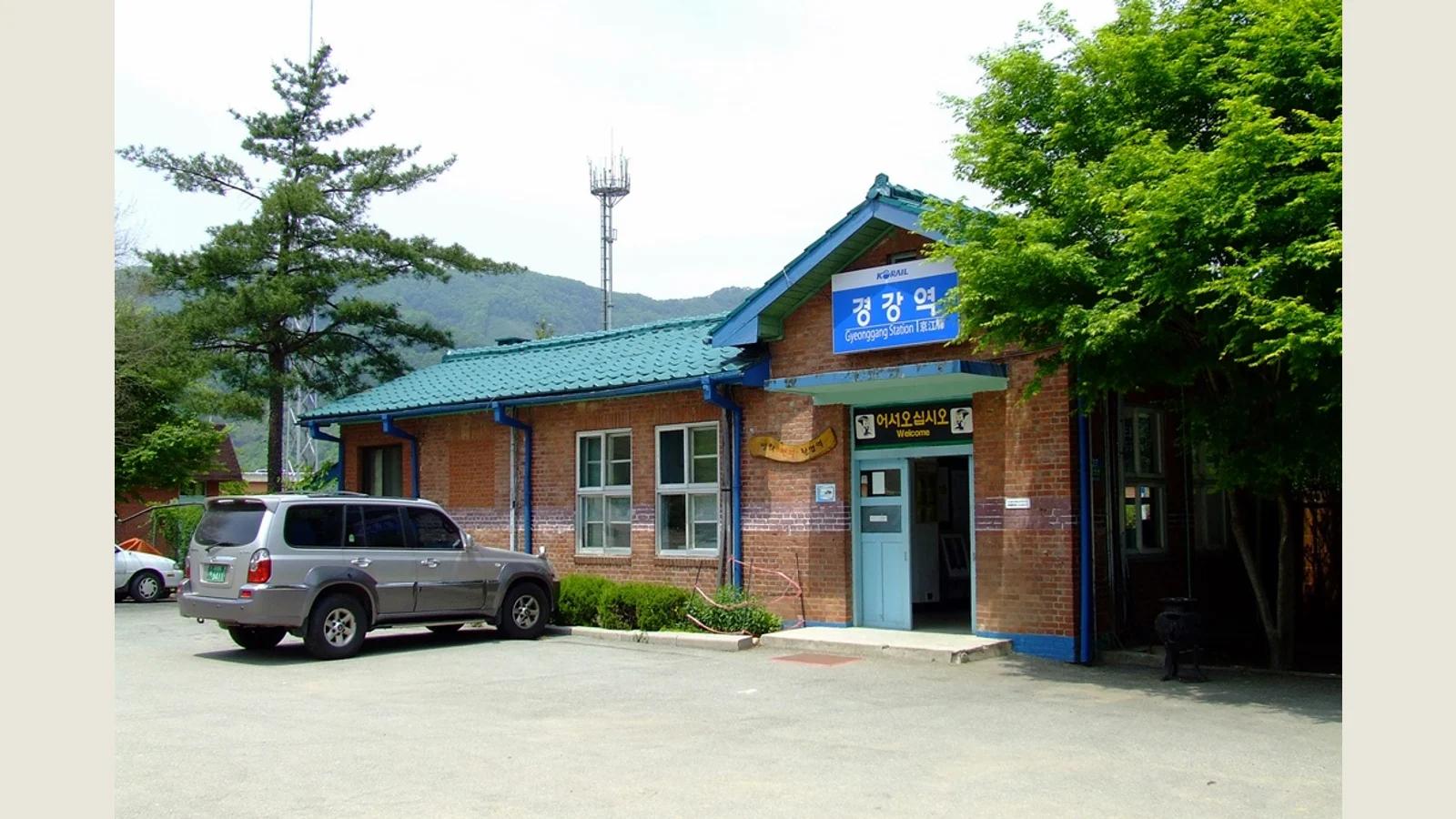
A longer view along the platform puts trees, a low building and the rails beside one another. The track sends the eye into the distance while the station gives people a place to remain. If your memories of rail travel are mostly about speed and arrival, use this contrast to think about waiting. Ask companions what each station encourages them to do: check a ticket, climb towards a platform, or pause beside an outdoor view. Describing actions is more revealing than deciding which station is more charming. Finish looking when staff give the return instructions, and let the organised ride take you back.
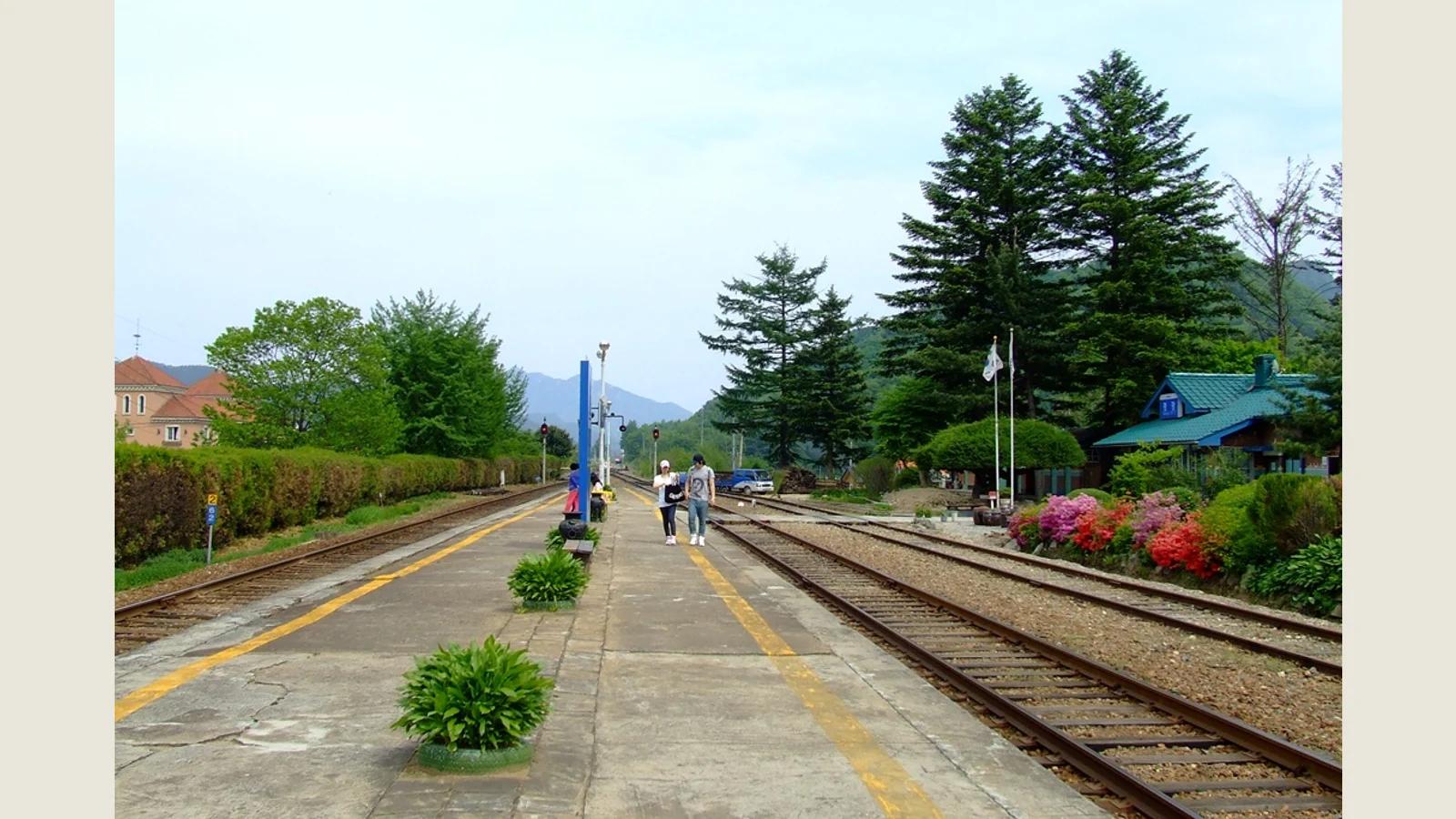
Place the main meal after returning to Gapyeong rather than relying on a brief turnaround pause. The operator locates its Gapyeong boarding point beside the five-day market and Jatgoeul Market. A permanent market area and a periodic market day are different things, so check the day and the individual businesses you intend to use. Companions who need a hot meal may want something more substantial than a snack counter. No particular restaurant, price or tasting experience is claimed here. Completing the ride before sitting down gives lunch a clear place in the day and avoids making a short station stop carry the whole meal plan.
After lunch, remember that the place where you left the railbike is still separate from the station for your return train. Use the transfer saved earlier and protect that time if the meal runs late. Drivers should check the actual parking and exit arrangements for their visit. If operation changes or the seating does not suit someone, do not force the outing to revolve around a ride. A meal in Gapyeong-eup and a postponed railway visit remain reasonable choices. A shared day works best when everyone can return comfortably, with something to talk about rather than another connection to rescue.
One small object to remember from the railway photographs is a jar outside the station. Against the long direction of the tracks, its round body holds attention in a small space by the entrance. Carry that interest in volume and empty space to the ceramics and art setting at Chiong Art Center. An object that interrupted your attention to movement can prompt a closer look at how a vessel sits beside a hanok courtyard or another artwork. Consult Chiong’s introduction and visitor guidance when arranging a visit. The change from a long railway line to the curve of a single vessel gives these two settings a thread worth following.