Journal
Homyeong Lake: Water, Power and a Walk above the Hills
Give one Gapyeong reservoir your time, following the human design behind a seemingly natural view.
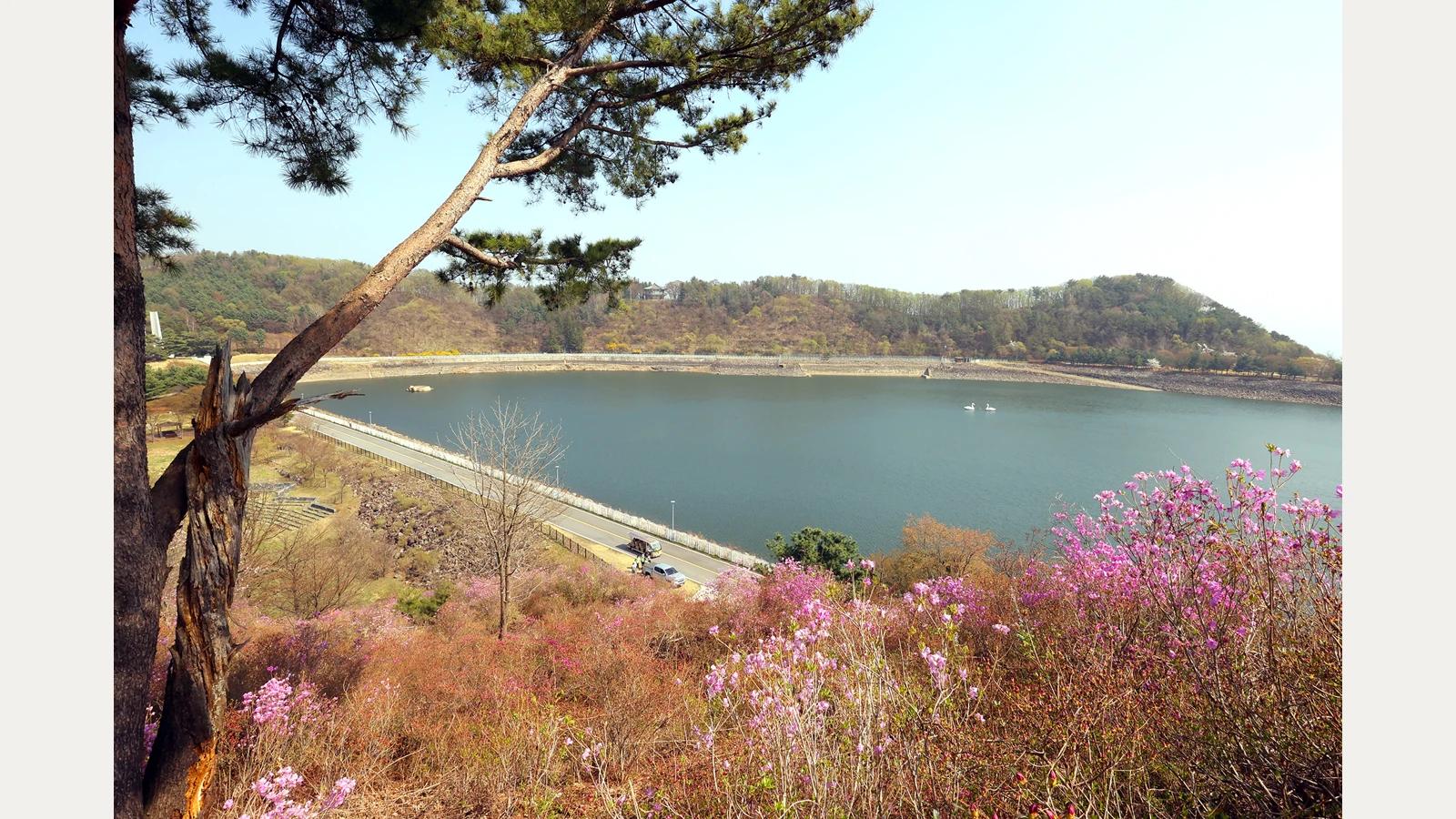
A wide sheet of water high in the hills can look like a lake that has always belonged there. At Homyeong Lake in Gapyeong, that first impression leaves out the reason for its existence. This is the upper reservoir of Cheongpyeong Pumped Storage Power Plant. A visit can therefore be both a landscape outing and a conversation about how electricity is stored for later use. Instead of adding a summit hike, give the reservoir itself your attention: its edge, a floating energy installation, animal sculptures and a pavilion. This approach gives companions interested in scenery and those curious about engineering something to discuss together.
Pumped storage moves water uphill, then releases it to generate electricity when needed. The Korea Tourism Organization identifies Homyeong as the upper reservoir of Korea’s first pumped-storage plant. Pumping also requires electricity; the lake is not a source of endless energy created without an input. Think of it as part of a system that makes use of water held at a different height. A quiet surface does not tell a visitor whether equipment is operating, and a photograph of the water level cannot establish that day’s output. What matters for this outing is recognising that human decisions help explain the relationship between the water and its surrounding hills.
From the reservoir edge to a floating device
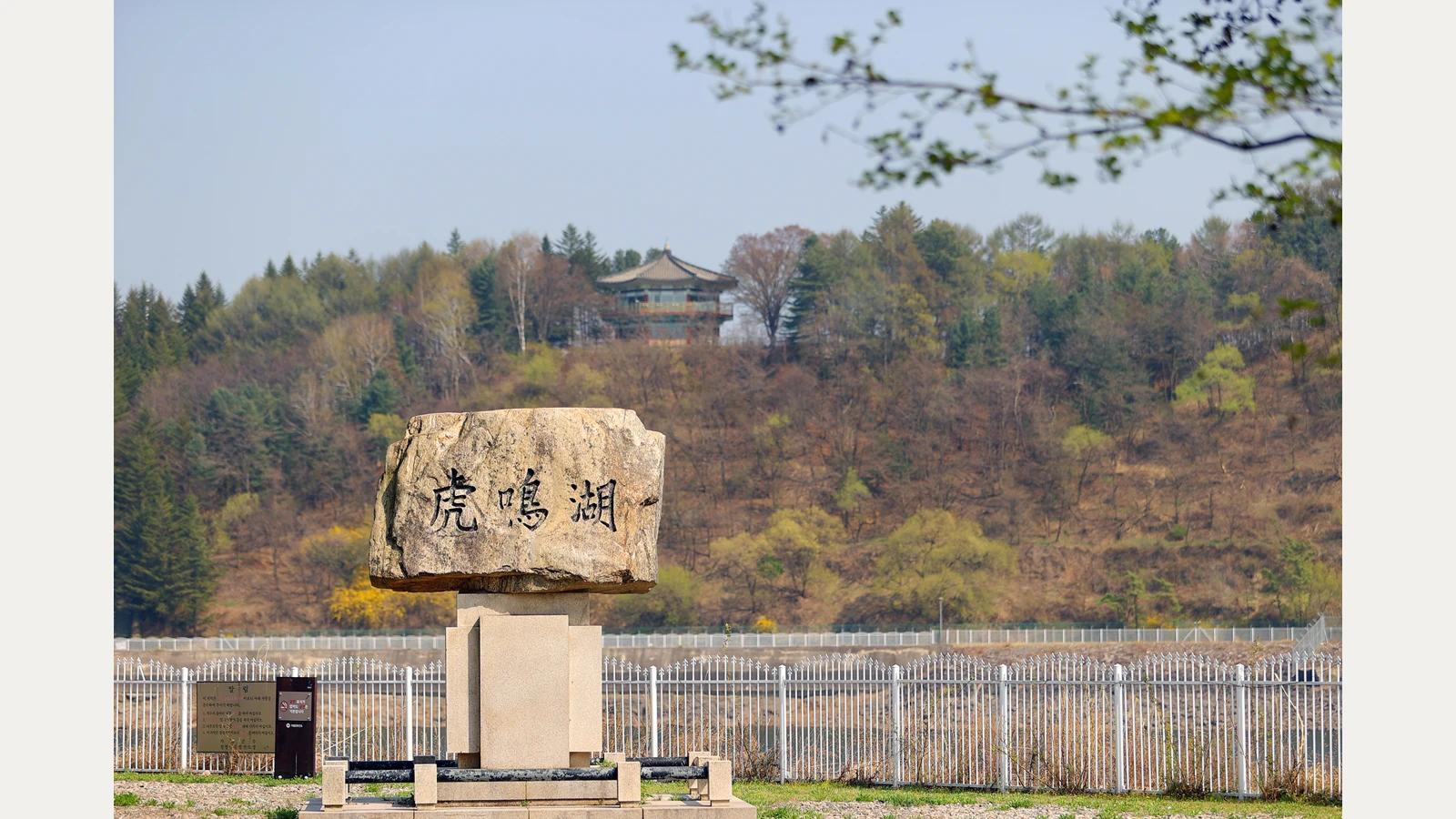
In the photograph of the name stone, characters carved into a rough rock sit in front of a railing, with a pavilion above the woodland beyond. Let your attention move from the small marker to the much larger reservoir behind it. Homyeong Lake and Homyeongsan appear together in travel searches, but visiting the lake does not automatically mean climbing the mountain’s summit. Tell your companions that the reservoir is today’s destination before setting out. That simple distinction prevents an optional hike from becoming an unexpected obligation. Use the stone and any on-site information boards to establish where you are, as well as to frame a photograph.
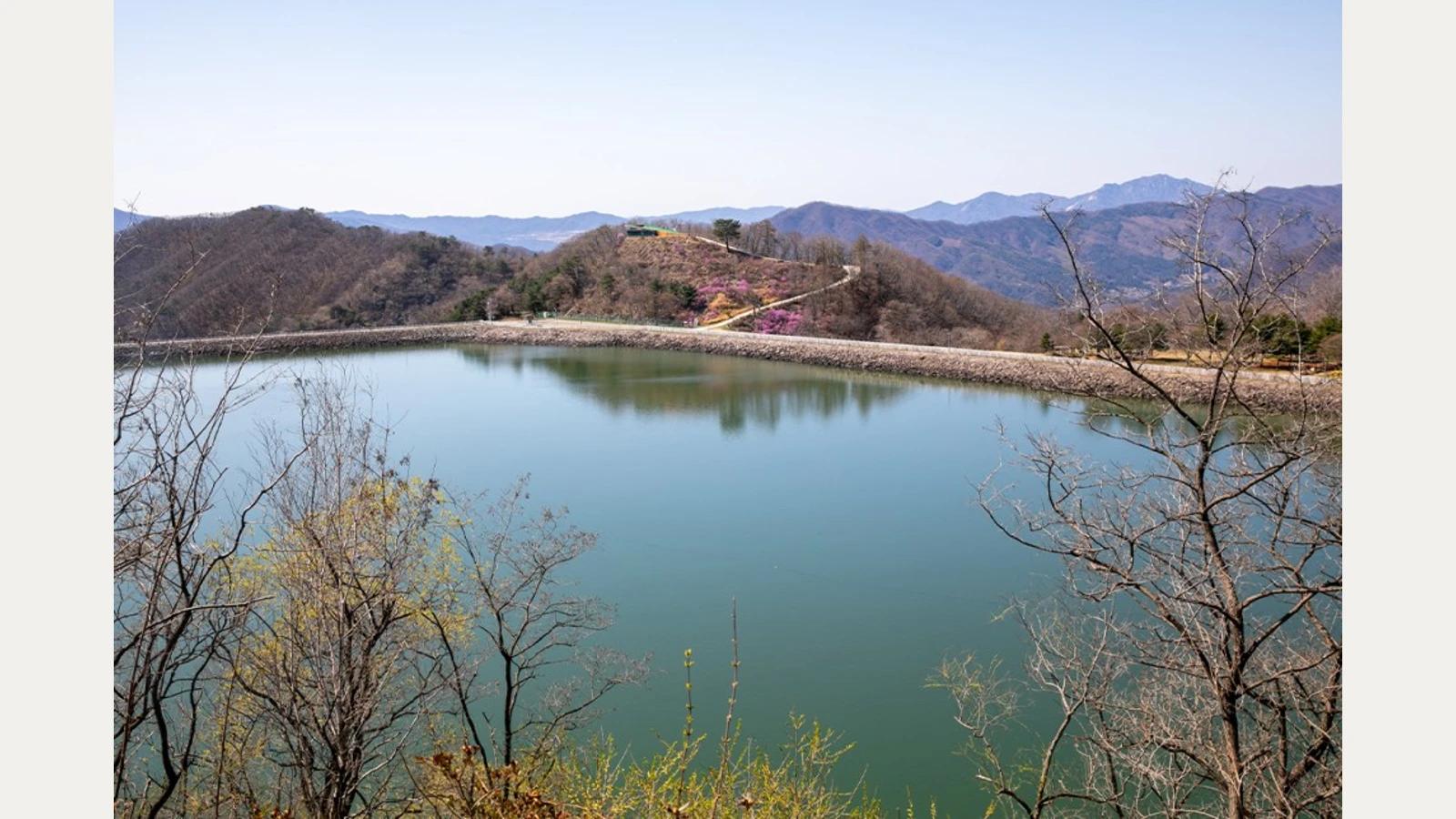
The broader water view makes the reservoir’s outline easier to follow. Distant ridges overlap gently, while the boundary immediately beside the water forms a much more definite line. Look for both the landscape and the structure that contains it. If you take photographs, compare a composition filled mostly with water with one that includes its edge: which explains this particular place more clearly? There is no need to step beyond a railing or descend towards the water. Stay within the designated viewing space. Rather than expecting a predetermined seasonal colour, notice which parts of the surface receive light during your own visit.
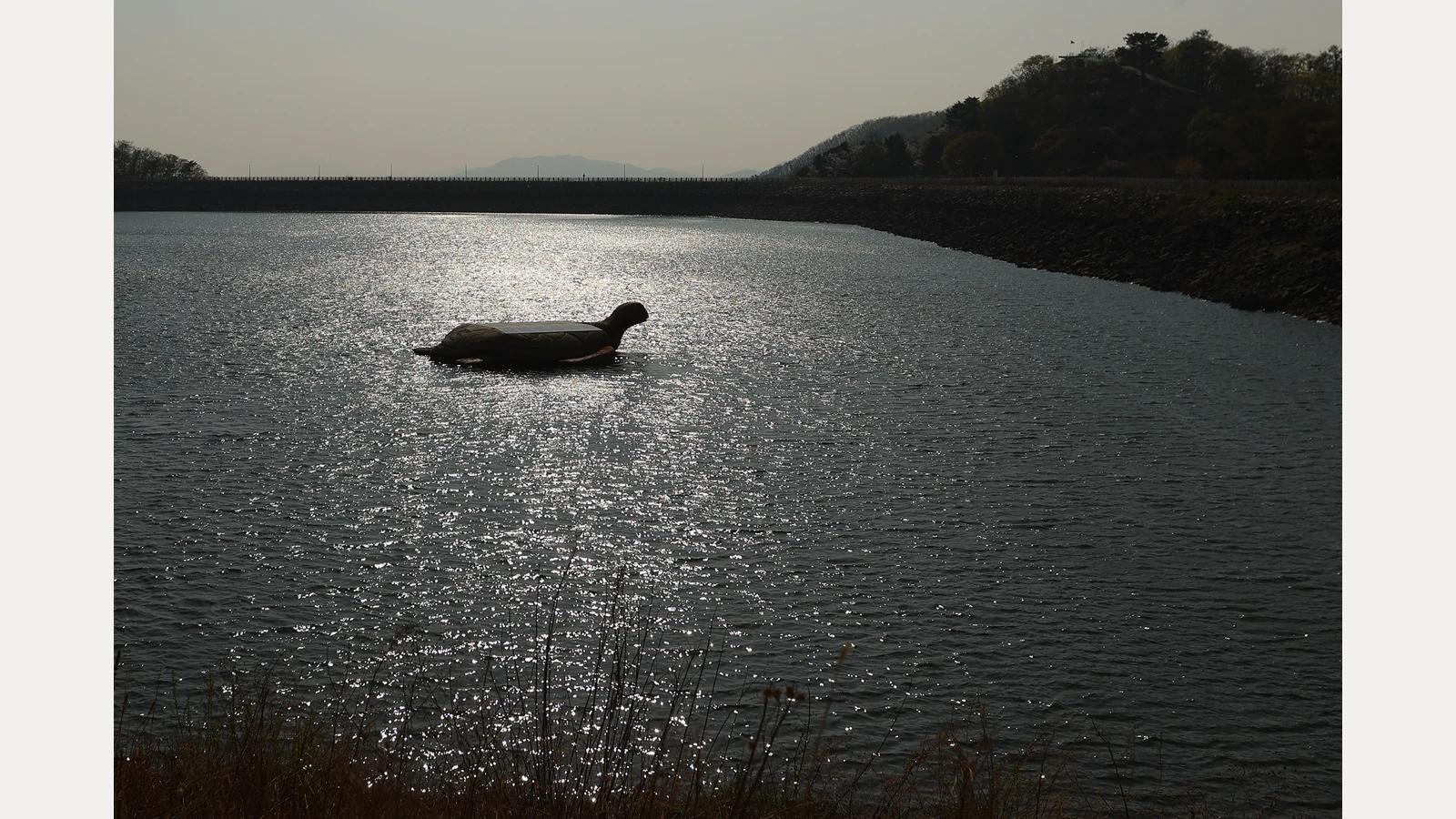
The turtle-shaped object on the lake has a practical purpose. The Korea Tourism Organization describes it as a floating solar-power installation. Pumped storage uses water held at height; solar generation uses sunlight. Here, those different ideas occupy the same view. In the photograph, distinguish the low silhouette of the turtle from the small reflections around it, then ask why an energy device might be given this form. Its appearance alone cannot establish whether it is working or how much electricity it produces. For a family conversation, naming the different resources used by the two systems is more useful than attaching an unverified output figure to the sculpture.
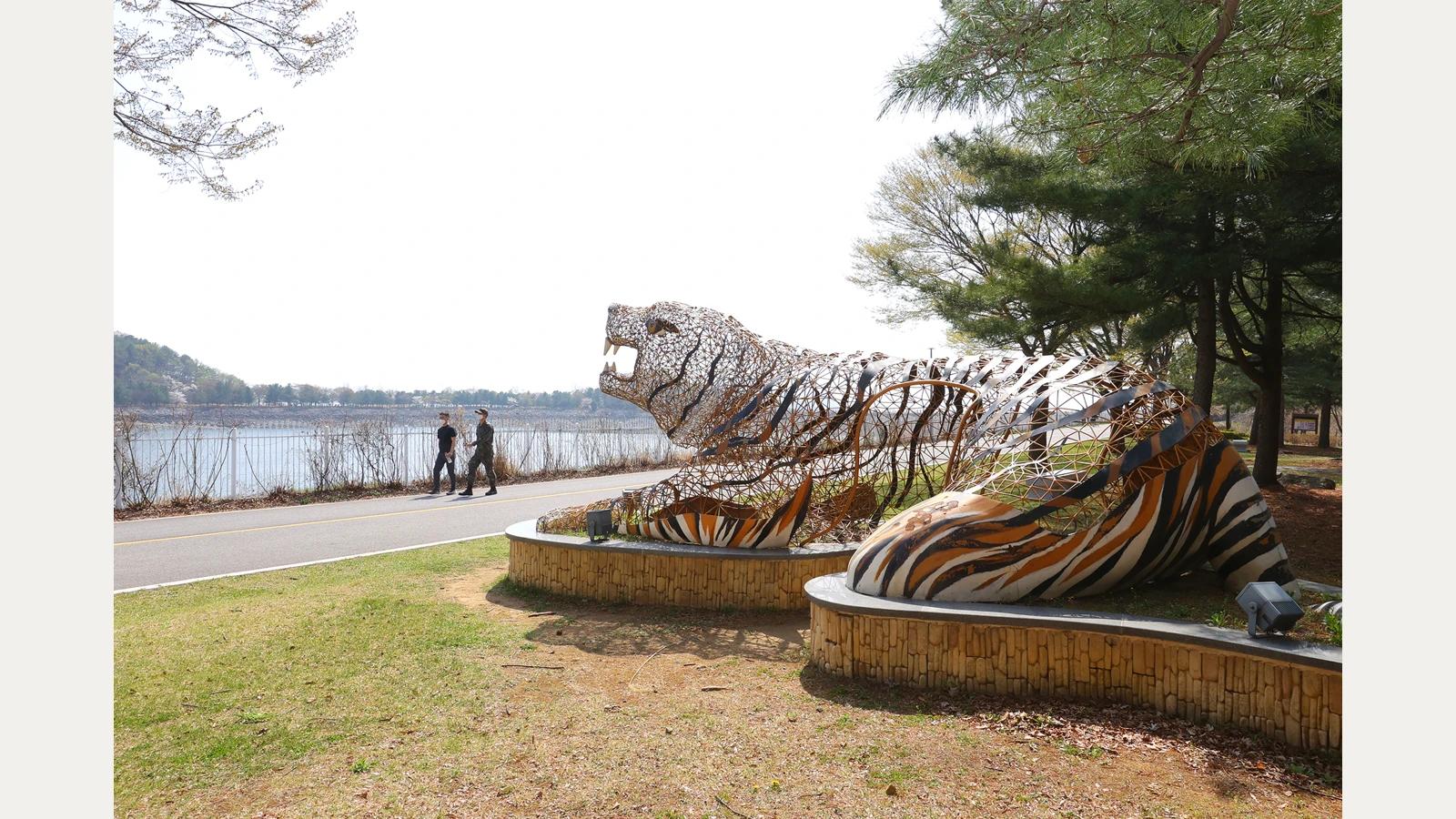
The tigers beside the path invite a different question. Their striped bodies and open mouths stand between grass, pine trees and the water. Gyeonggi Province’s account connects the mountain’s name with a story about the cries of tigers. Treat that as a place-name tradition, rather than evidence of animals a visitor might encounter today. After asking what the turtle does, ask what the tigers explain about the place. Objects that share a park need not have the same purpose. One can carry an energy function while another gives a local story a visible form. Keeping that distinction makes the walk more interesting than simply collecting photographs of animals.
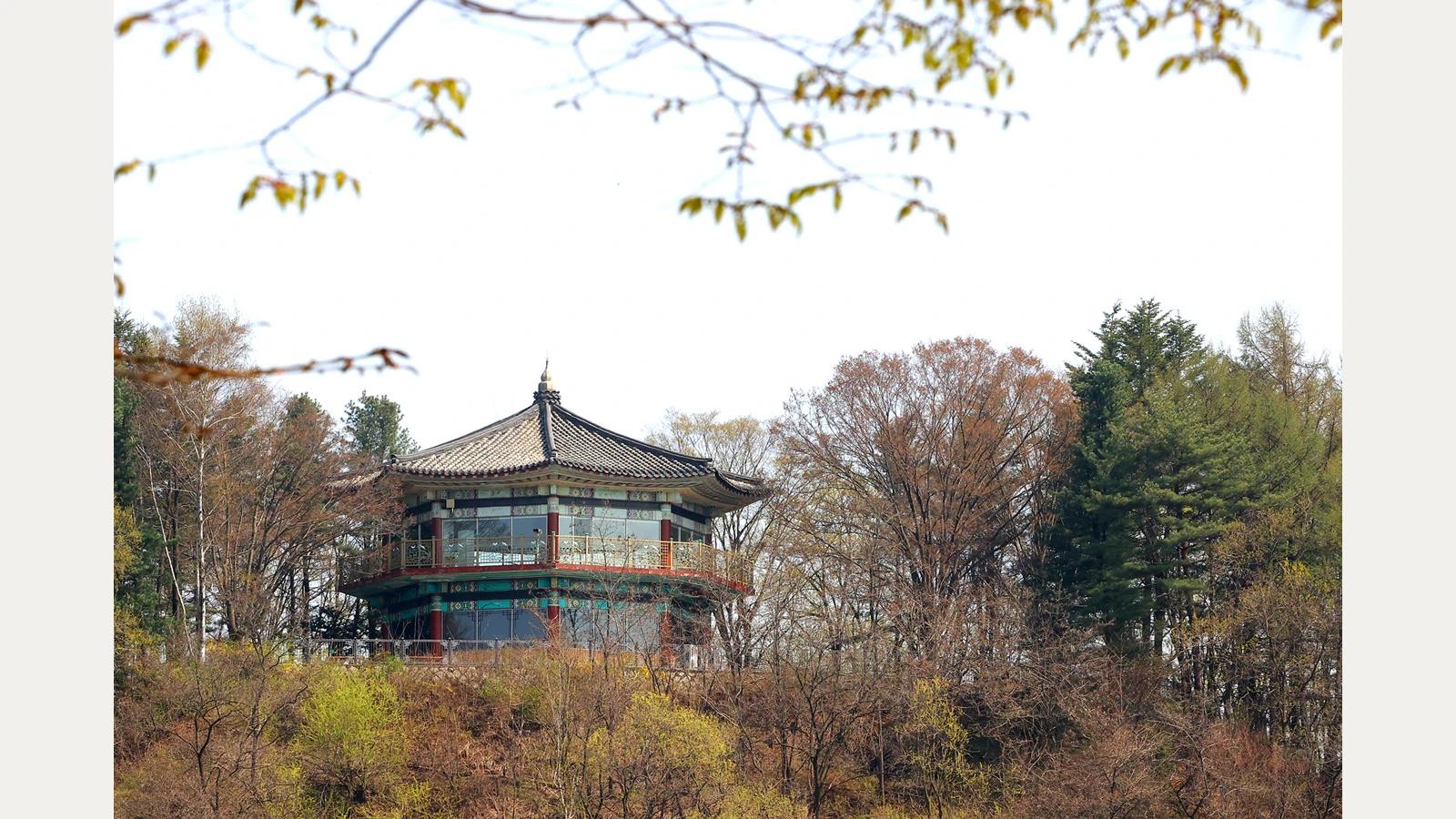
Raise your eyes from the water to the pavilion’s roof and storeys. In the photograph, tiled eaves emerge above the trees, while green and red railings draw horizontal lines across the building. An elevated view can make the reservoir’s outline legible in a different way: what seems like a long boundary at water level may become one shape from above. However, do not build your day around an assumption that the building or its exhibition space will be open. Follow the notices at the site and use the viewing areas available. Companions who prefer to avoid stairs can still spend time looking at the architecture from below.
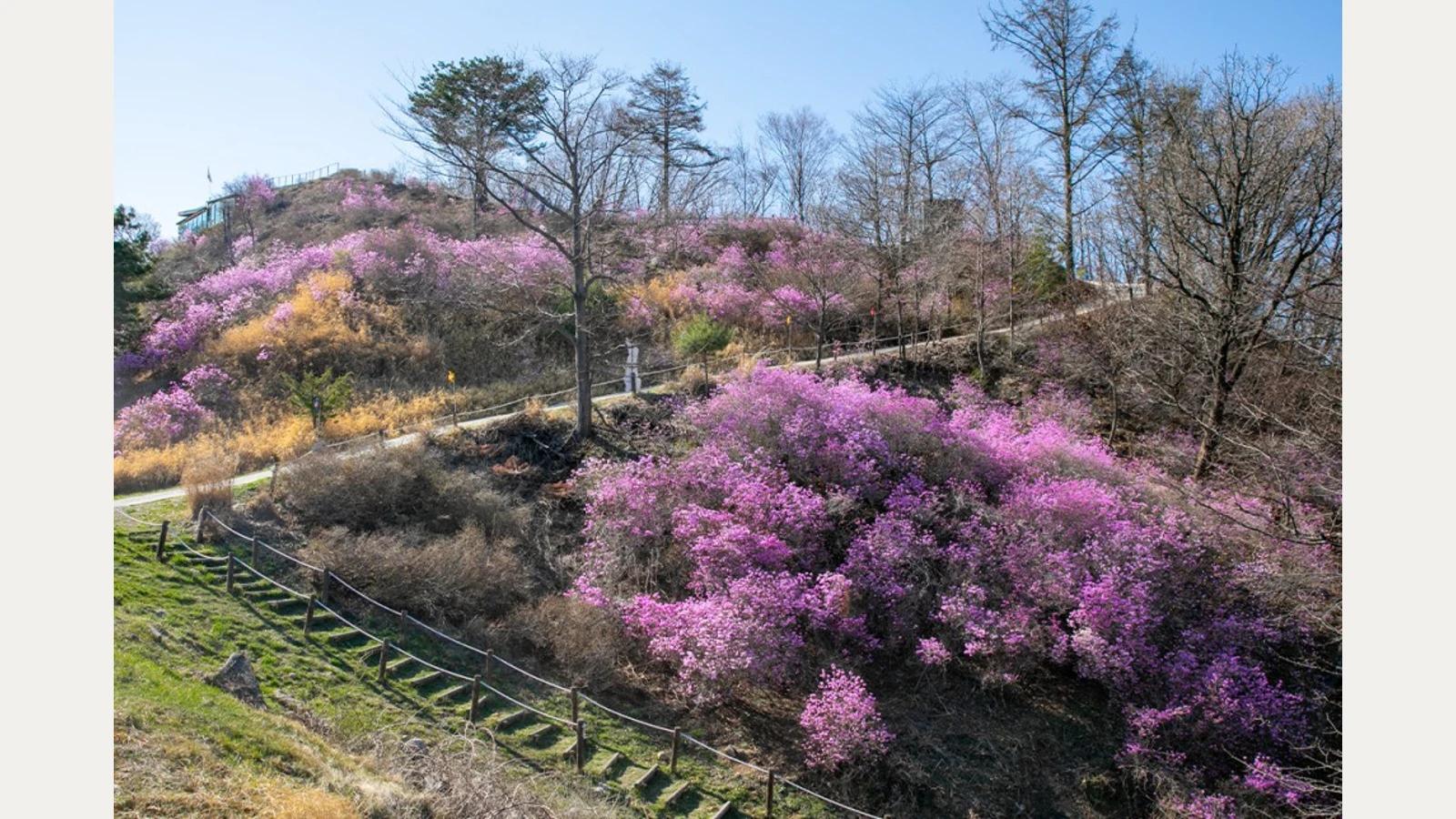
The photograph of flowers and wooden steps introduces a smaller scale of land shaping. Pink planting spreads across the slope, with a route divided by steps and tree trunks rising above it. Follow the relationship between the route and the planting. Where the steps change direction, look at the height of the slope and the spaces between trees. If you extend your walk, stay on the signed pedestrian route rather than following a worn-looking shortcut through planted ground. After the broad horizontal surface of the reservoir, these modest changes in level can become surprisingly noticeable.
Plan the ascent and the return together
Separate the effort of reaching the lake from walking around it. A photograph of a broad waterside path does not mean that the approach from the railway station is flat. If your party wants a reservoir visit, confirm the lake-bound bus arrangement first. Anyone intending a mountain hike needs a separate decision about equipment, route and return direction. Do not merge those plans casually after arrival. Nor does visiting the reservoir require completing an entire circuit. Leave open the option of seeing a signed section and returning to the same boarding point. That gives a mixed-ability group a clear stopping point without reducing the visit to a hurried photograph.
Save both Homyeong Lake Park in Sangcheon-ri, Cheongpyeong-myeon, and Sangcheon Station on your map. Chiong Art Center is at 300 Sumogwon-ro in Sang-myeon; these are separate starting and destination areas, rather than neighbouring stops on one village walk. Keep the Korean names 호명호수 and 상천역 on your phone if English map labels vary. Search results can mix a summit, a lower parking area and the lake itself. Identify where you will actually board or leave transport as well as where you want to see the water. An arrival pin alone does not resolve the whole journey, and this guide does not supply an unverified driving or walking time.
For the bus, check the travel date rather than relying on a seasonal headline. Gapyeong County’s 2026 notice for route 30-4 contains a spring weekend increase alongside separate autumn and low-season notes. It also says that the autumn period may change with foliage timing. November therefore does not automatically inherit the spring service pattern. Before travelling, consult the county’s current bus information and record an uphill and downhill service as a pair. The lake tourist information office is listed at 031-580-2062. Allow time to return to the boarding point; extending a visit on the assumption that you can simply walk down after missing the bus is a poor substitute for a return plan.
Drivers should also confirm how they will reach the upper area. Earlier official Gapyeong guidance describes restrictions on private vehicles approaching the lake. Ask the information office about the current parking location and onward access, allowing for a separate transfer between parking and sightseeing. For a wheelchair or stroller user, the tourism organization’s accessibility information is a useful starting point, but ask about the particular journey: bus boarding, gradients, unpaved sections and the location of a suitable toilet. A step-free entrance does not establish that every part of a day trip will suit every visitor. Omitting a staircase viewpoint still leaves plenty to understand about the reservoir.
Plan a meal around the return towards Sangcheon Station instead of relying on a particular shop being open on the mountain. Decide together whether to eat before going up or after coming down, then check a restaurant’s actual opening and menu. There is no need to preselect an unverified signature dish, price or taste experience. Bring drinking water and leave room for a short rest, following local notices about where eating is allowed. If the bus connection makes the schedule tight, reduce the number of things you intend to see rather than rushing lunch. The reservoir’s edge and the turtle installation alone can give the visit a clear subject.
For a November outing, opening notices and weather matter more than a predicted foliage peak. The Korea Tourism Organization directs visitors to check the bus timetable for hours and closures, so an old article’s daily opening hours should not govern the trip. Check the applicable winter notice separately, including whether pedestrian entry is permitted during any closure. If rain, possible ice or an unsuitable return connection changes the plan, make that decision below the mountain. Do not assume an indoor refuge will be available; bring an outer layer. Knowing that the reservoir exists and knowing that it is suitable to visit on a particular day are different parts of preparation.
After looking at the boundary that holds water at Homyeong Lake, carry the question of where water goes to Chiong Art Center’s hanok and garden. Look at the projecting ends of the eaves and the arrangement of earth and stone beneath them. A power reservoir and a building for people have different purposes and scales, yet both invite attention to how built forms relate to water. You need not choose a rainy day or test a drainage system to consider that relationship. Plan a separate visit using Chiong’s introduction and visitor guidance. The journey of attention can move from a large water surface to the meeting of a roof edge and a courtyard floor.