Journal
An Afternoon of Timber and Stone at Hyeondeungsa
Start with the spaces between a prayer hall’s columns, then learn to tell two kinds of stone monument apart at this temple on Unaksan.
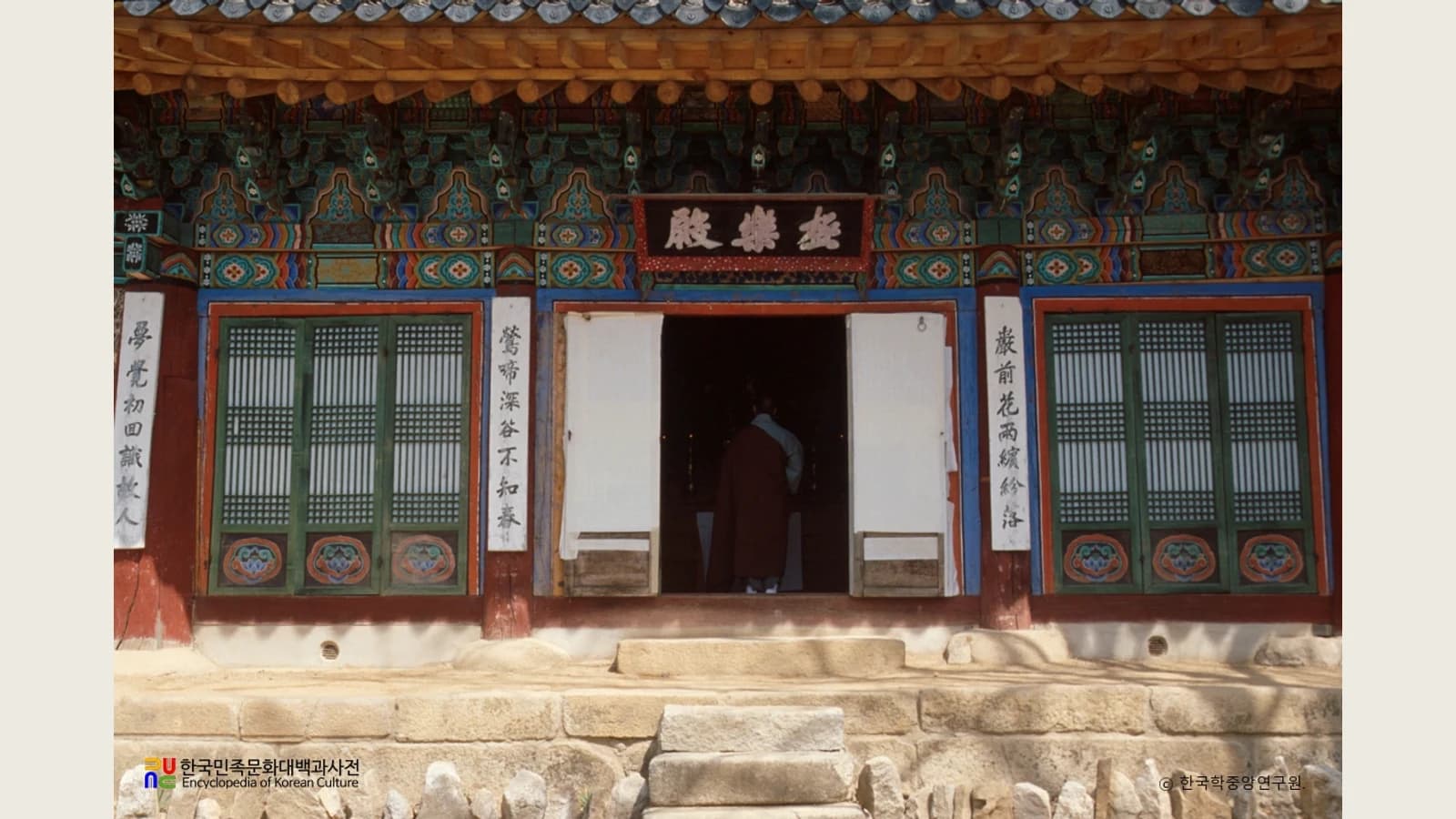
You do not need to make the summit of Unaksan the goal of a day in Gapyeong. At Hyeondeungsa, a Buddhist temple partway up the mountain, the more interesting task may be learning to tell a timber prayer hall, a stone pagoda and a monk’s memorial stupa apart. Give each a different question: how does the building divide its space, where does the pagoda’s base end, and whom does the stupa commemorate? This is a visit built around looking closely, with the mountain approach treated as part of the decision. It suits travellers who would rather understand a few objects than collect a long list of viewpoints.
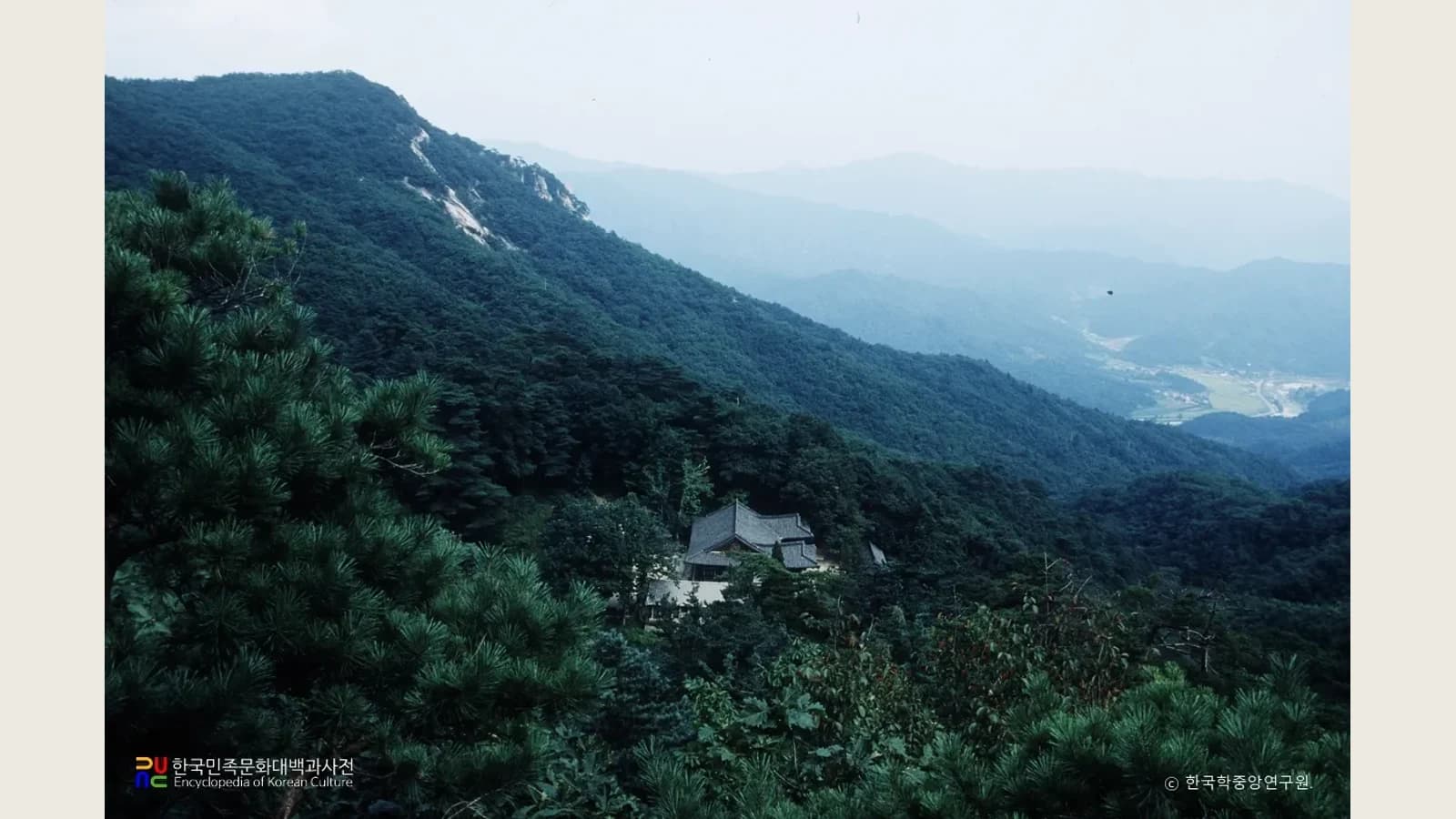
The temple’s address is 34 Hyeondeungsa-gil, Jojong-myeon, Gapyeong-gun: 경기도 가평군 조종면 현등사길 34. Save that Korean address as well as the name 현등사. Chiong Art Center is at 300 Sumogwon-ro in Sang-myeon, a separate destination; being in the same county does not establish a convenient walking connection. Searching only for Unaksan can also lead you towards a different mountain entrance. Before setting off, establish where your vehicle or public transport will leave you and what the remaining uphill approach involves. A temple visit here should not be planned as though it were an exhibition on level ground.
Once you reach the temple, begin by identifying Geungnakjeon, the prayer hall shown in the opening photograph. The Academy of Korean Studies describes its front as three structural bays and its depth as two. A bay is the interval between columns, rather than necessarily an enclosed room. Look across the front to see how columns frame the doors; if access permits, compare that width with the building’s depth from the side. In the photograph, green latticework, red columns and painted timber beneath the eaves offer different lines to follow. You can choose one joint or repeated division rather than trying to name every decorative pattern.
Follow current signs about entry and photography, and keep the entrance clear if worshippers are using the hall. Looking from outside still lets you compare the signboard, timber columns and stone steps. Decide where a photograph is appropriate and where simply looking is the better choice. Treating the building as a place of worship also changes your pace: there is no need to stand on the central approach while checking every detail on a phone.
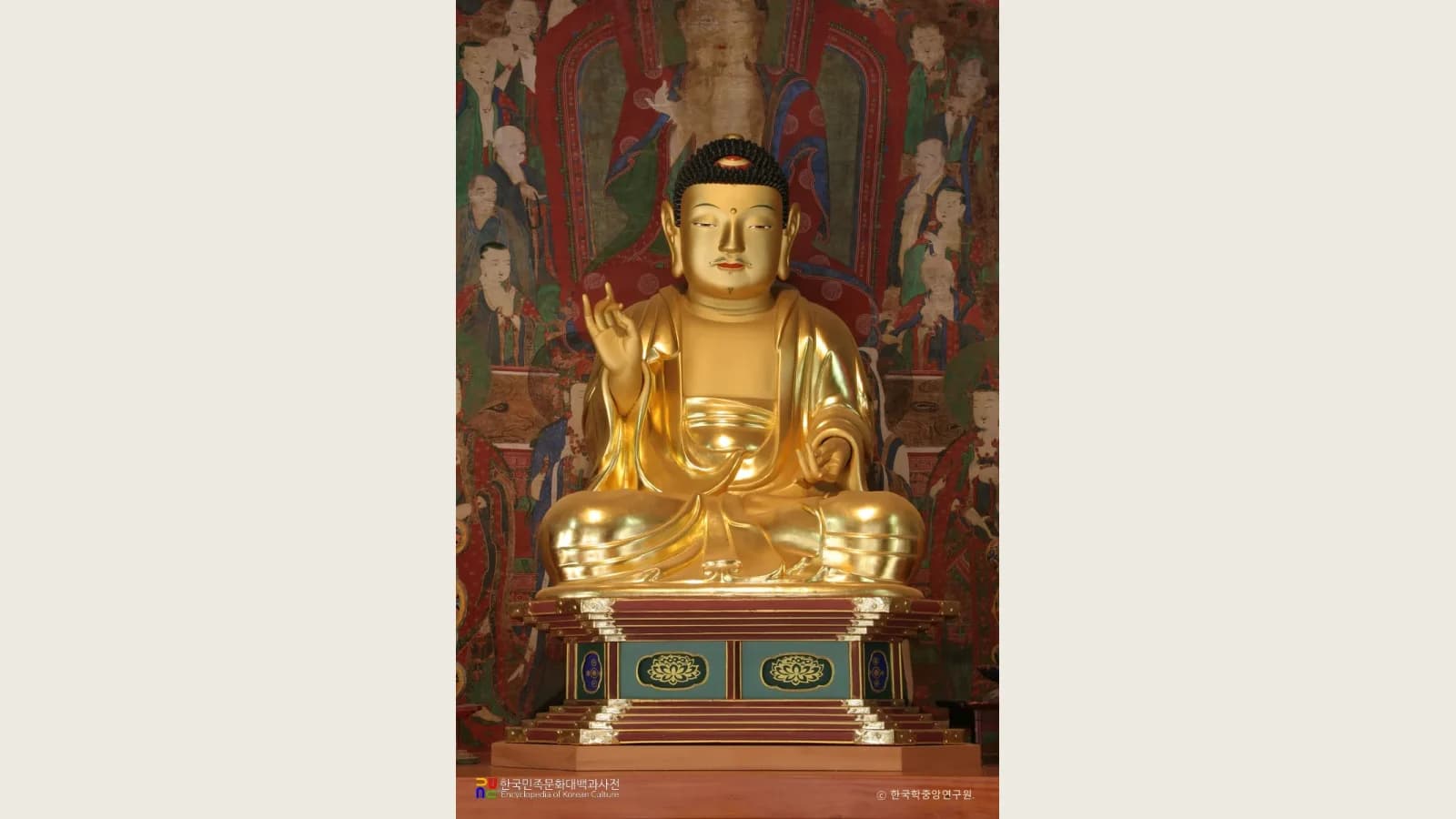
Geungnakjeon was designated a national Treasure in the Korea Heritage Service’s notice dated 7 July 2026. Earlier spring reports described a proposed designation; that is an earlier stage of the process. The designation is a reason to give the building your attention, but it does not establish that every interior object is on permanent public display. Heritage status and visitor access answer different questions. If repairs or religious activities restrict part of the space, use the permitted viewpoints. Comparing the front and side of one hall can be a more satisfying use of time than entering every building without understanding its purpose.
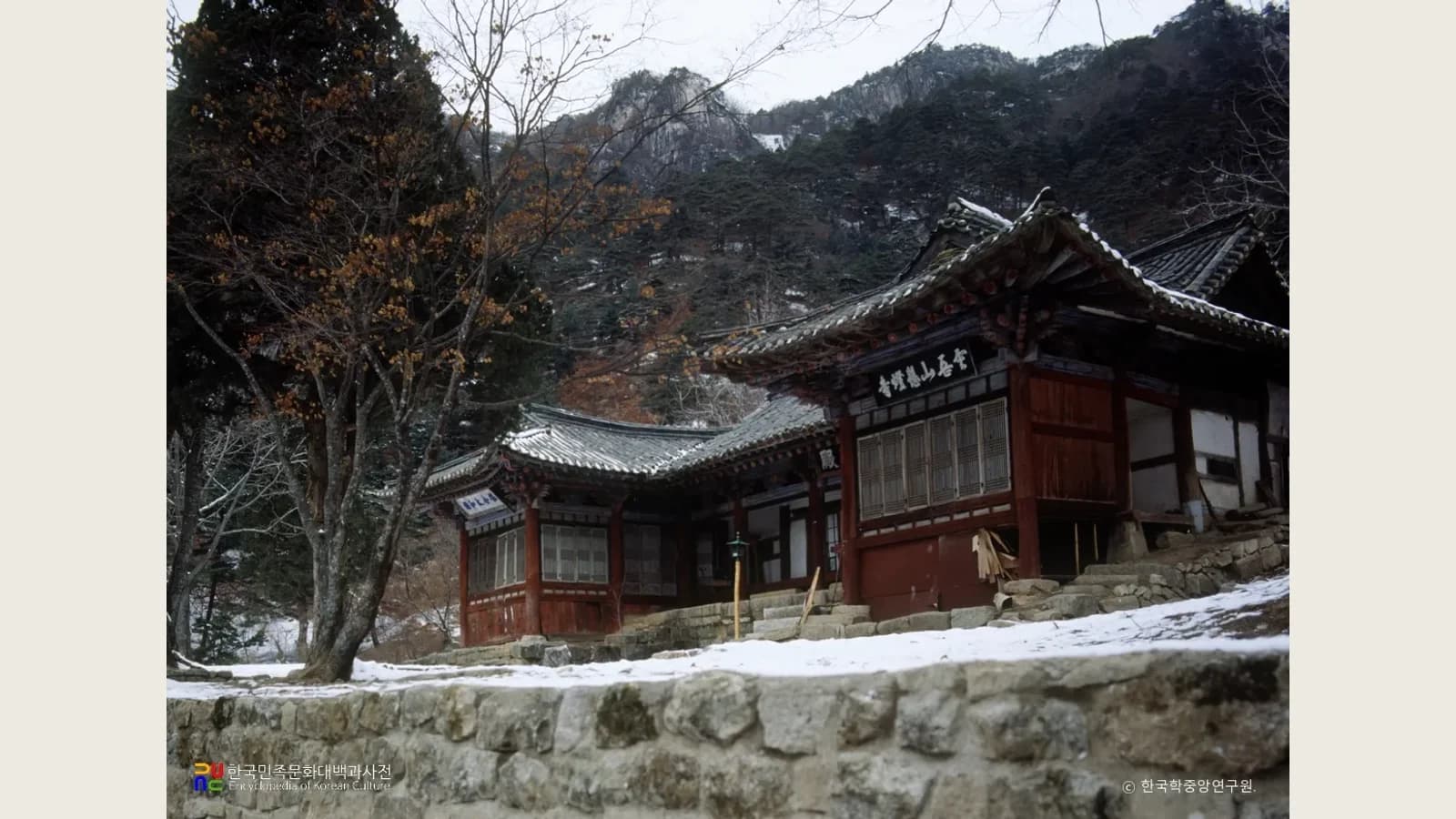
Read the Base Before Counting Roofs
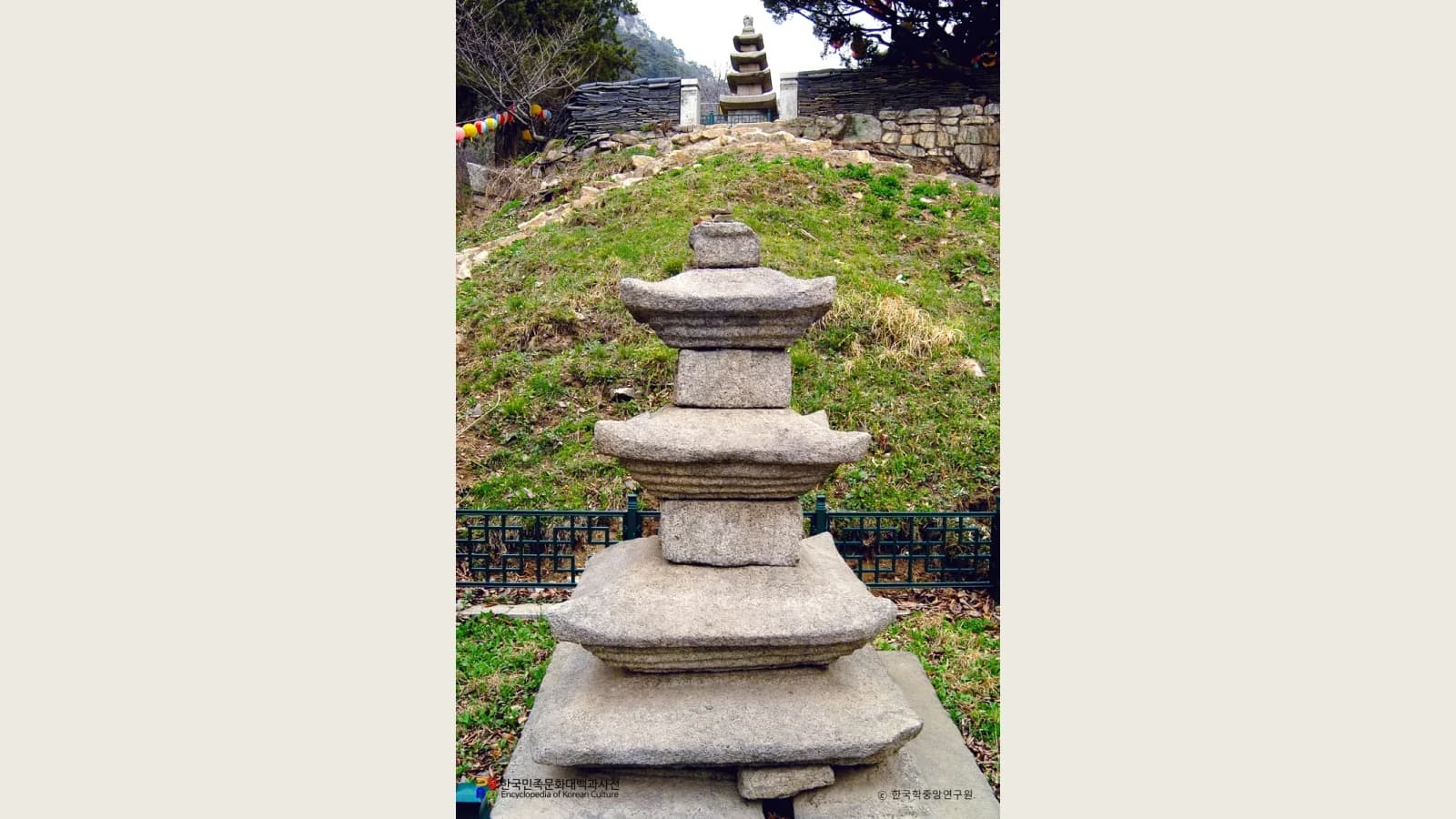
The courtyard’s Three-story Stone Pagoda shifts attention from timber to the way stone is stacked. Start at the base, then distinguish the body blocks and projecting roof stones. Gyeonggi Cultural Foundation’s explanation draws attention to the unusual form of the lower structure. A stone that resembles a small roof is not automatically another storey of the pagoda: first establish where the base finishes and the main tower begins. Read the site interpretation alongside what you can see from outside the protective boundary. The exercise is simple enough to do without specialist vocabulary, but specific enough to make the object more than a backdrop.
The pagoda’s date deserves a little care. The Academy of Korean Studies discusses an attribution to the Goryeo period on stylistic grounds; Gyeonggi Cultural Foundation considers early Joseon characteristics and the relationship with rebuilding at the temple. You do not have to settle that scholarly question during an afternoon visit. It is more useful to recognise the difference between an estimated date, a recorded repair and the name an object carries today. Check the current interpretation board, and retain the word “estimated” when it appears. The differing accounts are a reminder that old stone can carry a history of alteration as well as construction.
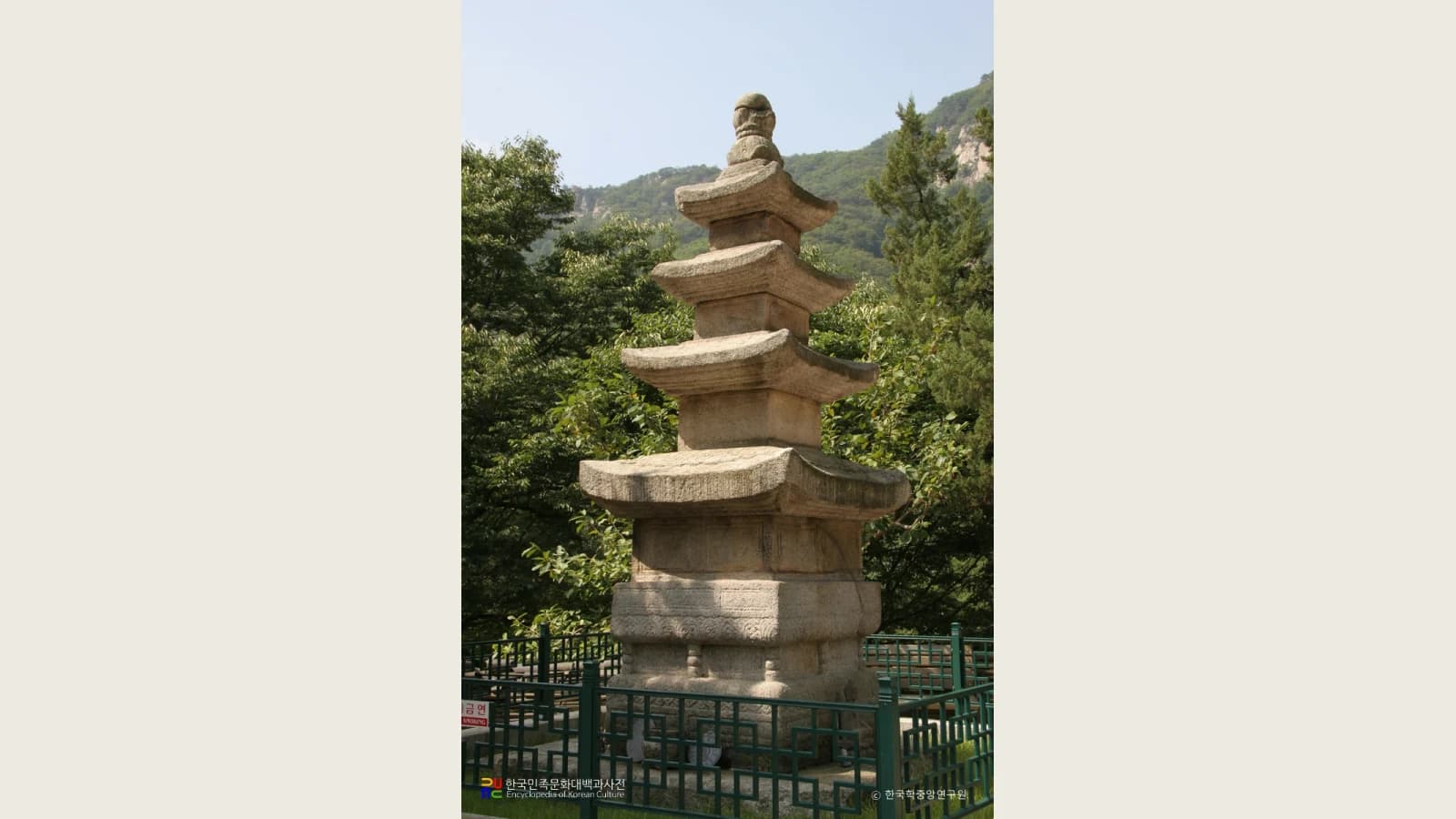
Look at the pagoda’s whole outline before enlarging details on a screen. Notice where its silhouette widens and narrows, then inspect visible lines in the stone from an allowed position. The photograph shows the pagoda’s base inside its protective fence. With children, identifying the base and roof stones can be enough; there is no need to turn the visit into a quiz about dates. Keep hands off the stone and stay outside any fence. The shape remains readable without getting closer than the site permits.
Hamheodang Deuktongtap and its stone lantern need a different explanation. The Academy identifies Deuktongtap as an early Joseon stupa holding the relics of the monk Gihwa, also known as Hamheo. A stupa commemorating a monk should not be treated as an interchangeable version of the courtyard pagoda. In the photograph, its rounded body contrasts with the lower lantern beside it. Establish what each object is called before deciding what its scale means. The distinction between a memorial and a lantern makes an ordinary material, stone, carry two separate purposes. You can compare those purposes even if you know little Buddhist art terminology.
This pair is not simply another stop immediately outside the hall door. The Academy places it on a ridge slope away from the main precinct. Ask where it is and whether the connecting path is currently open before adding it to your visit. If the route is closed or its steps are unsuitable, use the photograph and interpretation to make the comparison, then finish in the main precinct. The suggested sequence here is hall, courtyard pagoda and an optional stupa visit after checking access. Follow current signs rather than treating this suggested sequence as a fixed trail.
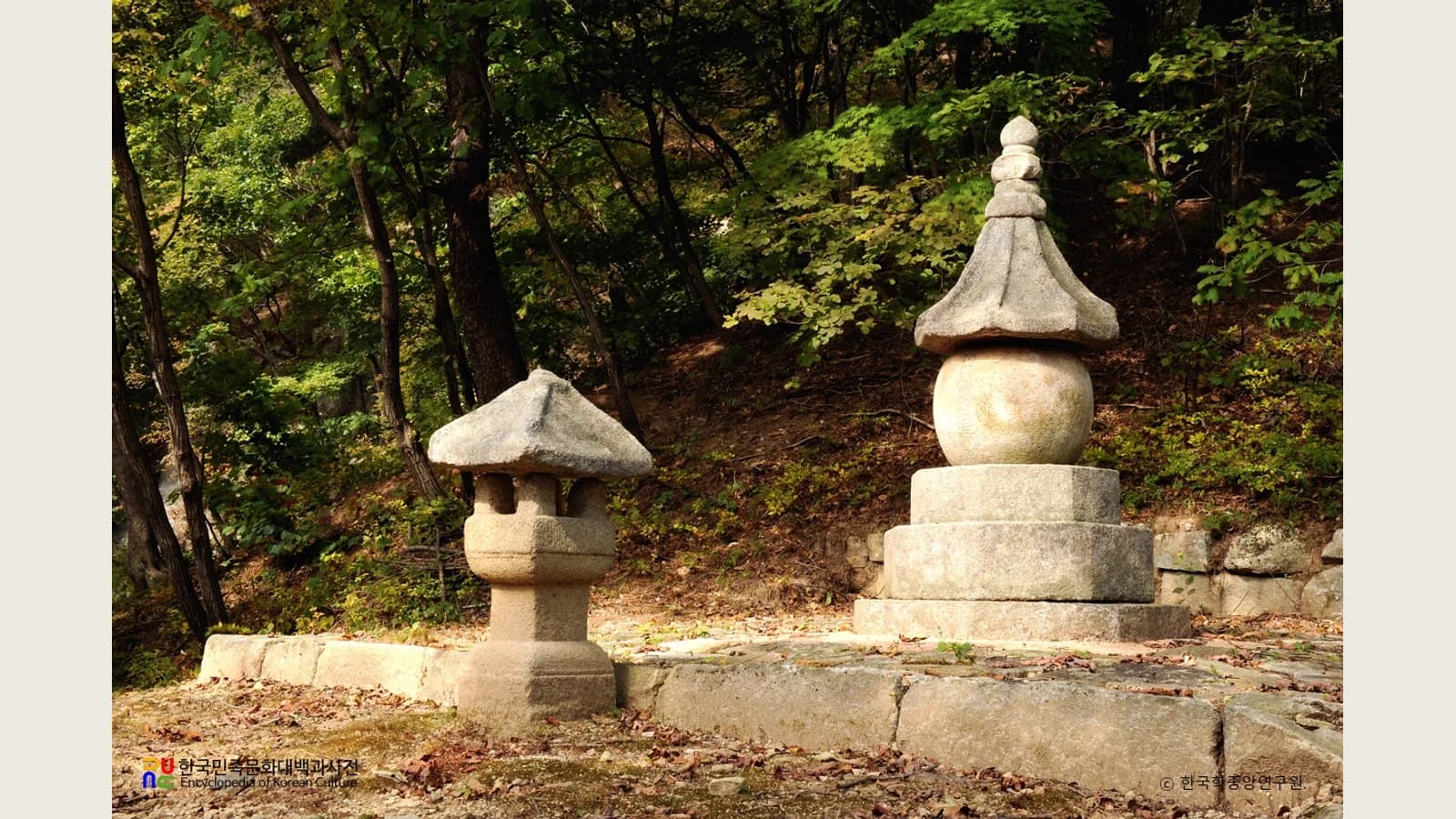
By this point, the difference between pagoda and memorial stupa can become the subject of the day. In the timber hall, think about where people stand and worship; beside the stone objects, ask what is being remembered or illuminated. Do not automatically identify the surviving lantern with every light-related story attached to the temple’s name. A founding legend and an object description are different kinds of account. For younger companions, distinguishing “a story people tell” from “what the explanation records about this object” is more useful than memorising a string of unfamiliar names. You can leave with a clear comparison instead of a complete chronology.
Make the Return Part of the Visit
Work backwards from the journey home when deciding how much to add. An impulsive detour from a temple visit to Unaksan’s summit or rock viewpoints changes the demands of the outing. The county’s official mountain description includes a summit route with an iron ladder. This article does not describe that hike. Use the temple approach you have checked as the basis for the return, and prepare a separate hiking plan if the summit interests you. That plan needs its own map, equipment and weather check. Keeping enough energy for the descent also leaves more attention for the buildings you came to see.
For public transport, save both the arrival stop and the stop needed for your return. Consult current county transport information or the relevant service timetable, then check the walk between the stop and temple separately. No bus number or last departure is given here because a same-day operating timetable has not been verified. Driving does not remove every access question either: distinguish the temple’s postal address from the point you can actually reach by car and park. If someone needs to avoid stairs, ask specifically about the remaining walking surfaces and gradients. A parking symbol alone does not establish a suitable approach.
Place lunch after the descent, somewhere that fits the actual onward journey. The county’s Unaksan introduction mentions handmade tofu and acorn jelly among foods associated with the mountain area. These are possibilities to ask about, not confirmation of any particular restaurant’s menu today. Dubu means tofu; dotorimuk is a jelly made with acorn starch, and its accompaniments vary. Ask whether your chosen restaurant is open and serving the dish, whether it comes warm or cold, and what portion makes sense for your group. Check sauces, side dishes and allergens directly rather than assuming a tofu or jelly dish meets every dietary requirement.
A pause for water and an extra layer can be part of the visit without adding another attraction. Use an authorised resting place before beginning the return. In late autumn, allow for wet leaves and earlier darkness; plan the return while there is still daylight. If the day’s weather or path conditions are poor, omit the more distant memorial rather than treating the photographs as a checklist. The difference between timber construction, a tiered pagoda and a rounded memorial remains available in the interpretation. Season provides the setting, while the objects give the outing its focus.
At Hyeondeungsa, one remembered detail can be enough: the spacing of Geungnakjeon’s columns, the pagoda’s layered base or Deuktongtap’s rounded body. The visit centres on the different purposes of timber spaces and stone monuments. Carry that interest into the hanok and garden at Chiong Art Center. With the temple’s columns and rooflines in mind, look at the hanok eaves and stones around the courtyard to consider how similar materials shape a different kind of space. If you include both places, arrange the transfer and visiting plans first, then leave yourself one clear thing to notice at each.