Journal
A Meal and a Small Basket at Gapyeong Jatgoeul Market
Let the calendar, the way goods are sold and a seated meal shape your visit to Jatgoeul Market.
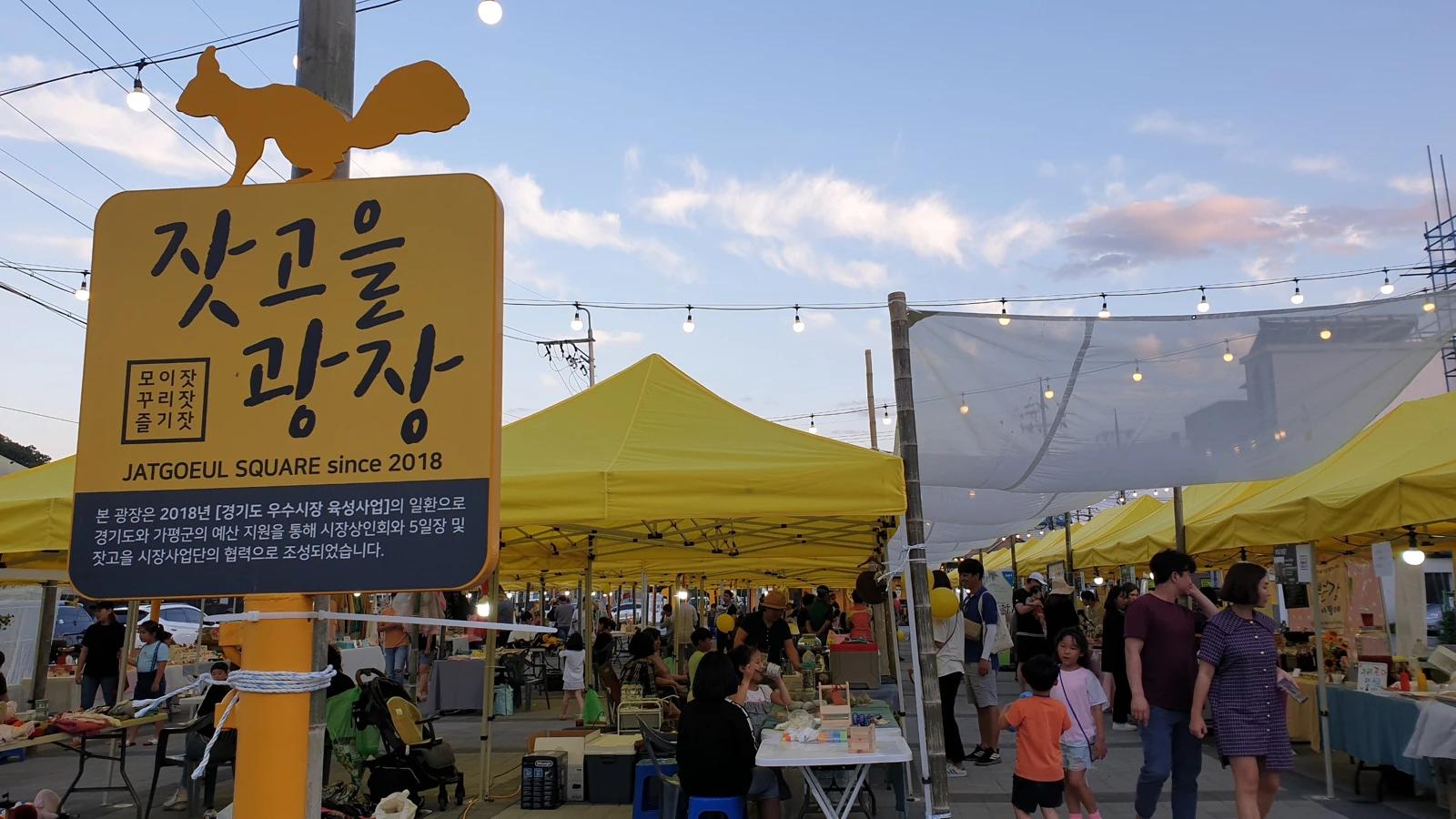
Before deciding what to eat at Gapyeong Jatgoeul Market, look at the calendar. The regular five-day market adds outdoor stalls to a district that also has permanent shops. Those are different reasons to visit, even when they share a name. This outing centres on a meal and a small basket of purchases, rather than a chain of attractions. Look around first, sit down to eat, and buy anything heavy or perishable towards the end. Agree on that order with your companions so that the person waiting for lunch does not spend the whole visit following someone else’s shopping list.
Save both 가평잣고을시장 and 가평잣고을시장 창업경제타운 on your map. The latter is the market’s business complex at 12 Jangteo 2-gil, Gapyeong-eup. Visiting the building alone and exploring the outdoor market are not quite the same experience. Gyeonggi Tourism Organization describes the periodic market, the business complex and the surrounding sculptures as different aspects of the district. Start by locating an entrance and deciding where you will eat and where you will leave. Chiong Art Center is at 300 Sumogwon-ro in Sang-myeon, so plan the trip into Gapyeong town separately; the shared county name does not make this a continuous neighbourhood walk.
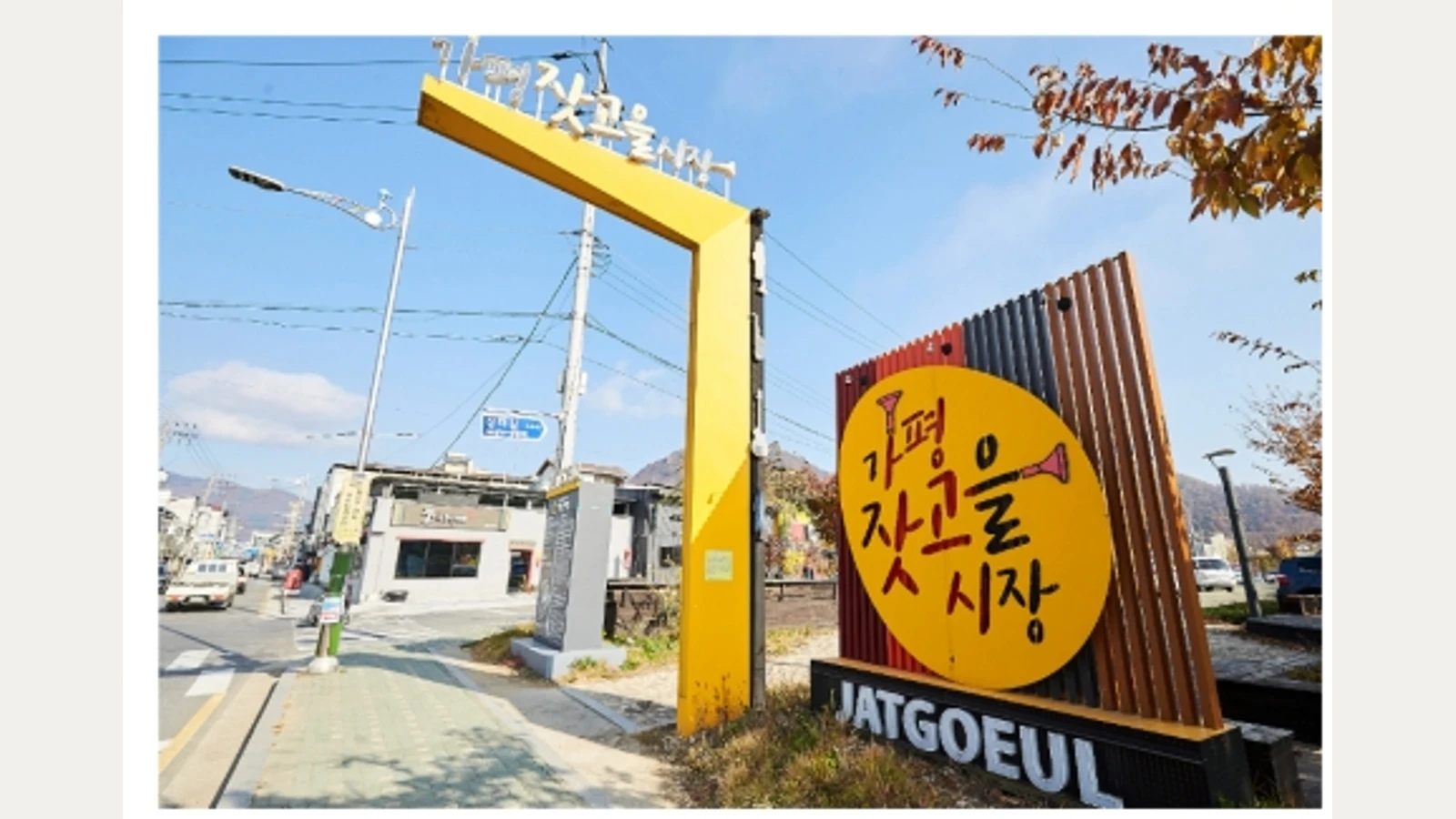
The regular market dates are the 5th, 10th, 15th, 20th, 25th and 30th of the month. The tourism organization’s description of a market on days ending in five and zero refers to this repeating pattern. A weekend is not automatically a regular market day, and a festival has its own arrangements. Choose a market date if browsing stalls is your priority. If you mainly want a seated meal and permanent shops, establish the relevant businesses’ opening days instead. You do not need to fit every version of the market into one visit. Even on a regular date, individual sellers need not all open at the same moment.
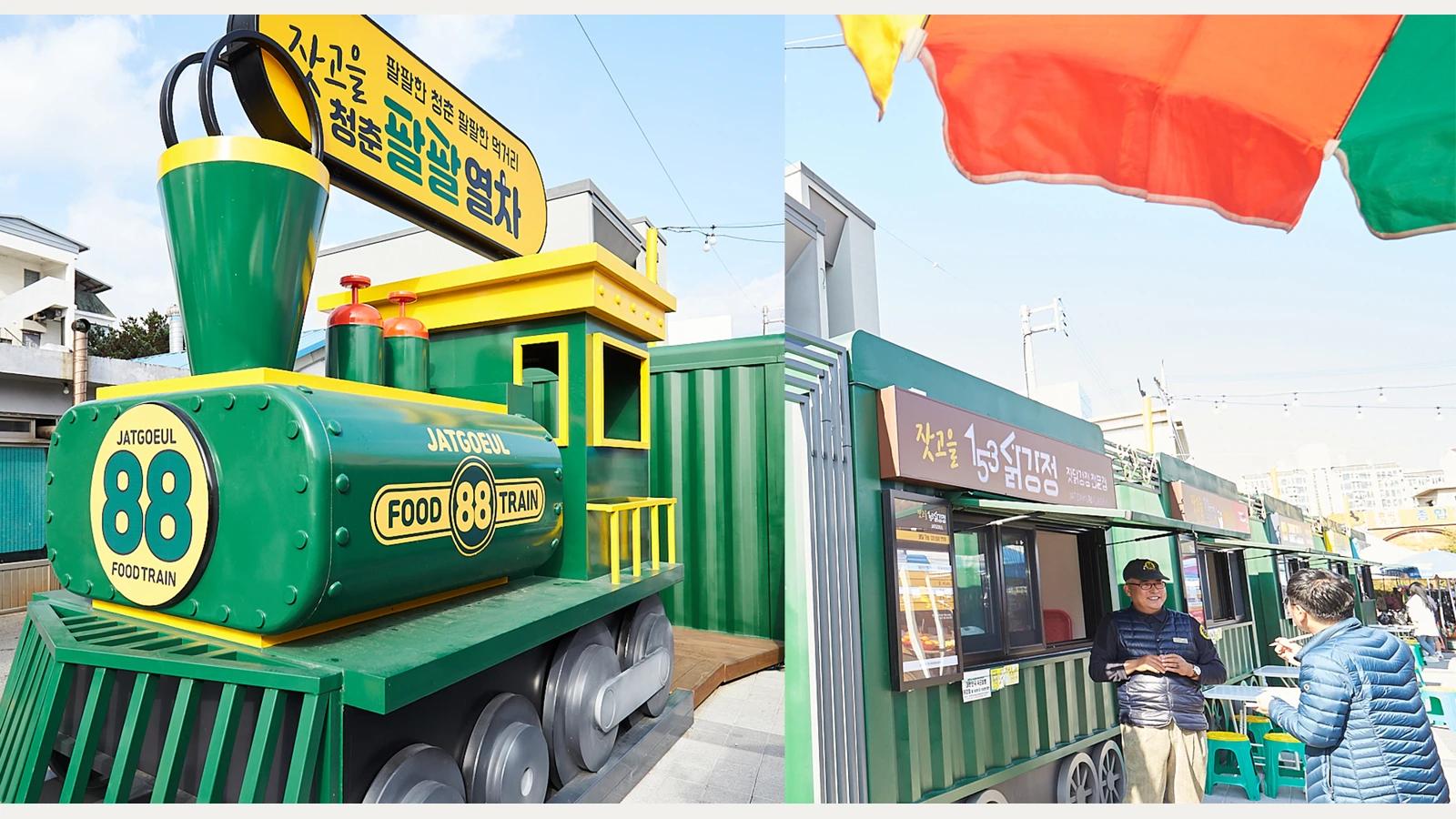
Before placing an order, see how the square connects to the selling spaces. In the photograph of yellow canopies, a passage beneath the sign separates moving people from those stopping at tables. The green Cheongchun 88 train-shaped food units offer another way to read the market: grey wheels and a chimney attract attention, while serving windows meet customers at standing height. You can notice how a market presents its goods without planning around a performance. Keep doorways and delivery routes clear when taking photographs. Choose a recognisable sign as a meeting point, particularly if some companions want to browse while others prefer to sit down.
Browse first, shop after lunch
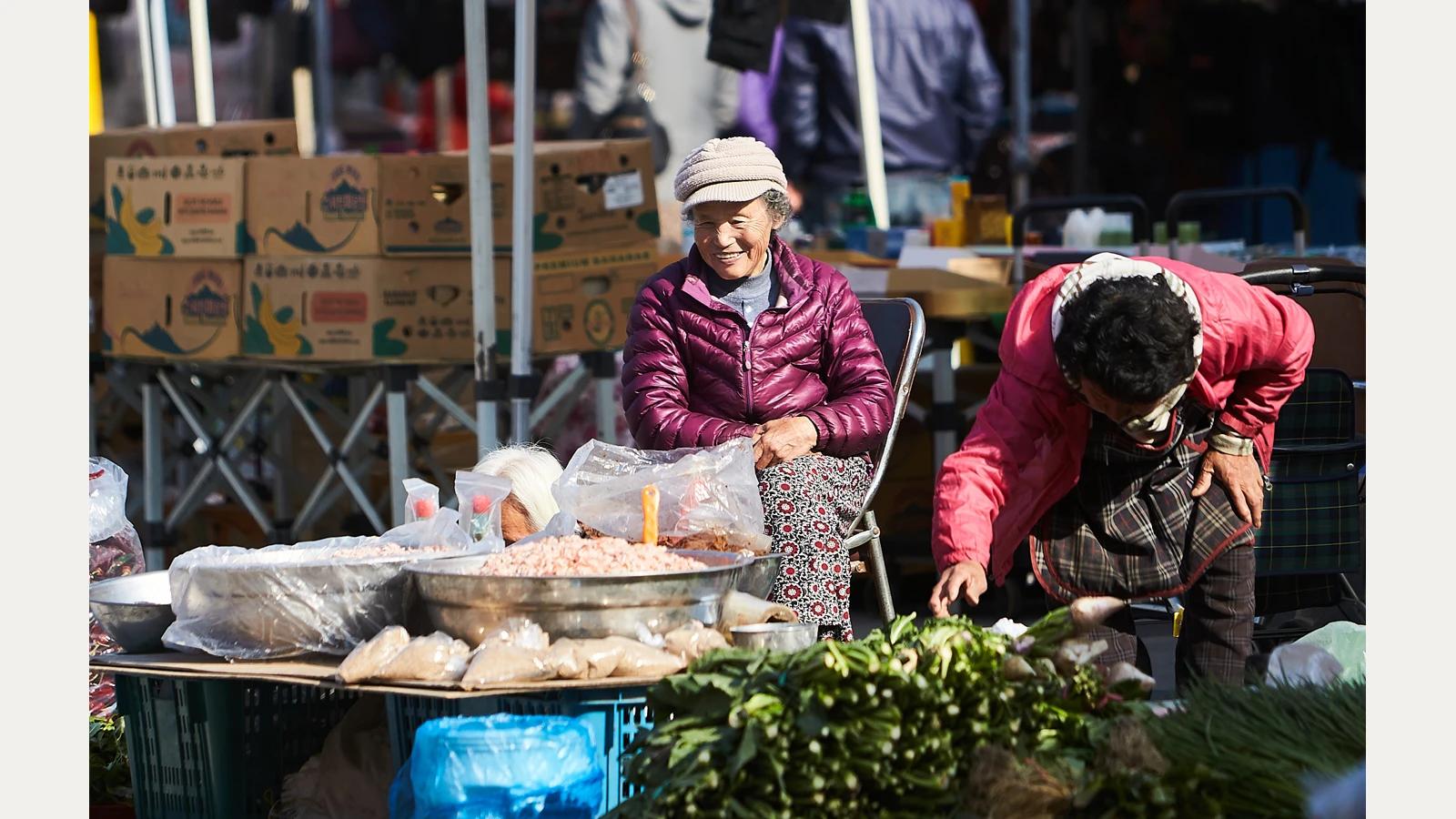
At the produce stalls, begin with one thing you could use at home. Think about how much you will cook, and how much weight you want to carry back. In the photograph, leafy vegetables, a wide metal bowl and stacked boxes occupy different levels. Ask what constitutes one bag, plate or bundle before comparing prices. Goods sold in Gapyeong are not necessarily grown in Gapyeong. If origin matters to you, read the label or ask the seller rather than assuming that every item comes from a nearby farm. The setting alone cannot tell you who grew something or how it was cultivated.
The fruit display makes the question of units particularly clear. Red fruit sits in white bowls, with boxes and bright awnings above. Check which bowl or quantity a price refers to, and explain whether you want something to eat soon or keep for a few days. Ask before handling fruit rather than pressing it to judge ripeness. Buy delicate items after your meal and keep heavier purchases from crushing them in your bag. There is no need to arrive determined to find the exact variety in a photograph. Selecting what is actually available, in an amount you can use, is a better reason to visit this market.
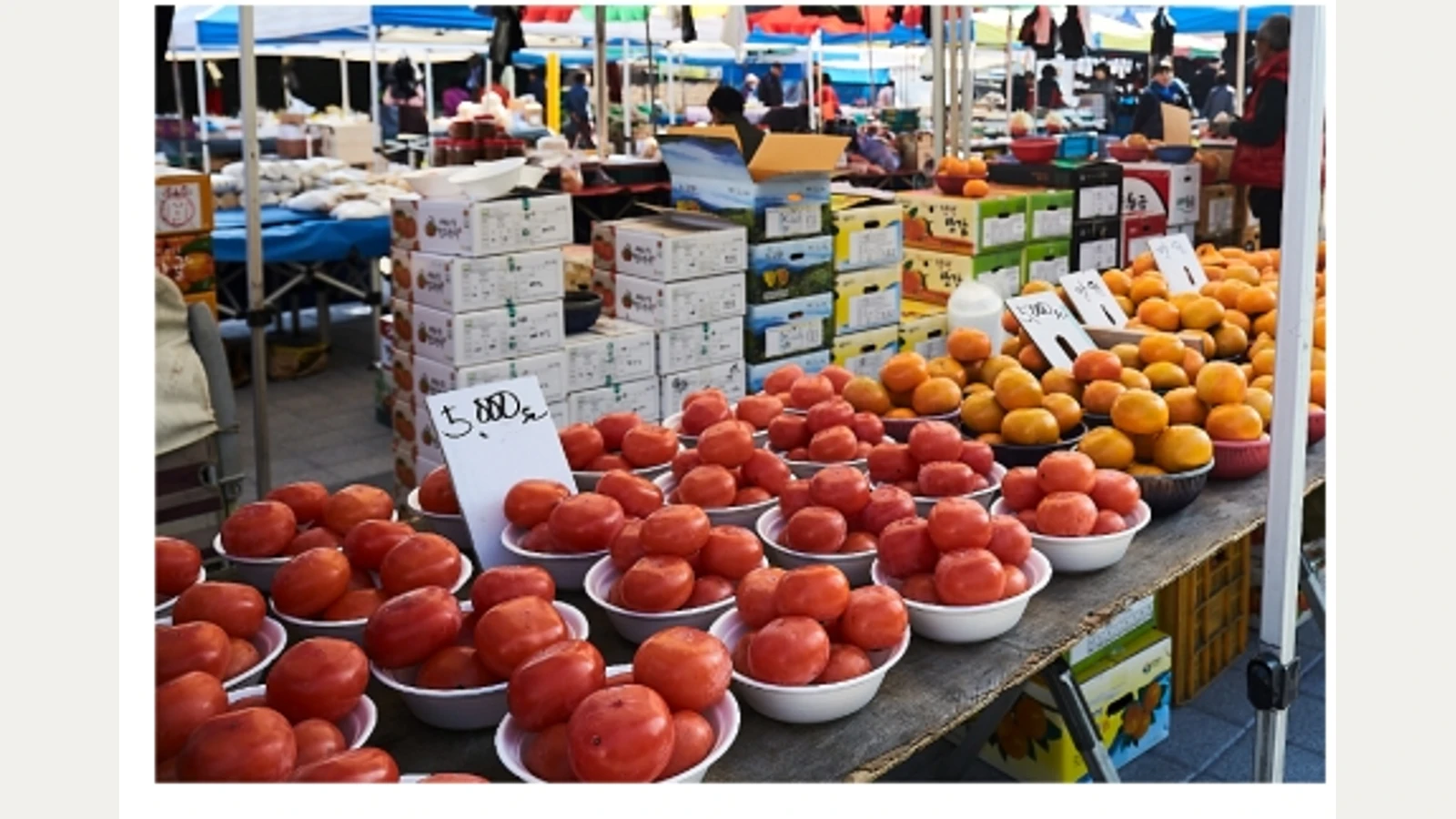
If the market’s name brings pine nuts to mind, compare labels before choosing a souvenir. Jat means pine nuts, but a processed food containing them serves a different purpose from a packet of the nuts themselves. Read the ingredients and origin information together. A gift and something for your own cooking may need different packaging. Check storage instructions and the use-by date, and consider whether anyone sharing the food avoids nuts. Deciding when and with whom you will eat a purchase can be more helpful than choosing the largest pack. Availability, prices and opportunities to sample products need to be established with the individual seller.
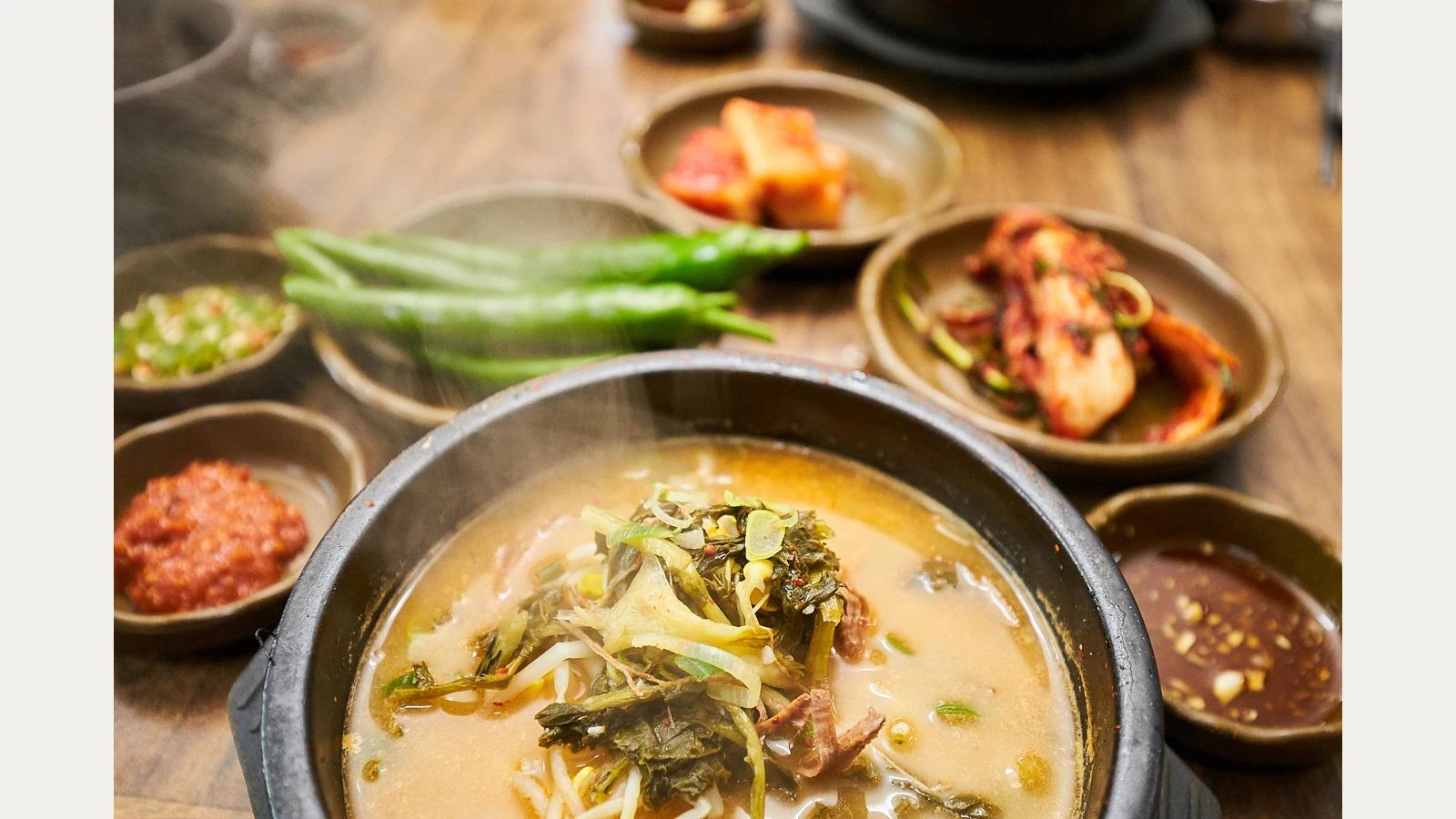
For lunch, distinguish a snack from a full meal. In the photograph of soup and small side dishes, the whole table setting matters as much as the main bowl. Ask whether your companions need a seat and a warm dish after standing at stalls. If someone avoids spicy food, check whether seasoning can be served separately and what portions are available. A photograph does not establish today’s menu, price or serving arrangement. Read the actual menu before ordering. If the wait is long, decide together whether to browse a little more or eat at another open business, rather than leaving one person to wait indefinitely.
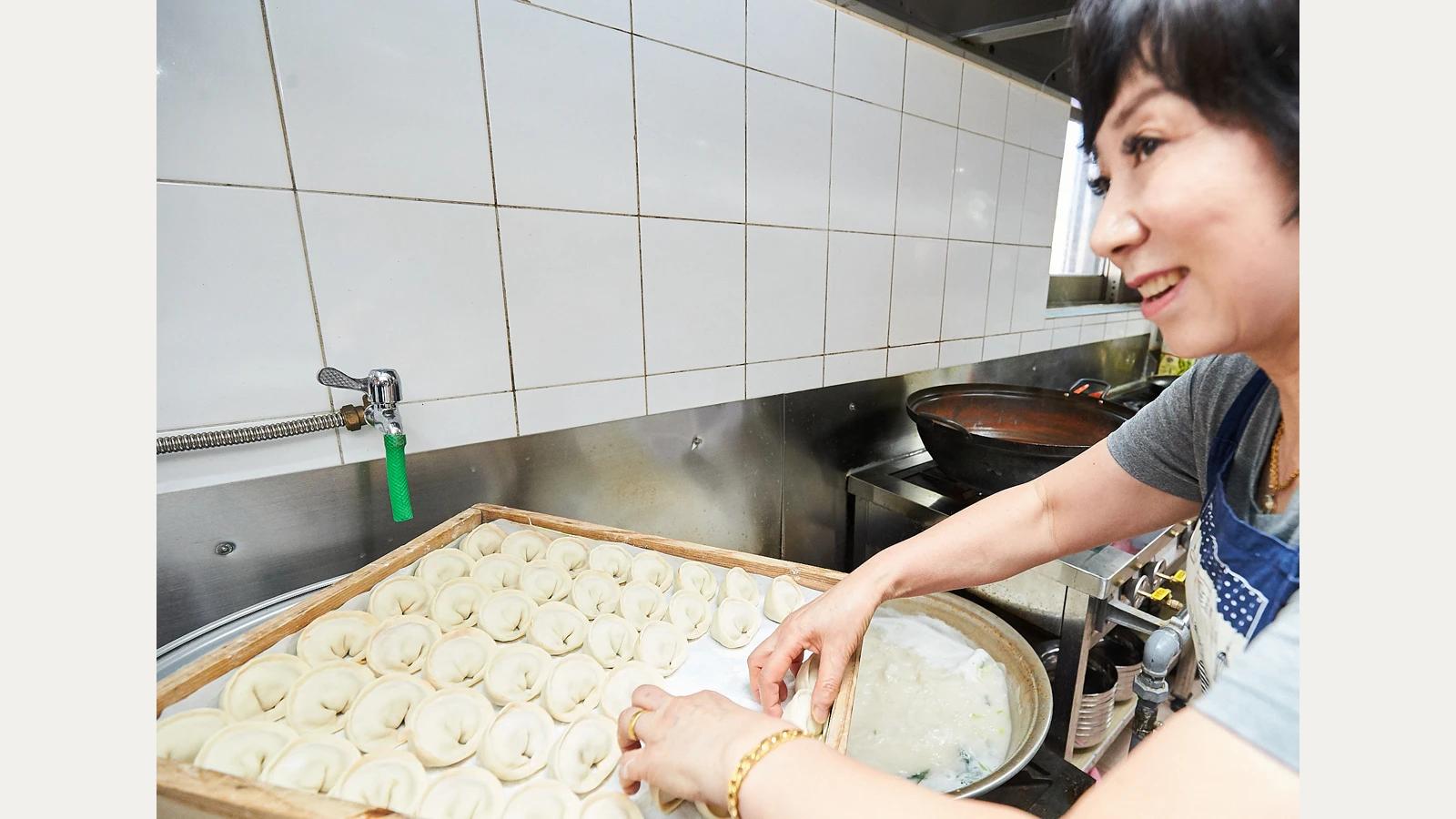
The dumpling-making photograph gives lunch another subject. Rounded dumplings overlap on a broad tray, while fingertips bring the ends of another together. What looks like a repeated shape contains small differences in their folded edges and the way they are arranged. Before ordering mandu, ask about the filling, including meat and kimchi, and whether the dish is spicy. The word handmade cannot establish either flavour or ingredient origin. A plate to share at the table and dumplings to cook at home also involve different questions. Let the seller explain the options actually offered, rather than treating an image of preparation as a promise of a particular meal.
After eating, consult the business complex’s floor guide if you want a break. Gapyeong Facilities Management Corporation lists restaurants and retail on the first floor, a café and children’s library on the second, and workshops and offices on the third. A facility list does not guarantee unrestricted entry or an activity session. Check the conditions of the particular space you want to use. With children, share responsibility for rest and shopping rather than assuming that one adult will manage both throughout. Look for seats that are available for your use, and follow the venue’s rules about bringing purchased food inside.
Check the building and the businesses separately
Read building hours separately from shop hours. The management corporation lists the complex as operating from 08:00 to 22:00, while explicitly stating that tenant businesses keep different schedules. Its regular closure is the second Tuesday of the month, moving to the following day when that Tuesday is a five-day market date. This is a rule for the complex, not a universal closure rule for every business in the market district. Confirm the place where you intend to eat or rest. The complex’s enquiry number is 031-5175-8815. Months in which the regular market and building holiday coincide deserve an extra calendar check.
If driving, identify the car park as well as its tariff. The corporation lists the complex’s basement and attached parking as free for the first 60 minutes, followed by 500 won for each additional 30 minutes. Do not transfer a different car park’s free period to this one. Read the on-site charging hours and allow time to leave after shopping. If you take bags back to the car while companions remain in the market, agree on a meeting point first. Avoid sorting purchases between moving vehicles, and do not plan to stop beside a stall simply because unloading there seems convenient.
For public transport, save Gapyeong Station separately from the market. Arriving by rail still leaves a journey outside the station. Use Gapyeong County’s current bus information to check the actual stops and return service, or keep the Korean street address ready to show a taxi driver. Jangteo-gil and Jangteo 2-gil are similar names that can both appear in search results, so check the building name too. On the way back, account for the shopping you are carrying. Decide when to finish buying things in relation to your return train, instead of estimating the journey from the pace at which you walked around empty-handed.
Make the last shopping decision about condition rather than quantity. For fruit or prepared food, ask whether packaging might leak and how the item should be kept during the journey. Consider hot food separately from anything that needs to stay chilled. Leave difficult-to-store purchases until just before departure, or leave them for another visit. Taking home one or two useful things is enough. Discuss what the seller called a portion and how they advised you to store it. Those details give this outing a connection to ordinary life in the town, beyond the appearance of a busy market.
Remember the folds made by fingertips on the dumpling board when looking at ceramics in Chiong Art Center’s art space. Pay attention to where a vessel’s lip meets its body. A thin wrapper enclosing food and a vessel formed from clay have different materials and purposes, yet a small edge helps determine the whole shape of each. Look at visible thickness and curved lines without inventing a maker’s technique. Plan a separate visit using Chiong’s introduction and visitor guidance. A day that began with choosing lunch can continue as an interest in forms made by hand, giving the market table and art within a hanok a specific point of connection.