Journal
Pine Nuts and Mountain Lives in Jathyanggi Pureunsup
Start with the work behind an ingredient. Pine-nut displays and reconstructed mountain homes give a forest walk in Gapyeong a different focus.
Begin with an ingredient
Pine nuts often appear in a Gapyeong itinerary as something to eat or take home. At Jathyanggi Pureunsup, you can begin further back: with the forest, the tools used in production, and the homes of people who lived on these mountain slopes. The site combines walking trails with Chukryeong Baekrimgwan, an exhibition about pine nuts, and a reconstructed mountain settlement. This visit follows a material through different uses rather than collecting viewpoints. Decide whether your group would enjoy an exhibition followed by a short walk, or a longer outing that includes the settlement. Distance is only one measure of the day.
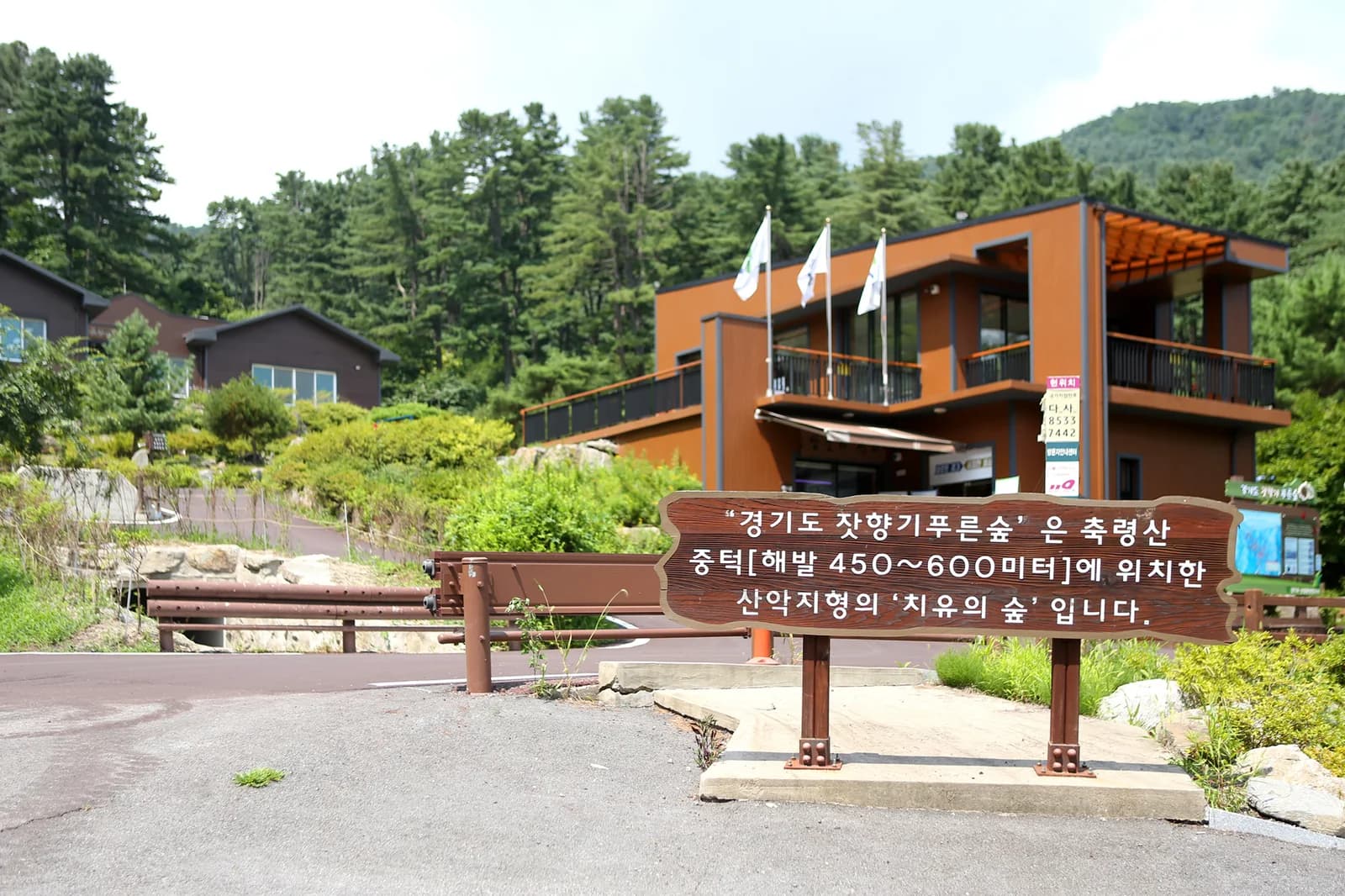
The forest is in Sang-myeon, Gapyeong-gun, at 289-146 Chukryeong-ro. Save the Korean address for navigation: 경기도 가평군 상면 축령로 289-146. The operator places it on the slopes of Chukryeongsan and Seorisan, at elevations of 450–600 metres. Chiong Art Center is at 300 Sumogwon-ro in the same township, but sharing a township does not establish an easy walk between the two. Check the actual transfer and the return journey before deciding how much walking to do inside. A summit hike would need its own preparation; it is outside the scope of this cultural forest visit.
On arrival, ask at the visitor information centre whether Chukryeong Baekrimgwan and the reconstructed settlement are open, and which paths connect them that day. The sequence here follows the story from pine-nut production to mountain homes; it is not a surveyed circuit that accounts for maintenance closures or every gradient. Mark the exhibition, the settlement, and your exit on the current map. For a shorter visit, concentrate on the exhibition and a suitable open trail nearby. For more walking, ask whether you can comfortably include the settlement. At junctions, follow named destinations and current signs rather than trying to reproduce an old photograph.
From tree to tool to table
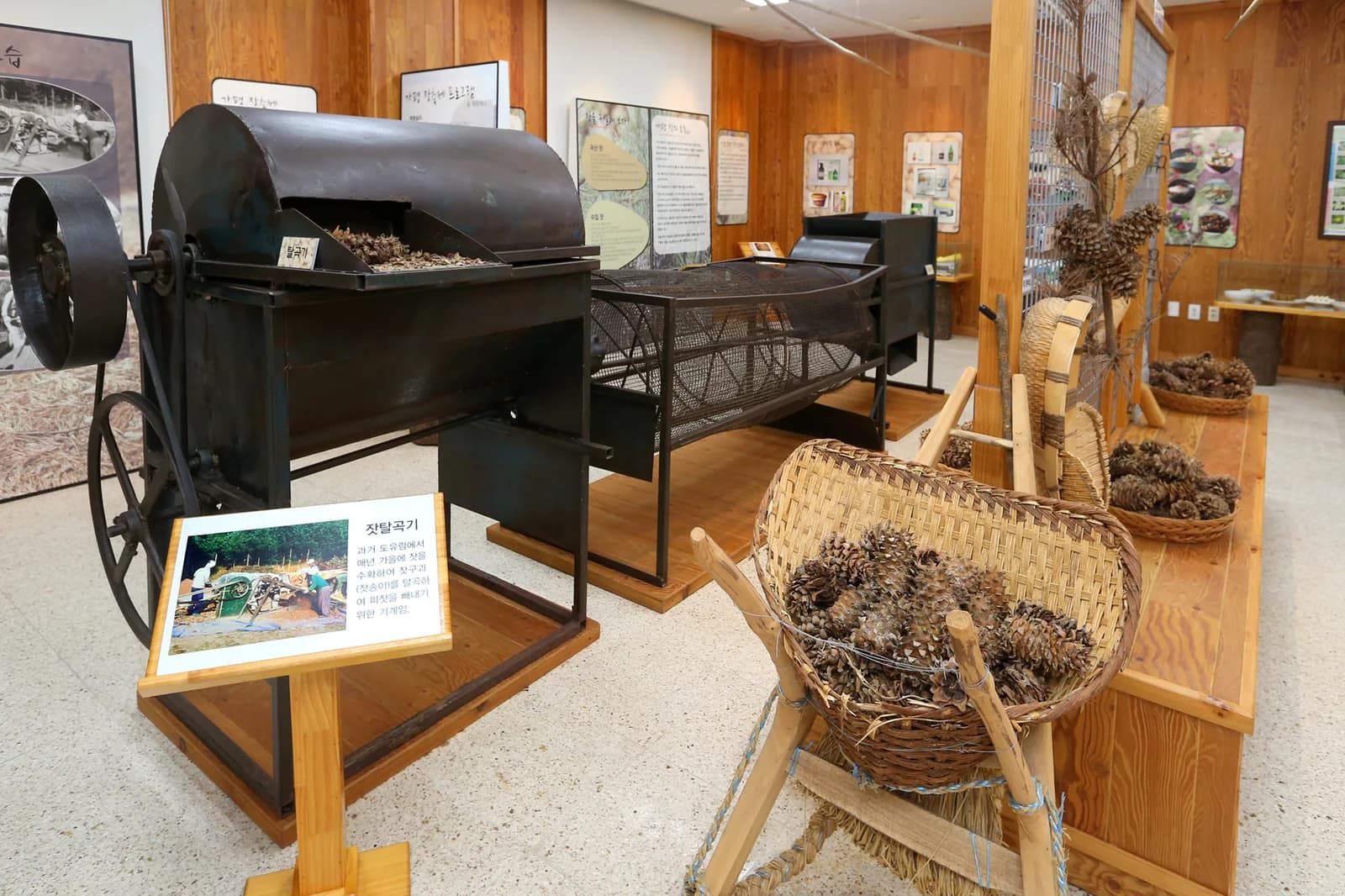
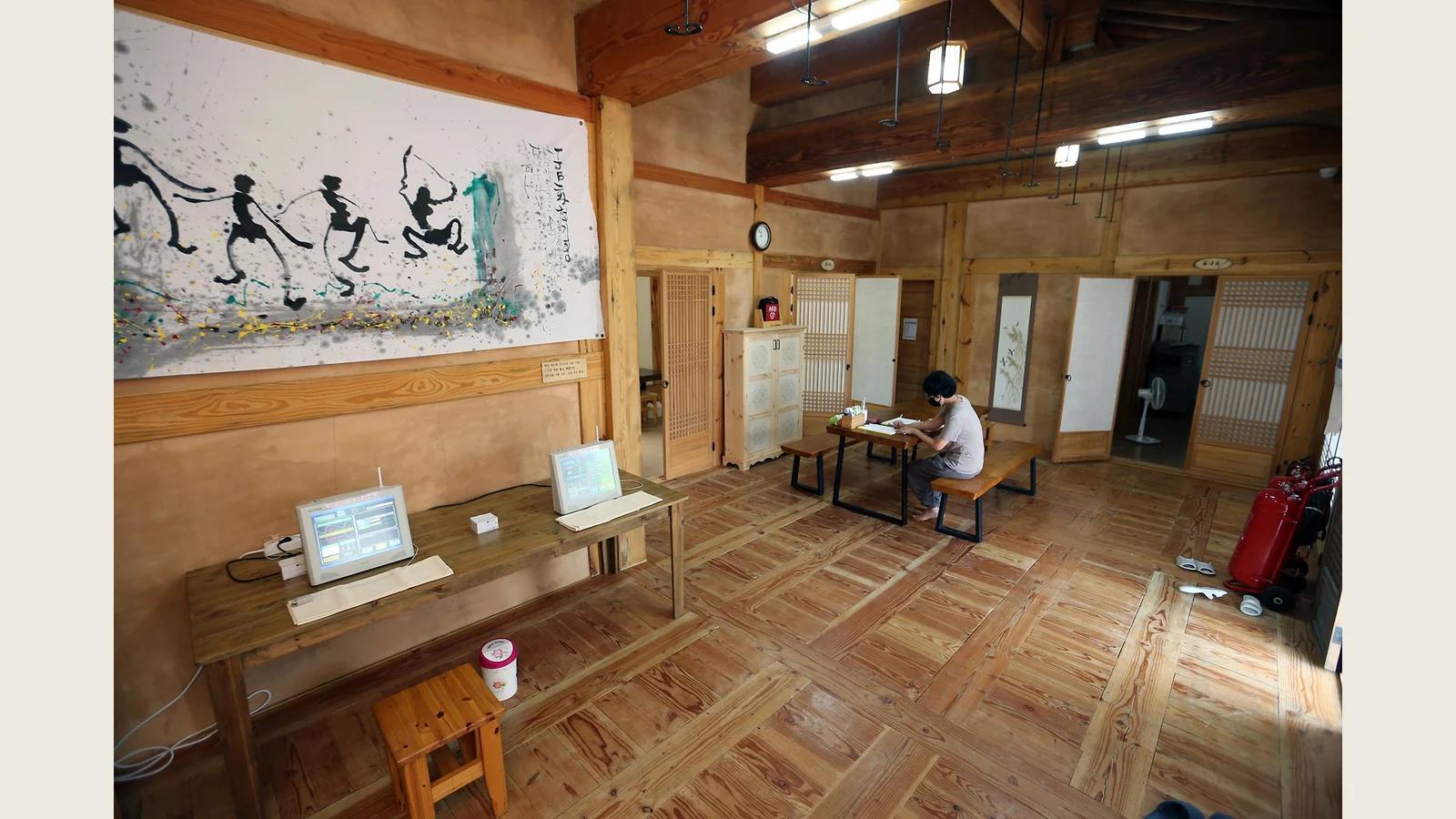
Begin in Chukryeong Baekrimgwan by looking for the steps between a pine cone and an edible nut. The official facilities guide describes displays about the trees, production processes, tools, foods, and finished products. That gives you a useful question to carry through the room: what work has to happen before the ingredient reaches a table? Read how a tool is used, then look at the part that performs that task. Understanding one process may be more memorable than collecting every equipment name. It also gives the trees outside a connection to daily work that a distant landscape photograph cannot show.
The exhibition photograph accompanying this article shows cones, baskets, and cylindrical equipment together. Use the labels in front of you to identify the equipment. With children, try discussing the movement a person would need to make if doing a task by hand. Do not assume that a museum object is intended to be touched or operated. A display, a demonstration, and a hands-on activity are different experiences; join the latter two only when staff explicitly offer them.
Outside, carry one question from the exhibition into the trees. You might consider how the same tree can provide shade and an ingredient, rather than treating those as separate subjects. Observe from the designated path. The rules prohibit collecting plants and animals, and removing soil or stones, so leave any cones you find where they are. After seeing production tools, a cone can become something more specific than an attractive souvenir. In conversation, distinguish what you can observe on the walk from what a label taught you. You do not need to identify every species or gather anything to make the link between the exhibition and the woodland.
Homes on the mountain slopes
If the connecting route is open and the group has enough energy, continue the story at Hwajeonmin Village, the reconstructed mountain settlement. According to the operator, shingle-roofed houses, log houses, and charcoal kilns have been recreated on the site of a settlement occupied on Chukryeongsan in the 1960s and 1970s. This is an interpretation of earlier mountain life, rather than a visit to a village whose residents still occupy those historic houses. Keep that distinction in mind when looking at the buildings. Follow the access signs for each structure; the presence of a doorway does not establish that an interior is open.
At the settlement, move your attention between roof and wall after reading the building name. Look for the relationship between the materials described on a panel and the construction you can see. A charcoal kiln can prompt a question about how forest wood was used; it does not promise a live demonstration on your visiting day. For photographs, try one complete building and one visible construction detail from the permitted route. Avoid turning the picturesque appearance of a reconstruction into an assumption that past mountain life was easy or prosperous. The useful interest lies in how a house was made and what its interpretation tells you.
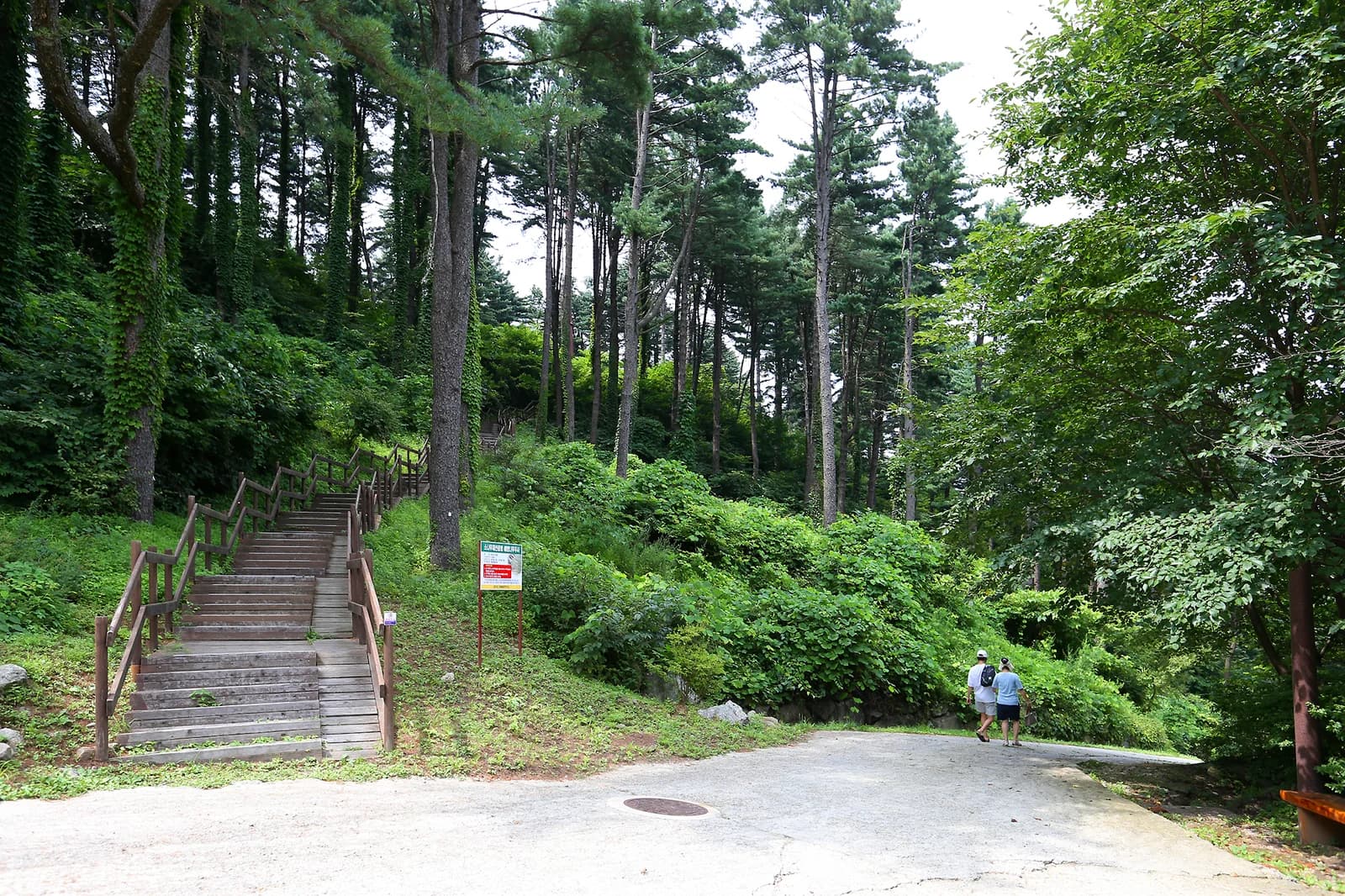
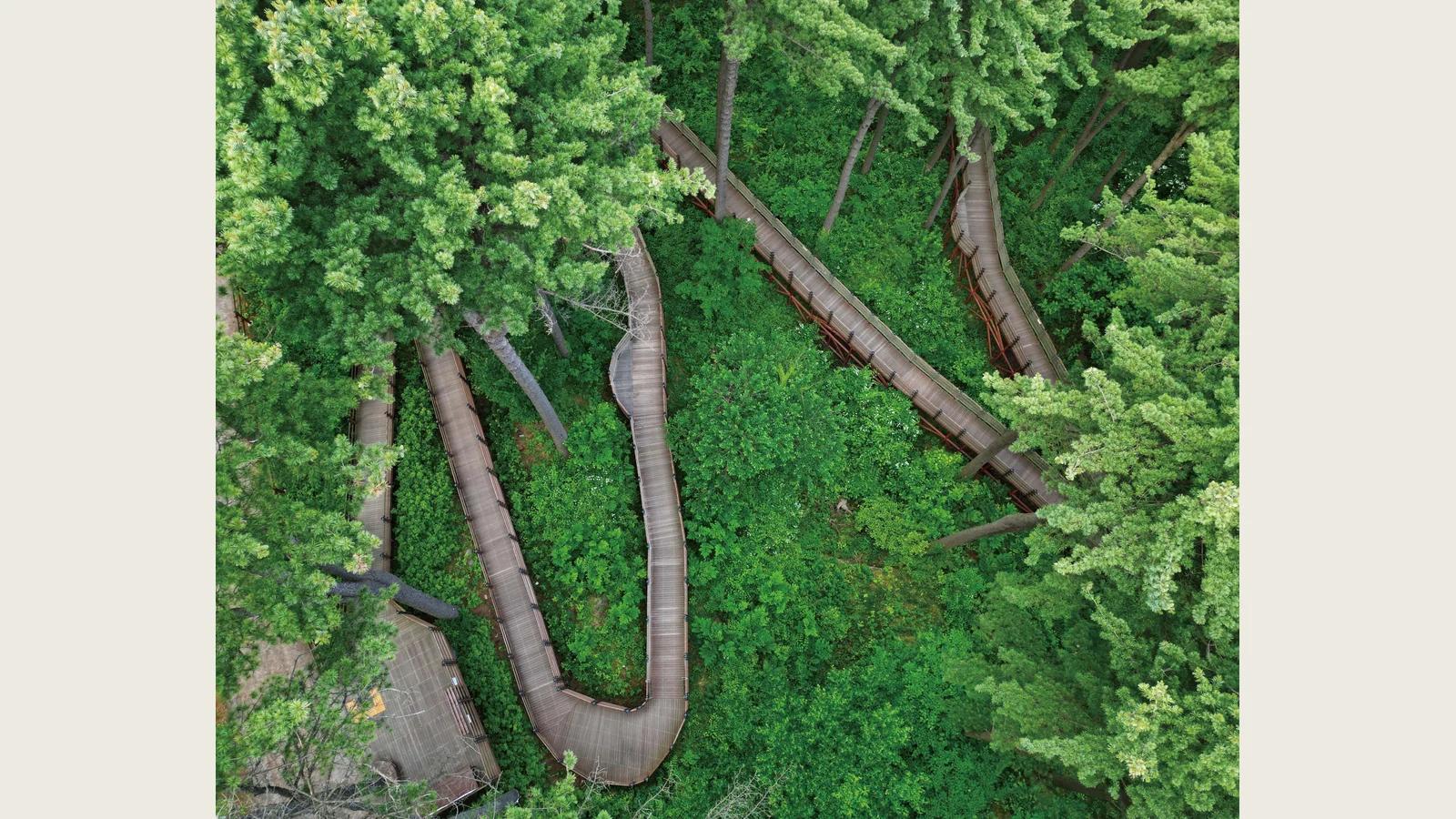
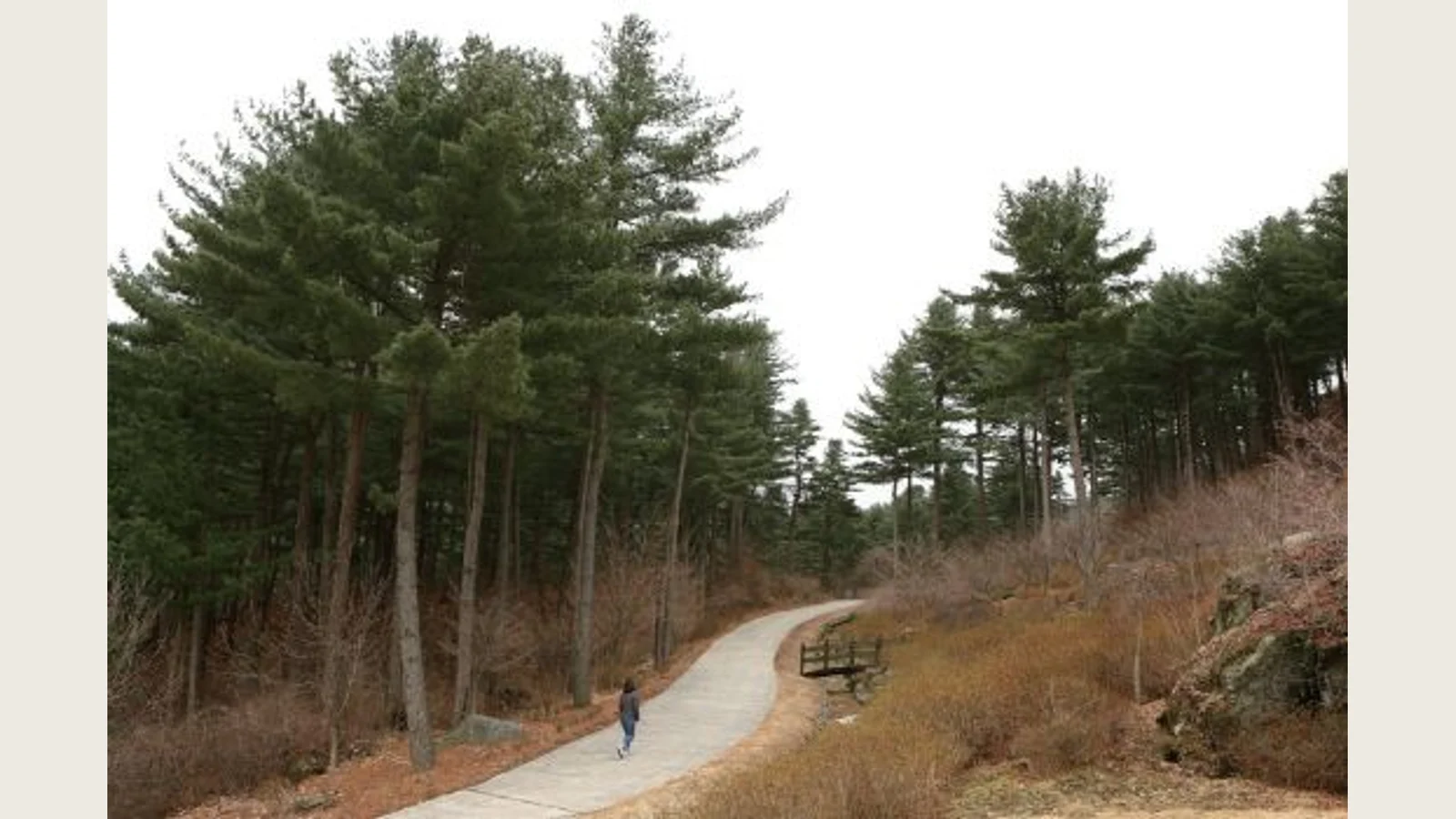
Choose the walking section with the actual group in mind. A paved path and a staircase should not be treated as equivalent simply because both appear on a forest map. The trail photograph shows steps branching away from another path. If anyone uses a wheelchair, pushchair, or walking aid, ask about a suitable section and the route back before setting out. The operator prohibits trekking poles and similar equipment on wooden decks, including the barrier-free sharing path, to protect the structures. If an aid is necessary for you, discuss its use with staff rather than assuming that a general accessibility label answers every practical question.
A pause and a meal beyond the forest
You can leave a pause in the walk without booking an activity. At a permitted resting place, drink some water and compare the objects or buildings that interested you most. Woodworking and guided forest activities require a separate check. The current visitor guide lists an April–November activity season, with advance reservations and possible on-site registration when places remain that day. Woodworking materials cost extra. An unreserved session should not become the fixed point around which the whole day depends. If you do have a confirmed activity, arrange the walk around its start time and allow time to reach the meeting point.
Place your main meal outside the forest. The rules state that there are no sales facilities or rubbish bins, so arrive with drinking water and a way to carry packaging back out. Do not plan to cook or camp. A pine-nut dish afterwards can connect the visit to the table: jat is the Korean word for pine nuts, and a useful word to recognise on a menu. However, the ingredient appearing in a dish name does not establish that it was grown in Gapyeong. If local origin matters to you, ask the restaurant directly rather than inferring it from the destination or the name of the meal.
Choose somewhere along your actual onward route after checking opening information for the day. For a mixed group, consider whether everyone can find a suitable meal and whether the only choices would be too spicy or too hot for younger companions. If someone cannot eat pine nuts, ask the restaurant about stocks and garnishes as well as the main ingredient. Decide in advance whether lunch comes before entering or after leaving, so that eating does not create an unnecessary return drive to the forest. The useful planning choice here is where one meal belongs, not how many restaurants can be fitted into the outing.
Planning across the November boundary
Visits around the end of October cross an operating-season boundary. The official guide checked on 29 October 2026 lists admission from 09:00 to 17:00 and closing at 18:00 for April–October; for November–March, admission ends at 16:00 and the forest closes at 17:00. Individual admission is listed as KRW 1,000 for adults, KRW 600 for teenagers and military personnel, and KRW 300 for children. Regular closures include Mondays, New Year’s Day, and the days of Seollal and Chuseok. When Monday coincides with a public holiday or holiday period, the guide specifies closure on the next weekday. Check temporary restrictions separately and avoid planning to arrive just before last admission.
Public transport adds walking before your woodland visit begins. The official directions warn that no bus comes close to the entrance. From the Dokbakgol stop in Haenghyeon-ri, they describe an asphalt-road approach of 1.8 kilometres, taking approximately 50 minutes to the ticket office. That is the operator’s planning estimate, not a personal walking-time guarantee. Add the approach and the return leg before choosing your trail inside. Confirm current bus operation and the connection home; a timetable displayed online is not a live departure promise. If using a car or taxi instead, decide how the return transfer will work before setting out.
This outing suits visitors whose interest in a forest extends to the work and homes connected with it. Make the exhibition your priority if you enjoy reading about materials and processes. If building construction interests you more, check access to the settlement first. For companions who need a short, level outing, settle the approach and gradients before committing. Rain, strong wind, or a trail closure may make another day a better choice. You can leave with one clear connection between tree, tool, and house; the next time pine nuts appear on a table, there will be something specific about Gapyeong to remember. Carry that question about materials and the work of hands into a visit to Chiong Art Center. After looking at trees and production tools in the forest, consider the timber construction of the hanok and the forms of its ceramics. The connection gives you another way to read everyday objects and art through the natural setting of Gapyeong.