Journal
A Slow Half-Day at the Garden of Morning Calm
Give one garden more time. Look from above, pause beside the water, and follow a path whose views change as you walk.
Give one place a half-day
A day in Gapyeong can quickly turn into a list of transfers: a forest walk, a garden, lunch, then a café somewhere else. The Garden of Morning Calm deserves a different approach. Instead of treating it as a brief photo stop between larger plans, give it a half-day with three ways of looking. At the Sunken Garden, notice the overall design. At Seohwayeon, study the relationship between water and buildings. Along Haneul-gil, watch the composition change as you walk. These are suggestions for paying attention, rather than a timed tour or a promise to cover the whole site.
This approach suits a first visit, companions who prefer conversation to a packed schedule, and photographers who want time to choose a view. It also works if you are exploring the area around Chiong Art Center and would rather understand one attraction than rush between several. Choose two gardens you particularly want to see, leaving a third as an option. If your group is more interested in rides or a varied sightseeing circuit, shorten the garden visit deliberately. A relaxed outing begins with fewer commitments; it rarely emerges from a schedule that already fills every available hour.
Start with the return journey
The garden is at 432 Sumogwon-ro, Sang-myeon, Gapyeong-gun. For navigation, save the Korean address: 경기도 가평군 상면 수목원로 432. Chiong is at number 300 on the same road, but the difference between the street numbers does not establish a walking distance, a safe pedestrian route, or a journey time. Check the actual route before setting out. If you are using public transport, look up the return connection as well as the outward one. Knowing when you need to leave gives the rest of the visit a useful boundary without turning every garden into a timed appointment.
At the entrance, look at the current visitor map before choosing your first photograph. The official map names the Sunken Garden, the Korean Garden at Seohwayeon, Haneul-gil, and viewing points among the other garden areas. Locate the places you want and the direction back towards the exit, then follow the site’s signs to arrange your visit. The order discussed here is a sequence of viewing experiences, not a claim about the shortest walking circuit. If anyone uses a wheelchair or pushchair, or finds prolonged walking difficult, ask staff about gradients, steps, and suitable routes before committing to a section.
Stand back at the Sunken Garden
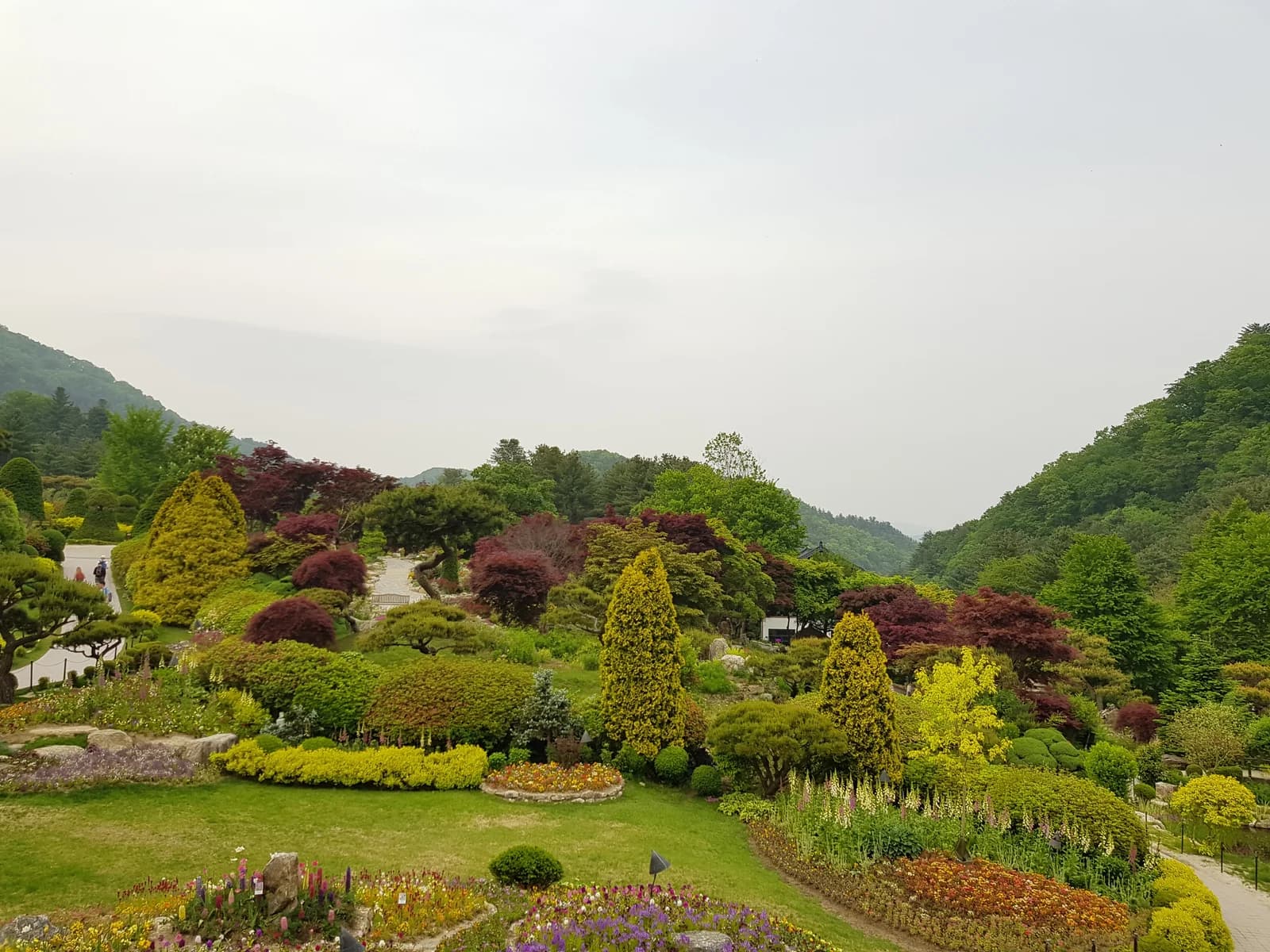
The Sunken Garden rewards a wider view before a close examination of its flowers. The operator describes a design based on the shape of the Korean Peninsula and intended to be appreciated from above. Knowing this gives you something to look for beyond colour: the outlines made by planting areas and paths. If the viewing points are accessible during your visit, compare the garden from a higher position with what you can see at path level. Notice which features become clearer when you stand back. The point is not to find one definitive photograph, but to discover how a change in position changes your understanding.
Try taking one broad photograph and one closer detail rather than several near-identical frames. In the wider view, consider how the planting sits against the mountain backdrop. In the detail, choose a meeting of leaves, flowers, or textures. A quieter flowering period need not make the visit unsuccessful. Paths, trees, and open spaces continue to shape a garden even when its seasonal display changes. Looking for those lasting elements also helps you stop comparing the day in front of you with an exceptionally colourful photograph taken months earlier. Keep to the visitor paths and leave space for people passing behind you.
Change your viewpoint at Seohwayeon
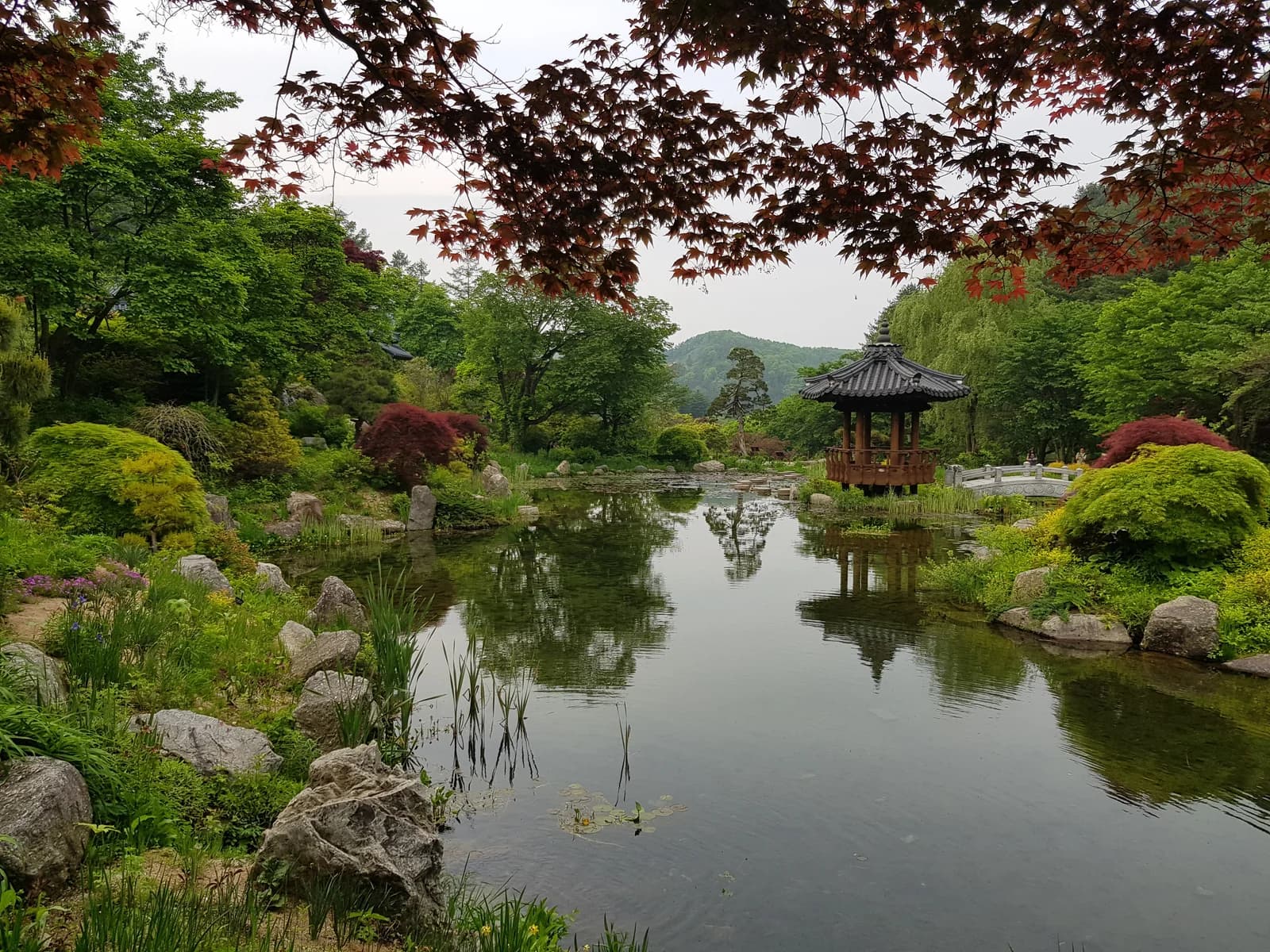
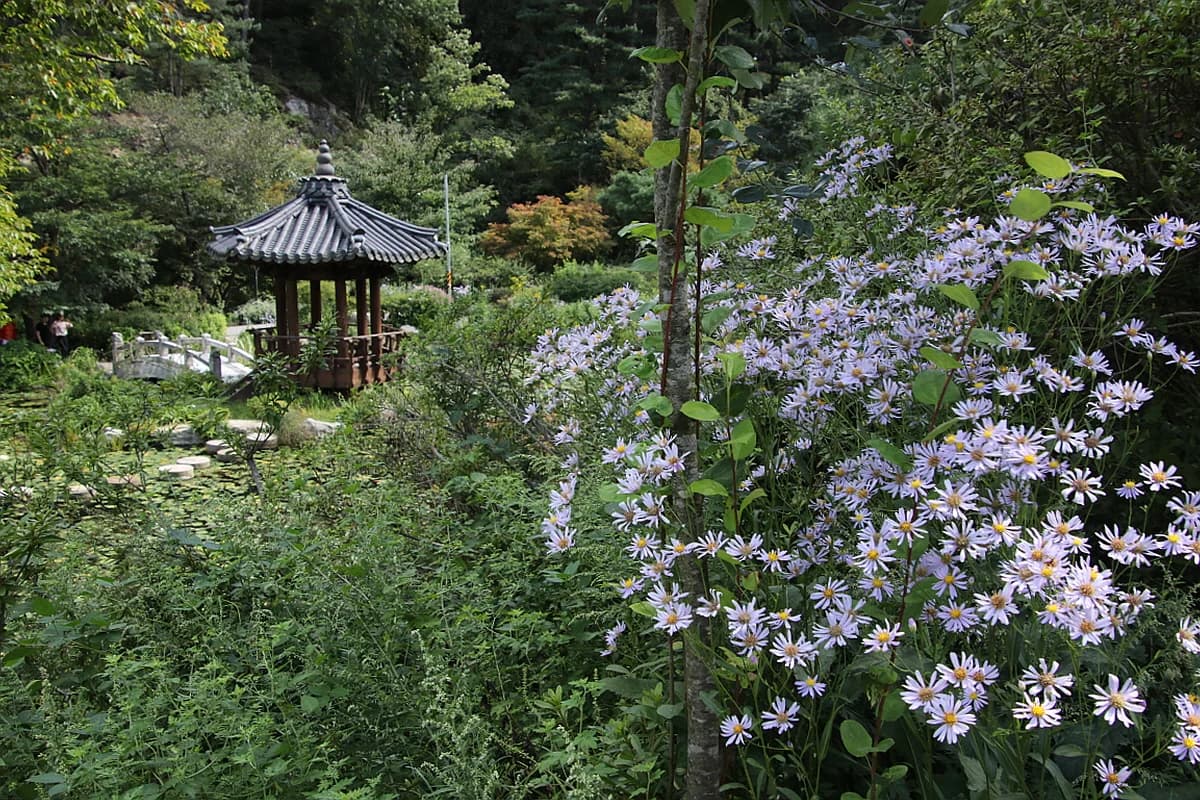
At Seohwayeon, the emphasis moves from flowerbeds to water. The operator identifies this area as a Korean garden, with a pond and pavilion forming part of the scene. Rather than taking a single panoramic photograph and moving on, change your viewpoint. A roof may appear prominently from one position and partly through trees from another. Look at the balance of water, planting, and architecture in each view. Reflections depend on wind and the movement of the water; watch how reflections break and reform as the water moves.
This is also a useful place to slow the conversation down. Ask each companion to point out one thing they noticed: the line of a roof, a branch near the water, or a curve in the path. Read an interpretation panel together if one interests you. You do not need to remember every garden name to leave with a more precise memory of the place. When looking for somewhere to pause, follow the current access signs. A pavilion or building appearing in a photograph does not necessarily mean its interior is open to visitors, so do not assume permission to enter.
Let Haneul-gil unfold as you walk
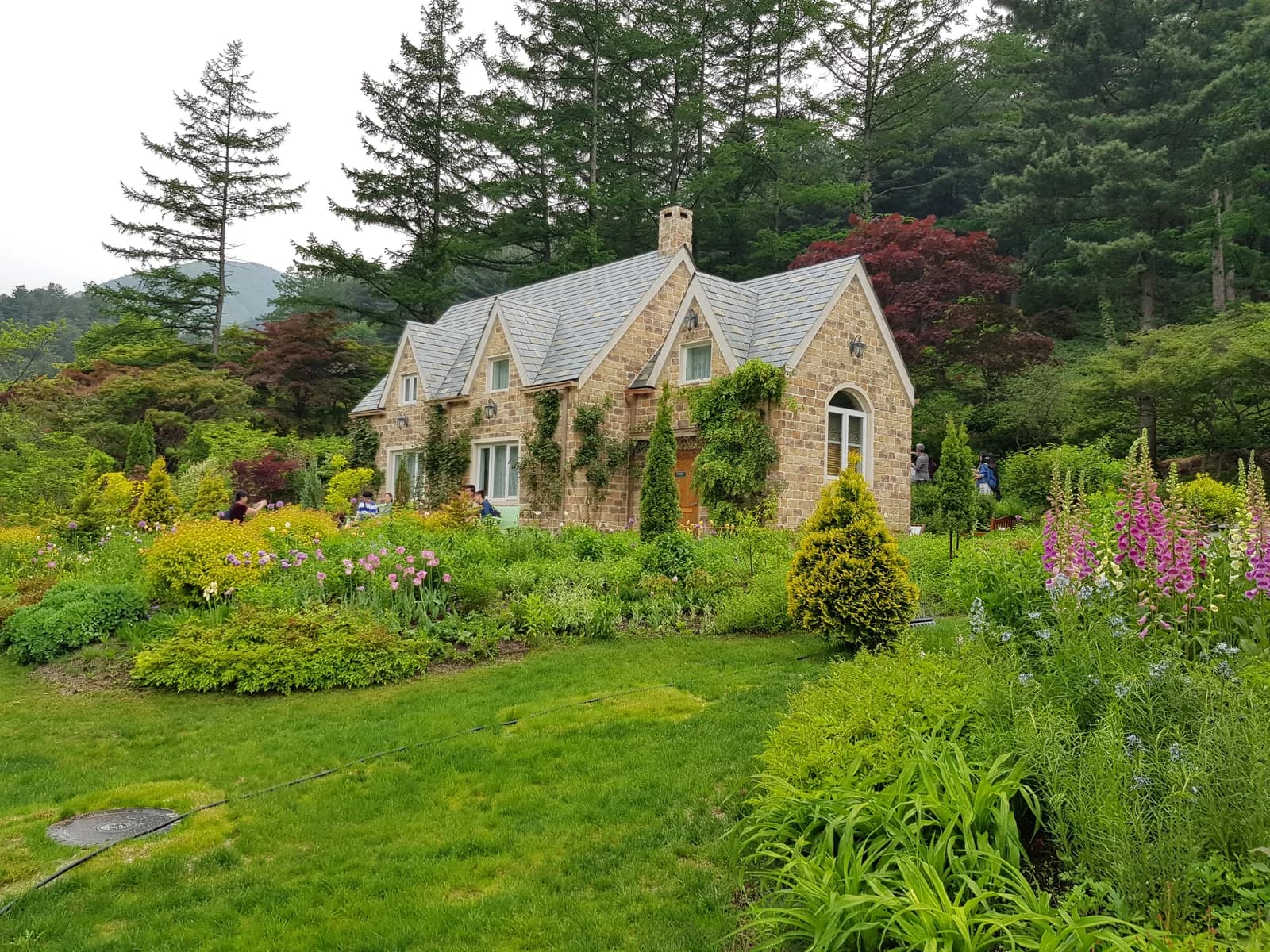
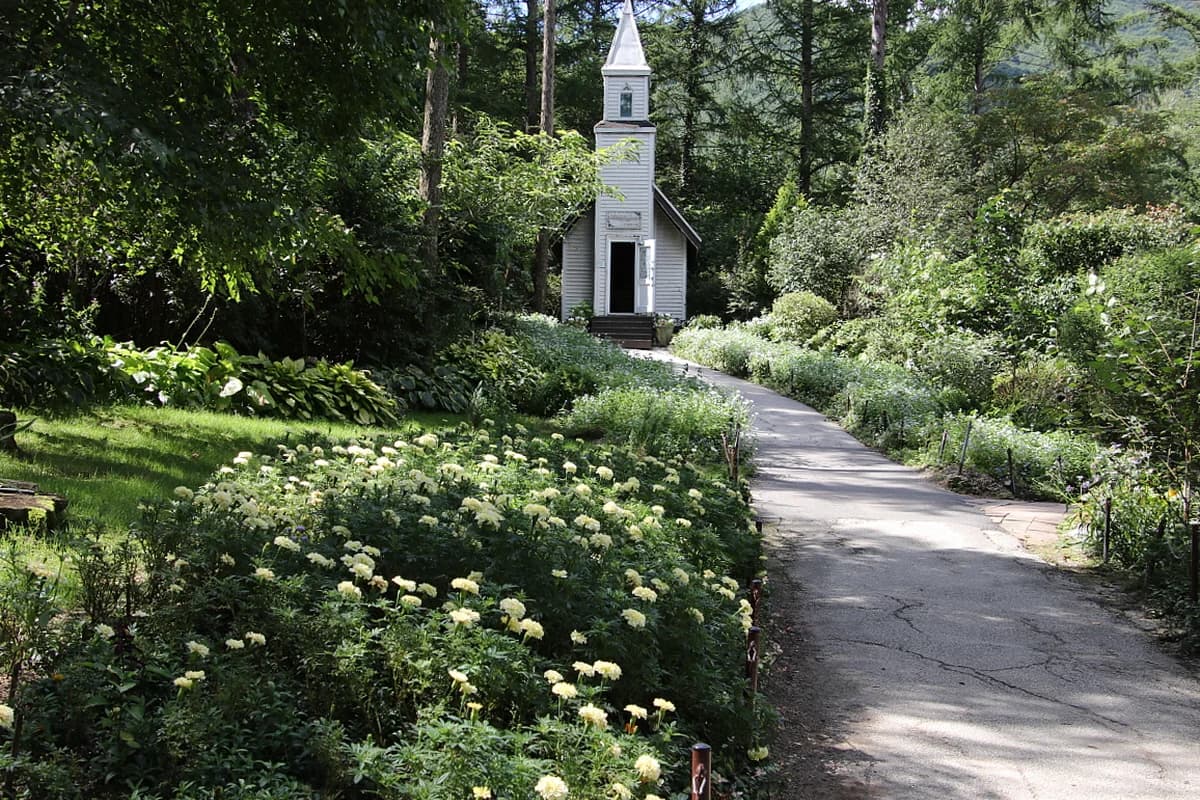
Haneul-gil brings movement back into the visit. The official garden description connects its curved flowerbeds with the small white church in the Moonlight Garden beyond. Look up occasionally from the plants nearest the path and notice how the distant building changes position relative to the beds as you walk. If you stop for a photograph, choose a place that leaves the route open. This is a section to experience through changing views, rather than a finish line to reach quickly. The pace comes from choosing where to pause, not from keeping up with the group ahead.
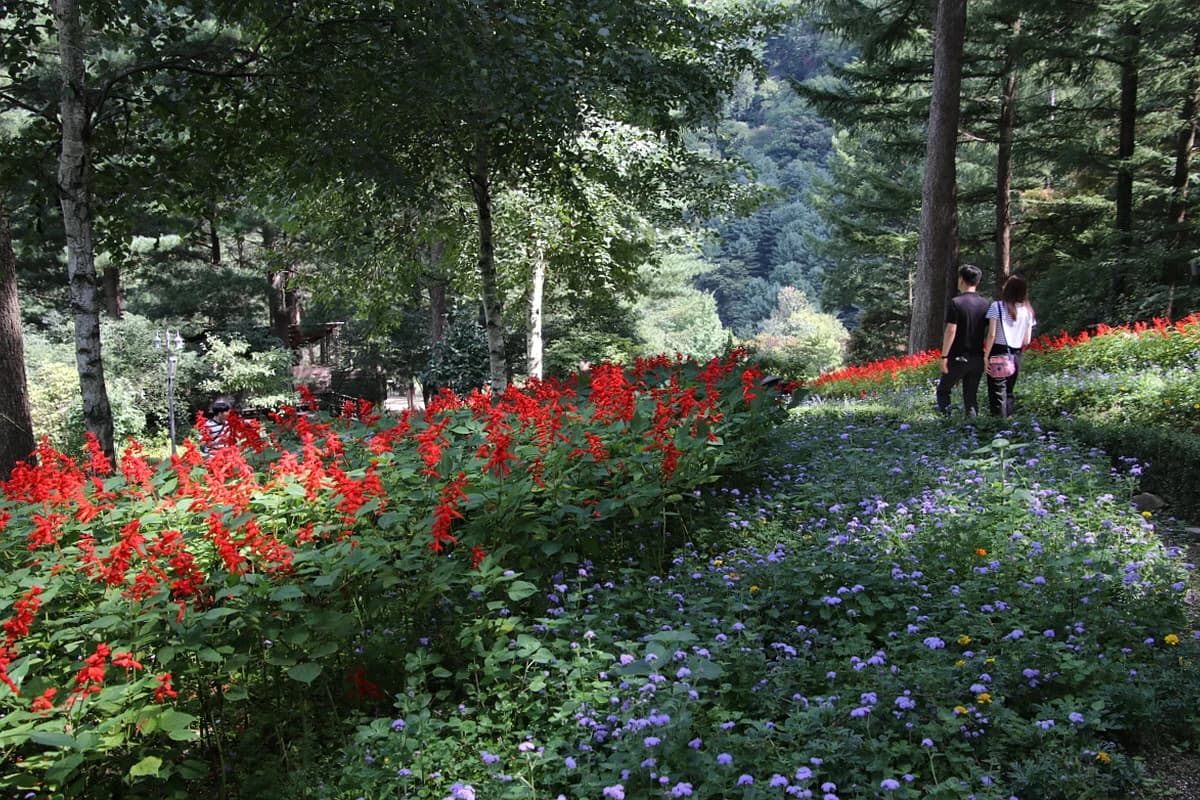
On Haneul-gil, alternate between the nearest flowerbeds and the white church in the distance. Curving planting, the direction of the path and the changing height of the trees form different lines through the garden. A few steps can reveal a building that was hidden among flowers or separate trees that seemed to overlap. Leave room for the path when composing a photograph instead of filling the frame entirely with blooms. It draws the eye deeper into the garden and gives a sense of the walk. If you also want to see an exhibition or event, consult the operator’s information to fit it around the garden visit.
Make room for lunch and changing weather
Plan lunch as part of the same outing rather than another long chain of stops. One place where everyone can eat and rest may suit this visit better than separate drives for a meal and coffee. Before deciding, check the restaurant’s actual address, opening information, and last order time for your day. Larger groups should consider whether there are suitable choices for everyone and whether a queue could interfere with the return journey. This article does not recommend an unverified restaurant by name. The useful decision is to place a meal within the route you actually have time to travel.
Rain or strong wind may be a good reason to shorten the visit. Completing all three areas matters less than moving comfortably and safely through the one you are already enjoying. A greenhouse marked on a map does not guarantee that every indoor space is open that day; check on site before relying on it as a wet-weather alternative. If outdoor conditions become unsuitable, bring lunch or the journey home forward. The proposed half-day is a planning allowance, not a minimum stay you must fulfil to have visited properly. Its purpose is to reduce transfers and give one attraction enough attention.
Before you set out
For practical orientation, the Korea Tourism Organization’s October 2026 Gapyeong article lists garden hours as 08:30–19:00 and admission as KRW 11,000 for adults, KRW 8,500 for teenagers, and KRW 7,500 for children. These are published reference details for that month, rather than a guarantee for every future date. Confirm last admission, any discounts, and access restrictions through the garden’s official information or its published enquiry number, 1544-6703. Do not assume that closing time and last admission are identical when deciding how late you can arrive.
On leaving, you do not need a complete inventory of everything you passed. A shape seen from above, a roofline beside water, and a white building gradually appearing beyond a flowerbed can be enough. They are different kinds of memory from a list of attractions checked off in one afternoon. Add another stop only if there is room for it without immediately erasing the visit in a hurried transfer. A half-day at the Garden of Morning Calm is an opportunity to choose how to look at one place, and to let that choice determine the pace of your Gapyeong day. Bring that way of looking to the hanok courtyard and garden at Chiong Art Center. After placing flowerbeds against a mountain backdrop at the arboretum, turn to the line of the eaves and smaller patches of greenery between buildings. Moving from a large garden to an intimate one gives the two places a shared question, rather than simply adding another stop. If you include Chiong, leave enough room in the day to look at those smaller scenes without rushing past them.