Journal
Music Station 1939: From a Railway Site to a Place for Listening
Explore a former station site through the spaces where music is made and heard.
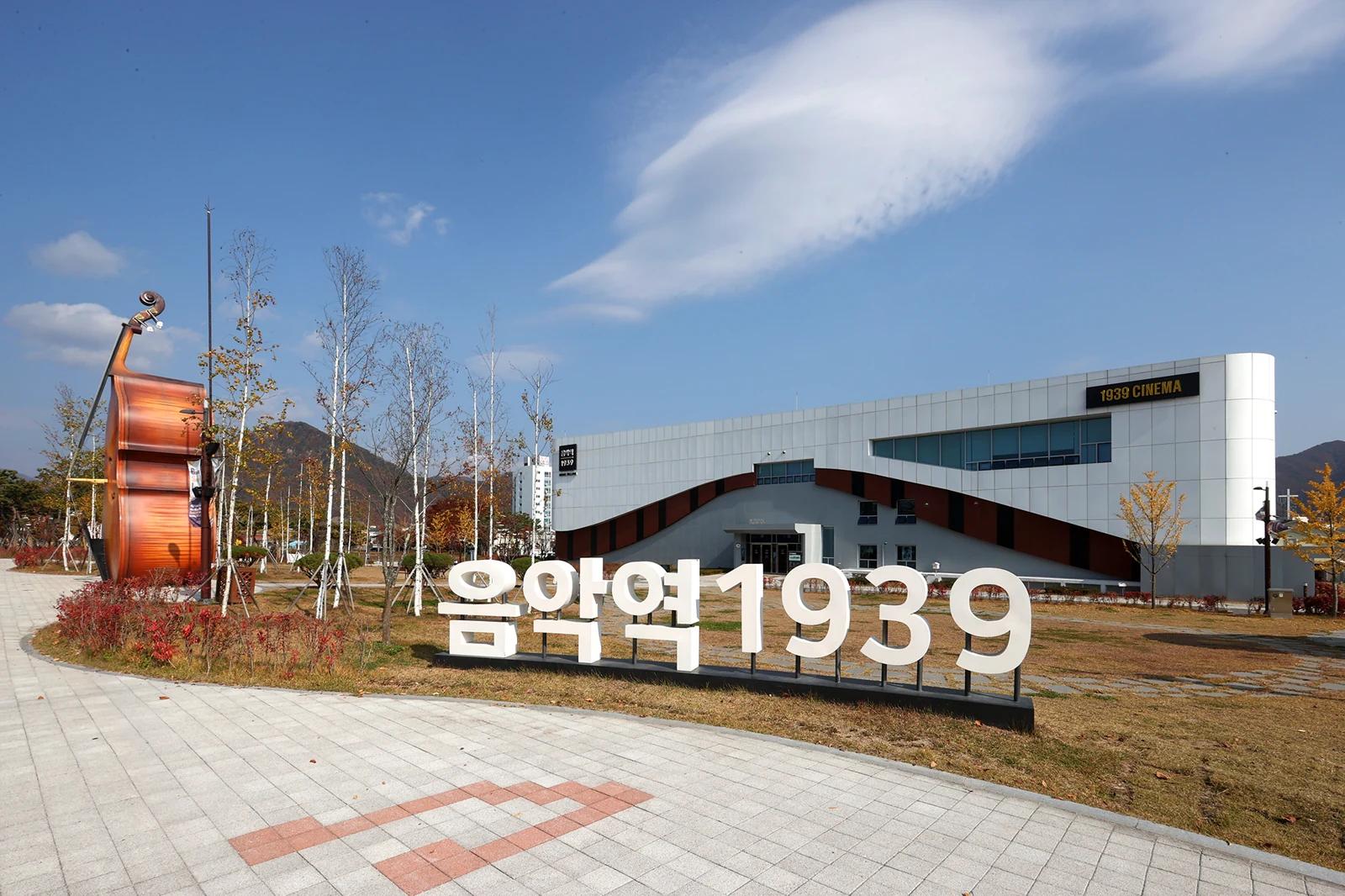
Before planning a music-focused day in Gapyeong, decide which kind of space you want to encounter. Music Village 1939 occupies the former Gapyeong Station site and brings performance and music-making facilities together. Its operator explains that the disused railway land takes its name from the station that opened in 1939. A day built around a scheduled performance needs a different plan from a visit to look at the setting. Check the operator’s current programme and the conditions for entering each space before setting out.
The large string-instrument sculpture and the lettering in front of the building help identify the place. The number points back to the station’s opening year. This is not the current passenger station: save both the name 음악역1939 and the address, 100 Seokbong-ro, Gapyeong-eup, Gapyeong-gun, when arranging the trip. Chiong Art Center is in a different district, Sang-myeon, so treat it as a separate journey. Allow time to check the local connection and admission information between a train arrival and any performance.
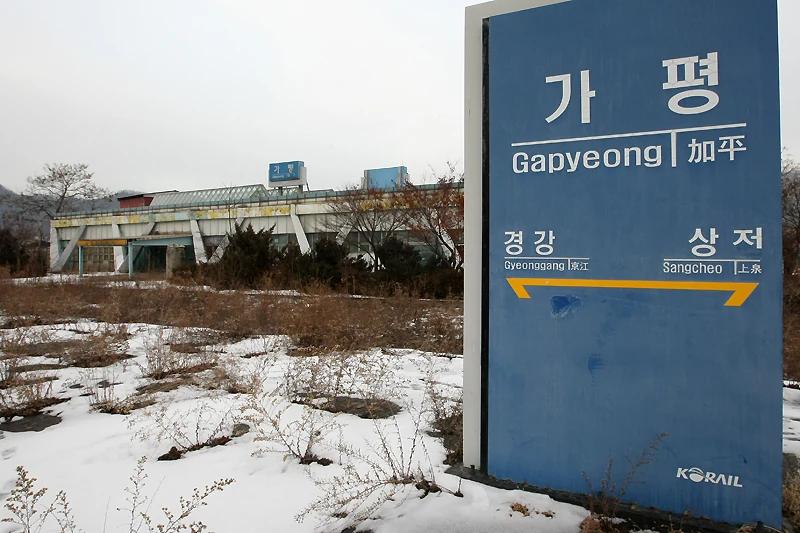
The name is a useful first clue. A station suggests departures and arrivals, while this former railway site has been given spaces for people to stay, make and hear music. The operator describes M Station as containing performance and other cultural facilities; S Station houses recording and editing functions, and T Station contains practice rooms. Those names make an unfamiliar site easier to read on a map. They do not mean every room is open for casual entry. Check which spaces serve an audience, which require a hire arrangement, and what visitors may enter on the day.
Outside, compare scale and shape before looking for a particular event. A large string-instrument sculpture rises beside the low, horizontal lettering of Music Station 1939. Behind them, curved and straight lines meet across the building. One way to look is to take in the whole frontage and then notice the spacing between letters and the pattern of the paving. The sculpture is a landmark, not necessarily an instrument visitors may touch or play. Follow the posted route and use what is visible as a starting point.
Spaces to make and hear music
If a performance is the reason for the trip, choose the date and work before planning the rest of the day. An indoor concert and an outdoor event at the same complex may have different seating, weather arrangements and admission procedures. Check the official programme for the date and start time, then see whether a seat or separate application is required. Do not carry a performer or time from an old event article into today’s plan. Families may also want to ask about running time, age guidance and leaving and re-entering during a show. Neither daily performances nor available seats are guaranteed.
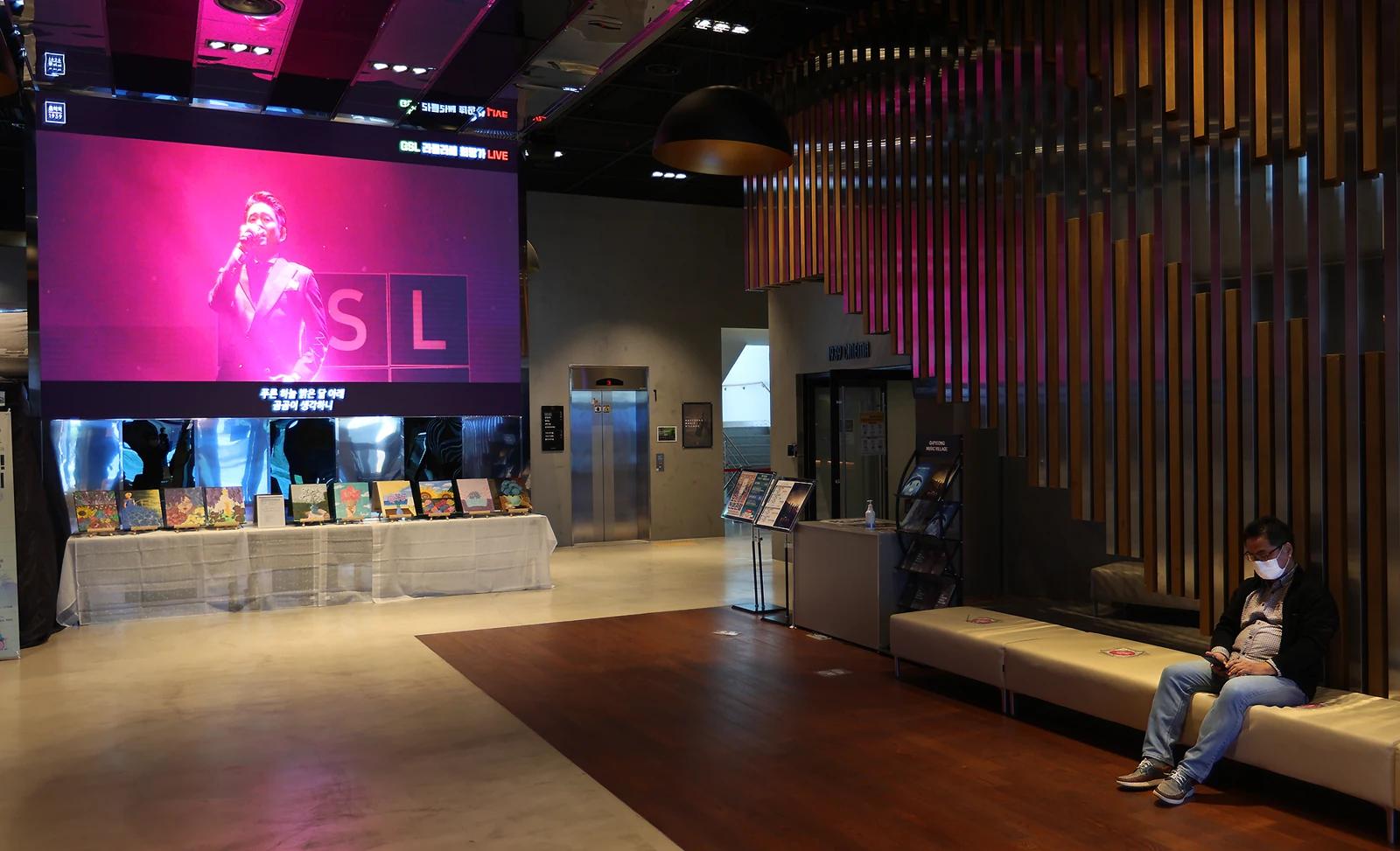
On a day without a ticket, the facility guide can still help distinguish places where music is made from those where it is heard. A recording room supports the making of a result; a practice room allows musicians to repeat and adjust; a performance hall brings performers and an audience together at a particular time. Check separately whether each room is open to visitors. Read the labels on the operator’s plan and ask about the actual public areas. Let on-site guidance determine whether a room can be seen or photographed. Thinking about preparation that an audience does not normally see can change how the building is understood.
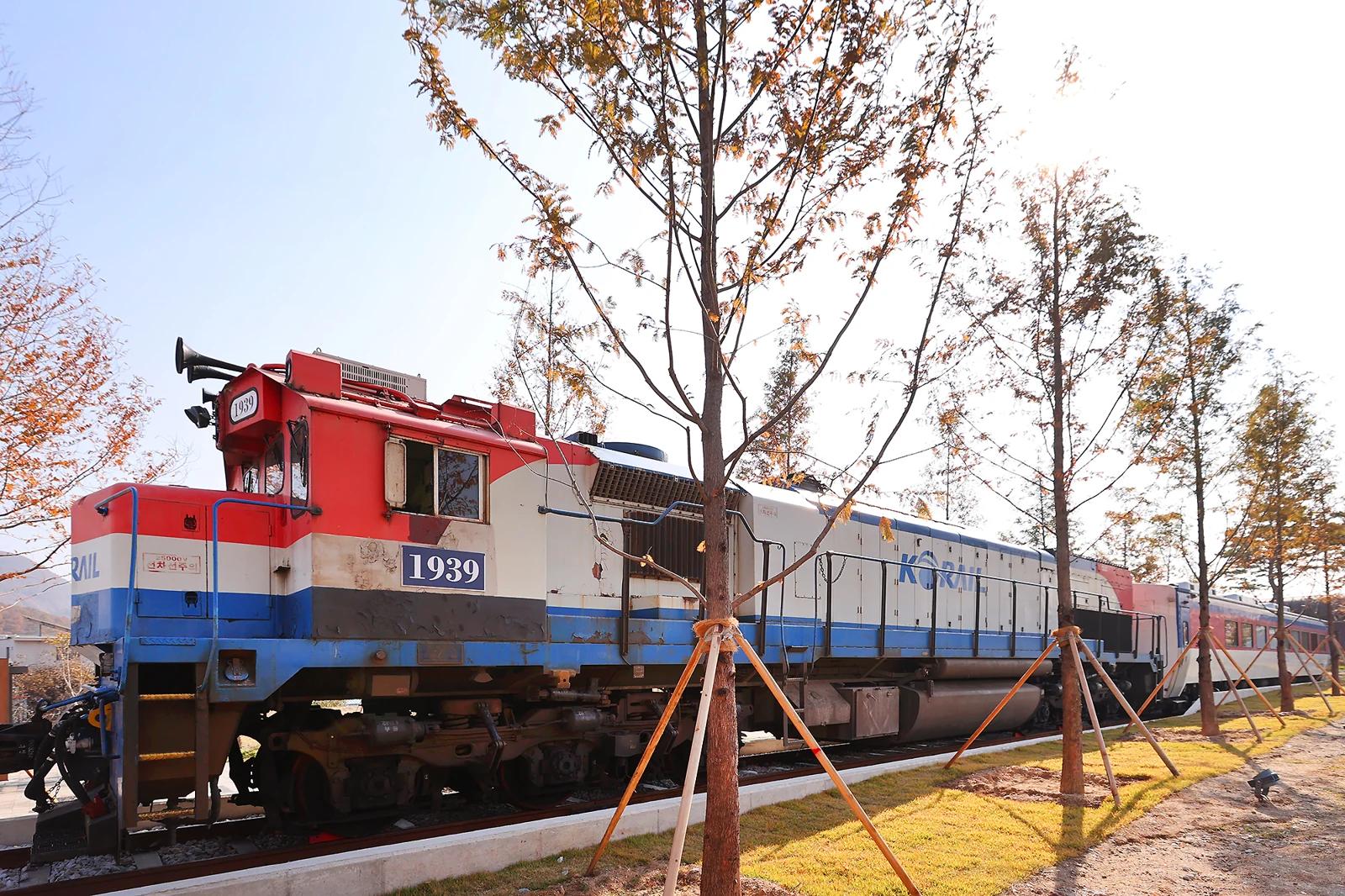
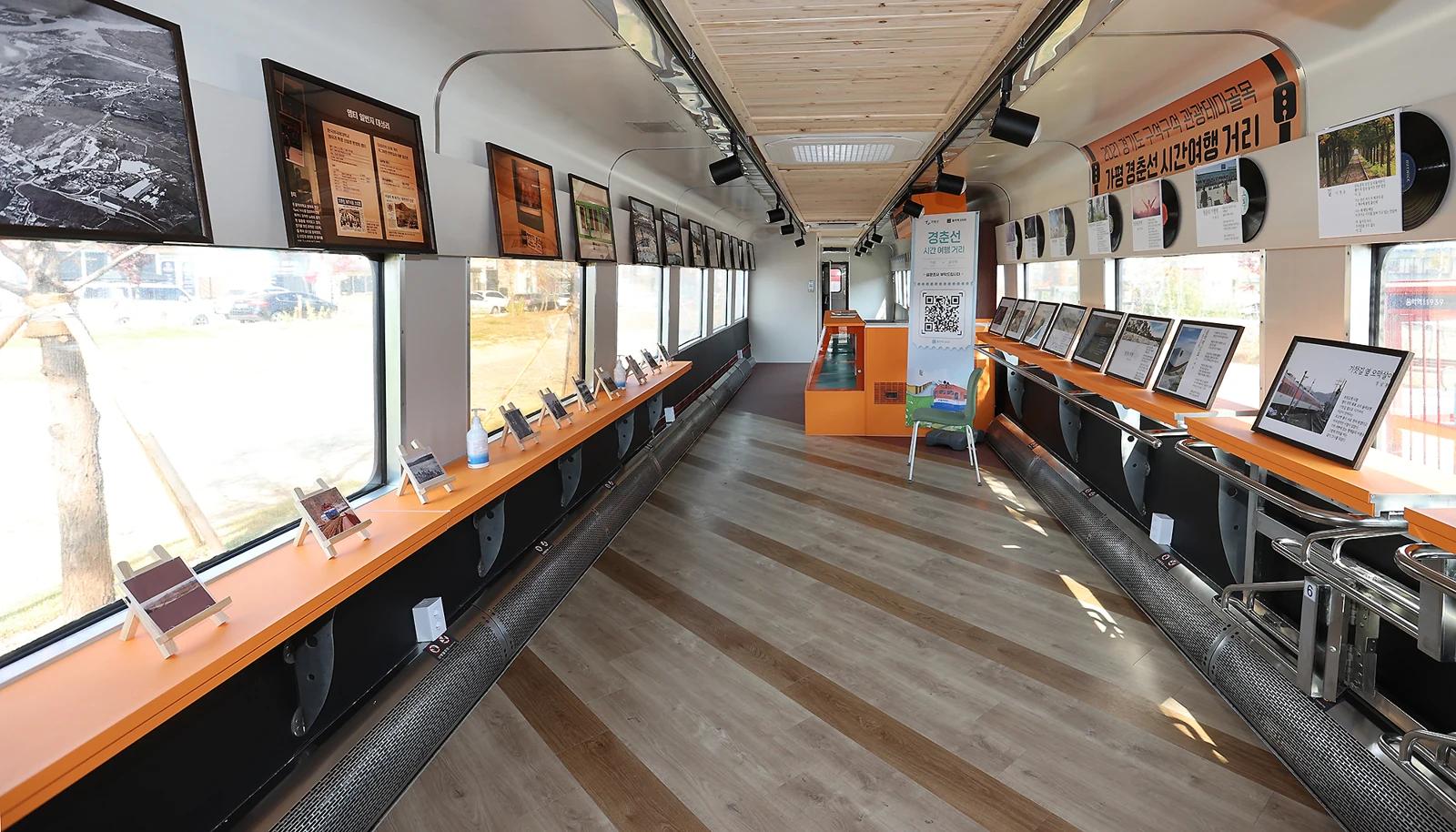
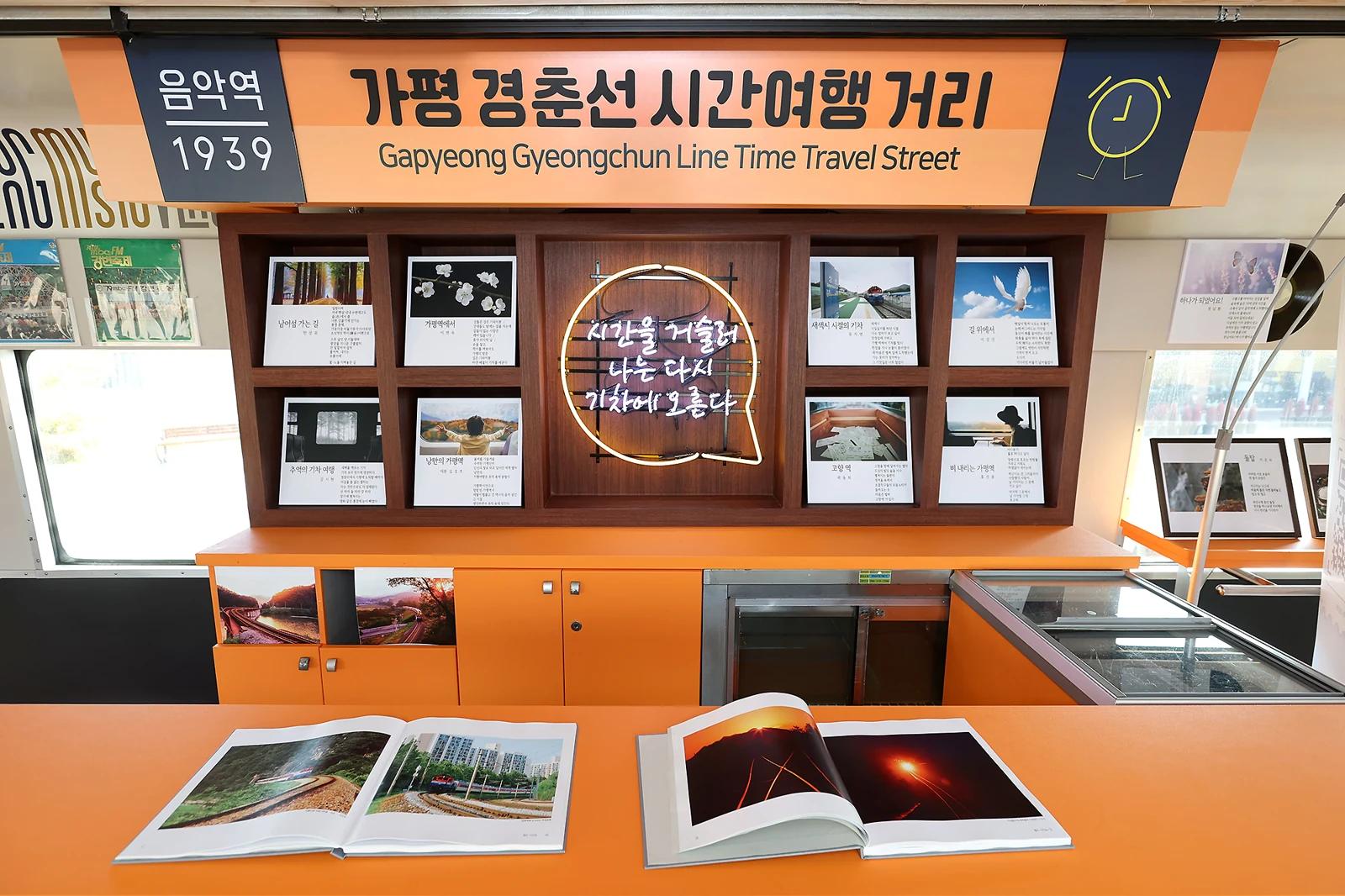
Beside the music complex, a former train has been described as part of the Gyeongchun Line Time Travel Street. Photographs published by Gyeonggi Province in 2021 show a red, white and blue locomotive and long displays inside a carriage. Those images document the exhibition at that time; they do not establish that the interior is open today. If entering it matters to your plans, check opening arrangements first. If it is closed, the exterior may still offer a way to compare the horizontal body, wheels and repeated windows from a permitted position. Signs and staff instructions determine where visitors may go.
In the photographs, framed images and text line both sides of the carriage, leaving a passage through the middle. A room made for movement becomes a place in which to pause and read. Instead of watching the landscape recede through the windows, the visitor’s attention can move between small images and the spaces around them. Choose one item and ask what story it is trying to tell rather than trying to absorb every caption. When the exhibition is inaccessible, treat the photographs as evidence of a past arrangement and avoid assuming that the same objects remain on view.
Railway traces and planning the day
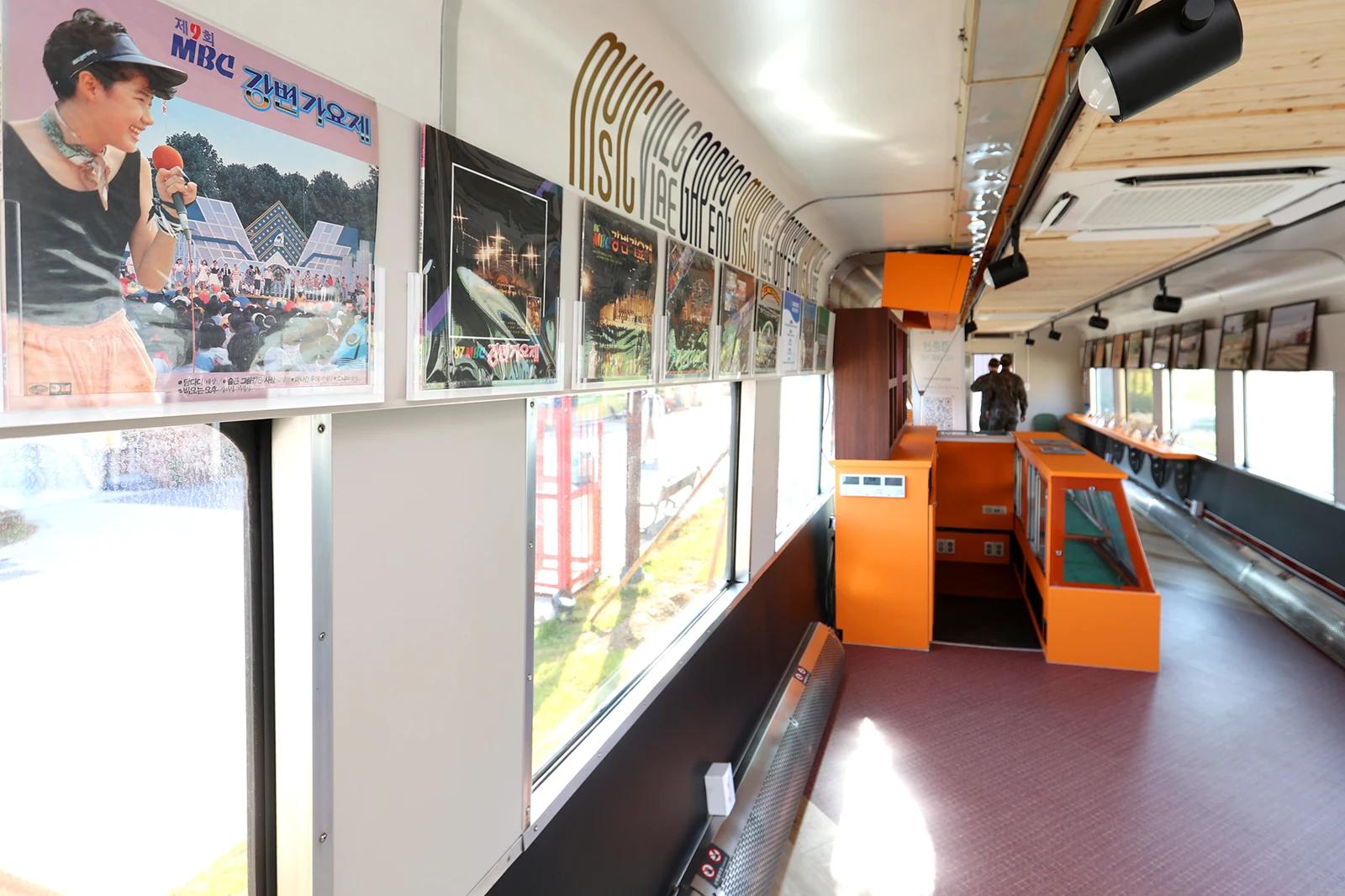
The province’s account also describes records associated with the Gangbyeon Song Festival in that carriage exhibition. That is a useful way to connect a building devoted to music with a wider local performance history. It does not prove that those particular records remain in place or can be played. When choosing a current show, compare genre, instrumentation, duration and indoor or outdoor setting instead of relying only on a familiar name. For unfamiliar music, one point of attention may be enough: the number of instruments, for example, or the pause between pieces.
Gapyeong Railway Park is a separate space following former railway land. The county describes a linear park project linking Music Station 1939 with the rail-bike boarding area. Our earlier railway story follows the practical choices of a rail-bike ride and return; here the emphasis is on a cultural facility and the uses of the land around it. Decide how much walking suits the group and check the on-site map for permitted sections and crossings. Walking the entire park is not a prerequisite for understanding the music complex. Staying near the building is a reasonable choice when distance is a concern.
Arrange food around the beginning and end of the performance. Agree whether the group would rather eat lightly beforehand or leave a longer conversation over a meal afterwards. Confirm the restaurant’s opening, menu and allergy information directly, and do not assume food is permitted inside a venue. If adding Jatgoeul Market, distinguish its permanent facilities from its periodic market days. Carrying purchases into a hall and spending longer at the market are separate decisions; check the venue’s rules and leave time for the return journey.
Public transport travellers should plan both the connection from the current passenger station and the return. A train to Gapyeong leaves a final local leg to resolve. Check the current route and service time with Gyeonggi Bus Information, or establish a suitable pick-up and drop-off point if using a taxi. Drivers can check parking with the operator. Visitors using a wheelchair or stroller should ask about steps, lifts, seating and the route to toilets. A county tender for accessibility-related works issued in 2026 does not by itself establish whether work has been completed or which route is currently usable.
If the carriage’s repeated windows caught your attention, continue that observation at Chiong Art Center by looking at how hanok doors and windows frame the courtyard. Evenly spaced carriage windows give a rhythm to a space once made for travel; timber frames and eaves divide the view towards a garden in another way. Their functions and materials differ, yet both invite attention to the intervals between inside and outside. Check Chiong’s introduction and visitor guidance and plan it as a separate visit. One place gives structure to music and memory; the other offers another way to notice the boundaries around a courtyard.