Journal
Books and Instruments: A Cultural Day on Nami Island
Put a shared picture book and one exhibition between the famous tree-lined paths. Let a few objects, rather than a full island circuit, give the day its shape.
The familiar image of Nami Island is an avenue of tall trees. For this outing, begin with a different decision: where would you like to open a book, and which exhibition deserves your attention? Build the day around a picture, an instrument and the paths between them. This approach suits companions who enjoy looking at objects and talking about them, including families who would rather pause over a page than complete a long circuit. The proposed sequence is the wharf, an island map, books and one exhibition, lunch, a short outdoor walk and the return ferry. It gives the island a cultural focus without turning every stop into an obligation.
Save the departure point as well as the destination. Nami Island itself is in Chuncheon, Gangwon Province, at 1 Namiseom-gil, Namsan-myeon. The normal ferry departure wharf is in neighbouring Gapyeong: 1024 Bukhangangbyeon-ro, Gapyeong-eup, Gapyeong-gun, Gyeonggi-do. In Korean, search for 남이섬 선착장 or 남이섬 매표소. Chiong Art Center is at 300 Sumogwon-ro in Sang-myeon, so travelling from Chiong to the wharf is a separate transfer within a wider Gapyeong itinerary. Check the live journey before deciding how much island time to add. Sharing a regional itinerary does not make these places a continuous walking route.
On the official admission page checked on 1 November 2026, standard admission with a regular ferry in both directions is KRW 19,000. Reduced categories have their own age and documentation requirements; use the published table for each member of your group. The motorboat arrival option has a different price. Parking is also a separate part of the budget, so consult the directions page rather than assuming it is included with admission. Keeping entry, mainland transport and lunch separate makes the cost easier to assess before departure. You do not need an additional paid activity to give this visit a purpose.
Read the seasonal notice alongside the regular ferry timetable. For 18 September–22 November 2026, the operator advertises an autumn first departure at 07:30 daily and a last boat at 21:30 on Fridays, Saturdays, Sundays and public holidays. This article proposes a daytime cultural visit. Before entering, confirm that day’s departures from the island and work backwards from your onward train or bus. A short time on the water does not account for queuing or walking back to the boarding point. Agree where you will finish sightseeing while there is still room to adjust the plan.
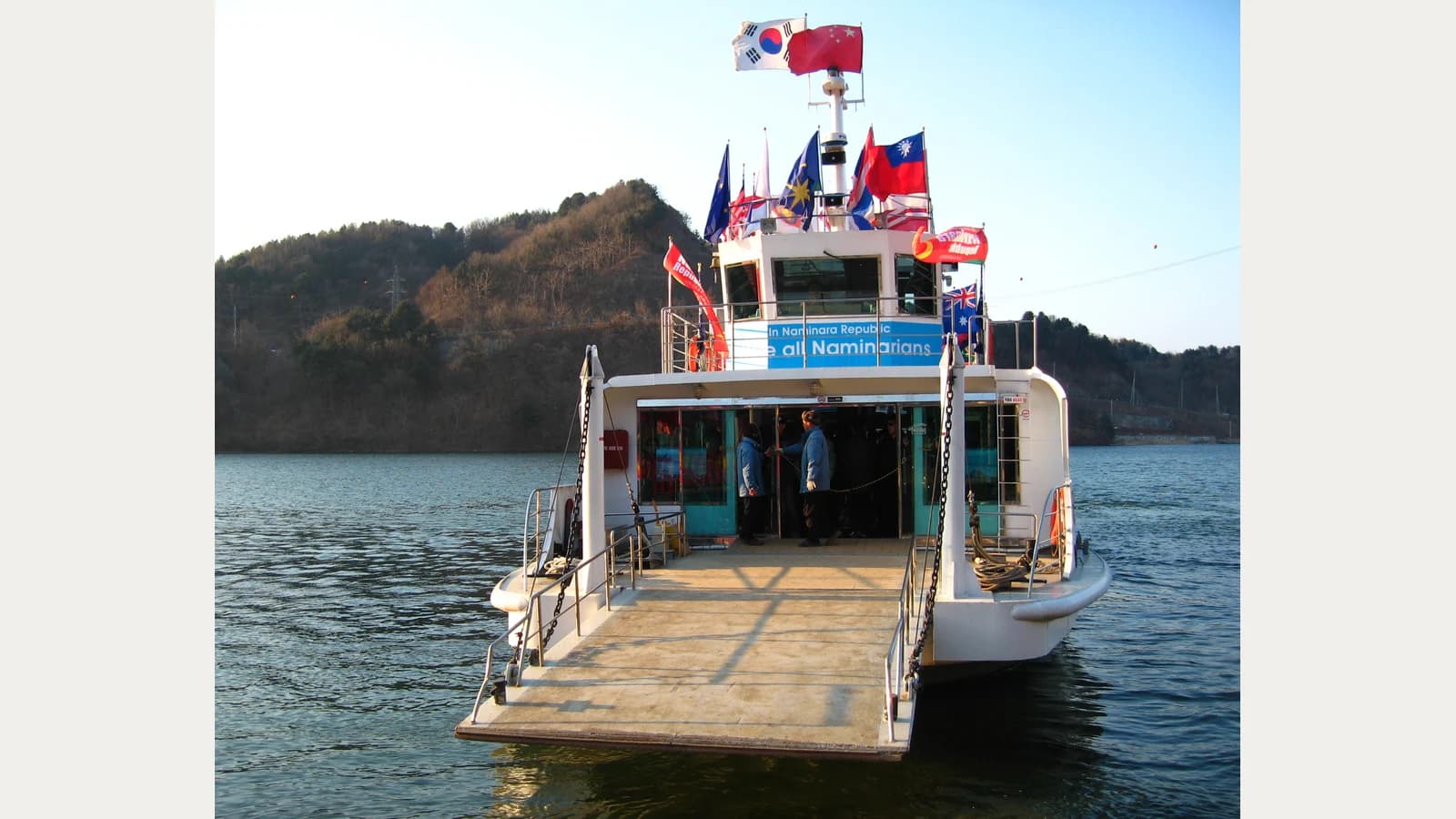
Gapyeong Station is the railway gateway, rather than the island entrance. After arriving by the Gyeongchun Line or ITX-Cheongchun, choose the final mainland transfer to the wharf. The operator’s directions distinguish walking, a local bus and a taxi; compare them against luggage and your companions’ walking needs. Save the Korean wharf address and check the return pickup point too. Individual train and bus departures are not reproduced here. In particular, leave time after the return ferry to reach the station: stepping off the boat and boarding a train are separate stages of the journey.
From a Shared Page to One Exhibition
Once ashore, locate Baplex and your preferred exhibition on the current map. The official downloads section provides Korean and English leaflets. The cultural guide distinguishes the Picture Book Lounge, UNICEF Lounge and several exhibition spaces, which helps you choose an indoor destination before following a famous avenue. The sequence in this article is an order for looking, rather than a verified shortest or step-free route. Use the map and local signs to establish entrances and connecting paths. If an exhibition is changing or a space is unavailable, build the visit around what you can actually see that day.
For a book-minded companion, start by considering the Picture Book Lounge, listed on the first floor of Baplex. Note the UNICEF Lounge and its International Children’s Library separately, so that the two names do not become interchangeable. A picture book can be shared even when everyone cannot read its language. Try one spread: which direction does the character face, and where is the largest area of colour? Rather than testing a child on the plot, ask what changes on the following page. Expressions, repeated shapes and the order of images offer a way into conversation in your own language.
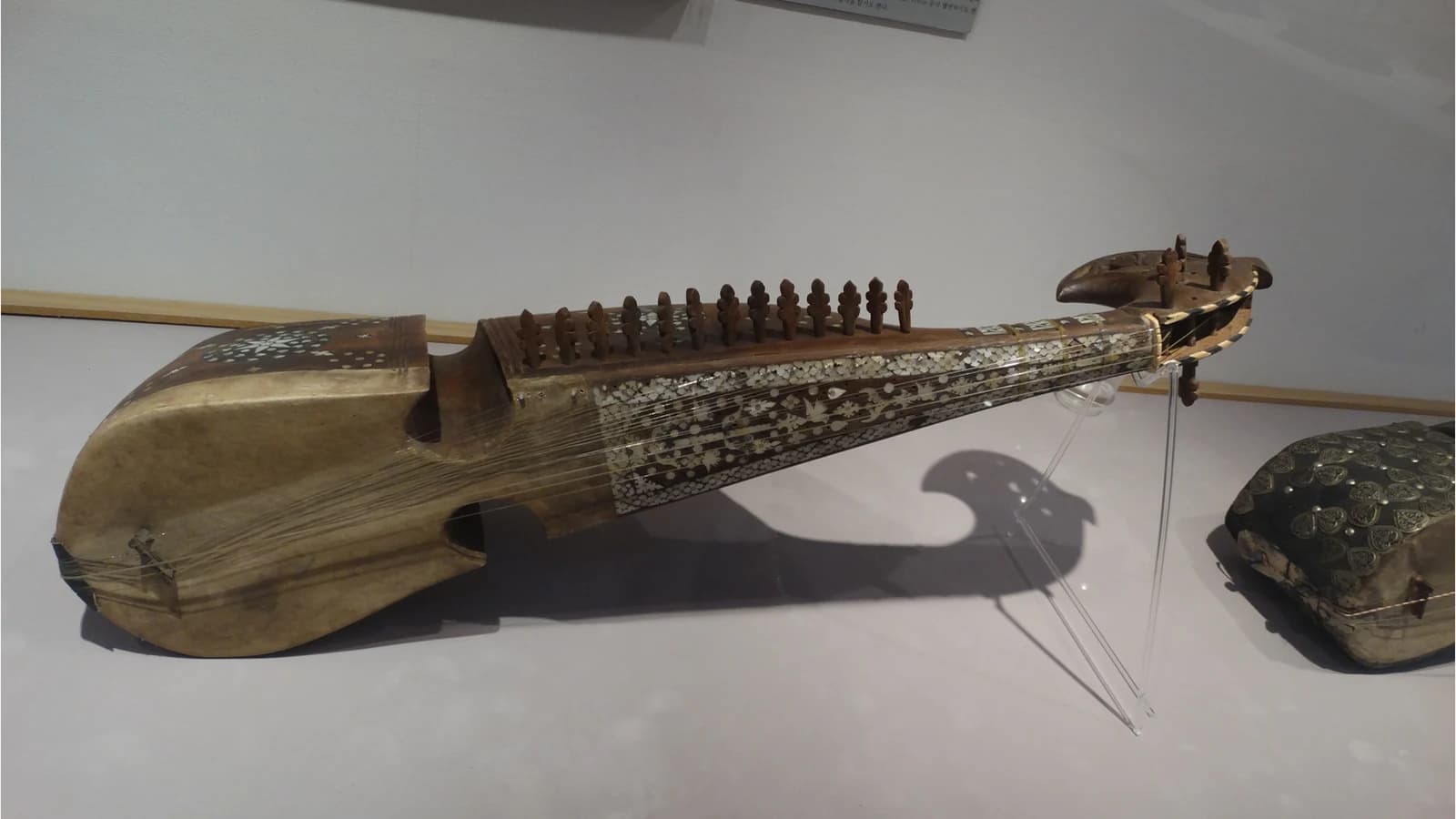
For another indoor stop, consider the Nami Concours Gallery or Liu Hongjun’s World Musical Instrument Exhibition Hall. The official introduction connects the former with an international picture-book illustration competition and the latter with instruments collected and restored by Liu Hongjun. Choose illustration if the movement and composition of pictures have caught your attention. Choose instruments if you are curious about how an object’s form relates to sound. Confirm the day’s displays and available rooms locally, and allow yourself to choose just one. The point is to leave with a question worth discussing, while keeping time for lunch and the outdoor setting.
At the instrument display, look at the relationship between the body and the part that produces sound before concentrating on unfamiliar names. Is there a long neck with strings, a hollow resonating body, or a form intended to be struck or blown? This is a suggestion for looking, not permission to play the exhibits. Read the labels and keep hands away unless a display explicitly invites interaction. Each companion could select a different object and explain what drew their eye. The attention given to a character’s gesture in a picture book can then move to the imagined movement of a player’s hands.
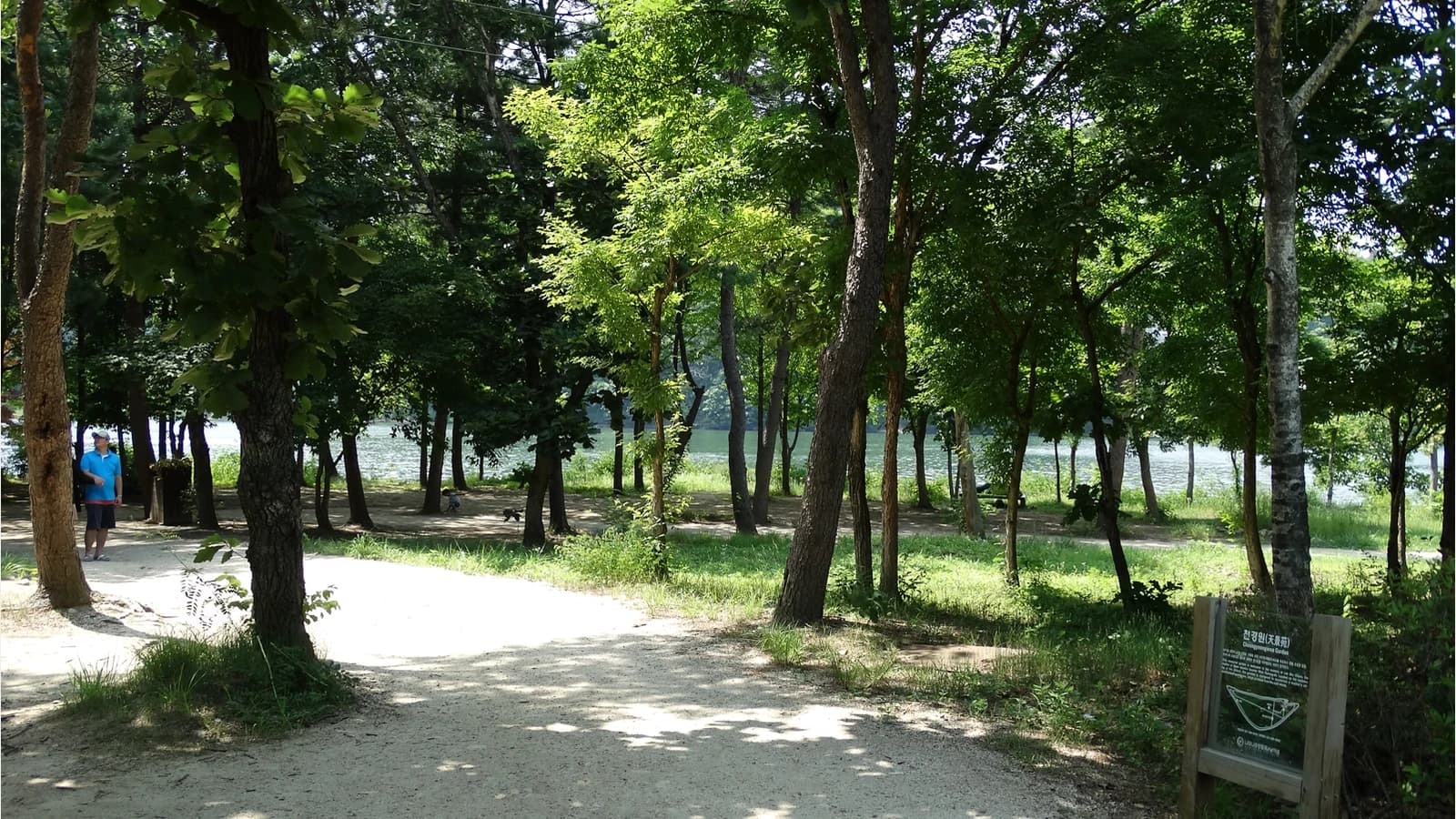
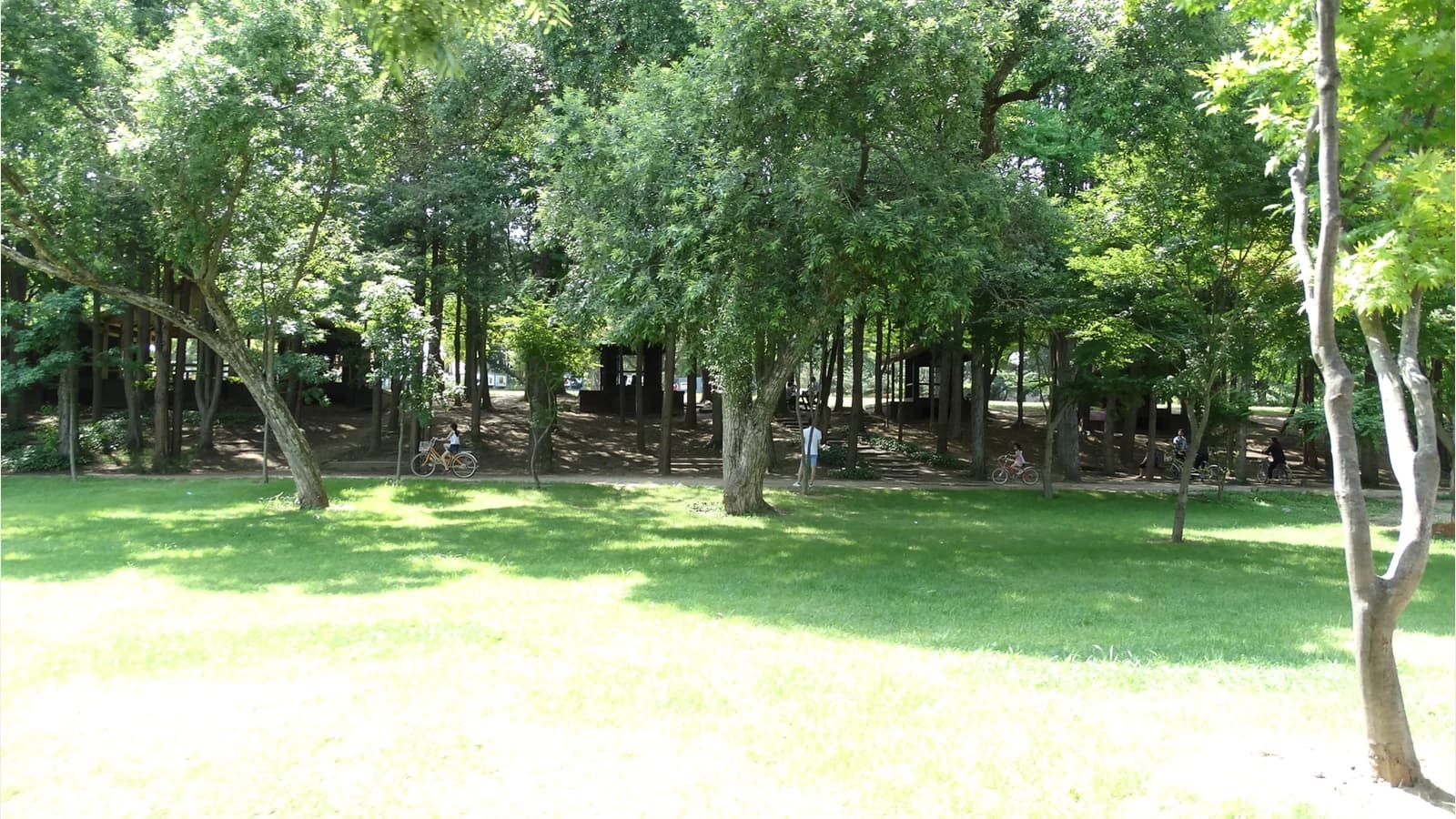
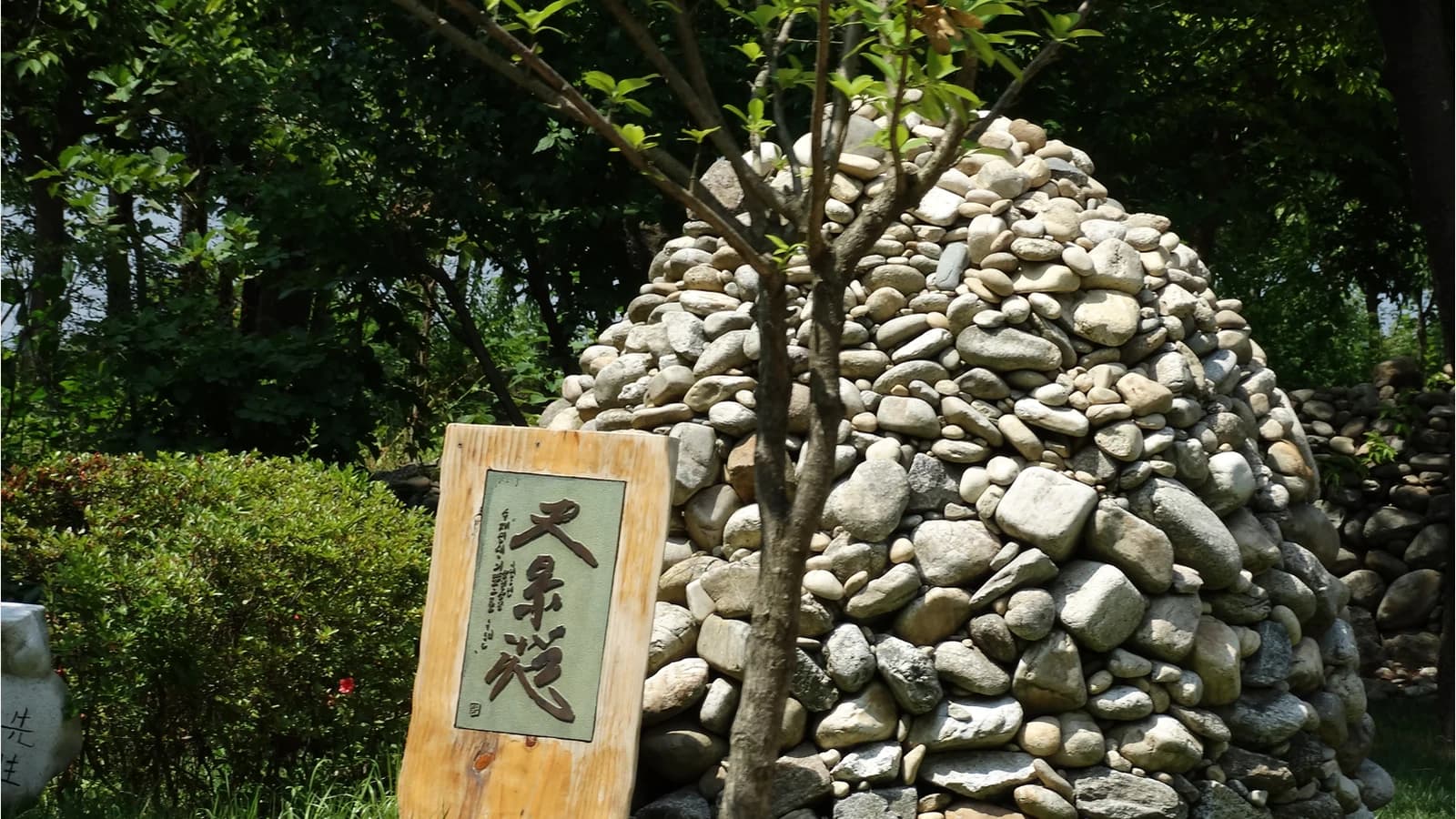
Outside, give the paths their own attention. After small illustrations and objects, look at the space between trunks and the places where lawn meets shade. In the photographs, a branching earth path divides the view, while an open grassy area creates a bright foreground against woodland. Find somewhere to pause without obstructing other walkers instead of insisting on a photograph from the centre of the path. The operator’s garden introduction describes a landscape developed through planting. Looking at the arrangement of paths and trees carries the visit’s interest in made spaces beyond the exhibition rooms. Even a mound of rounded stones beside a wooden sign offers a smaller arrangement to notice: look at how the materials are placed together.
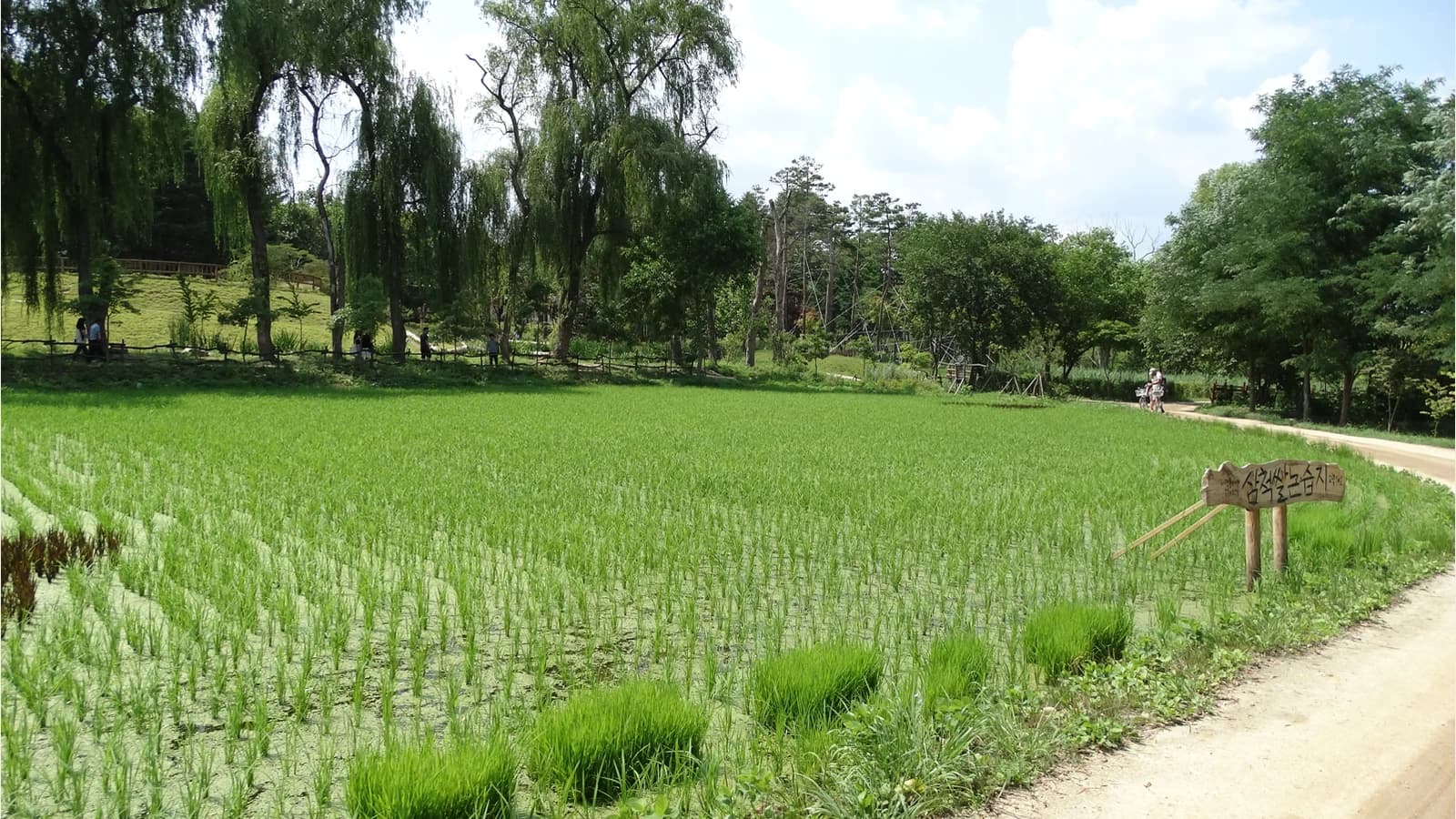
The photograph of a small rice paddy offers another scale of looking. Green shoots form rows above the water, and a path bends beside the bank. Consider how water and a crop occupy a defined space between paths and trees. An instrument may suggest the movement of a player’s hands; planted rows can suggest the hands that set them out and tend them. There is no need to touch the plants or step inside the bank. From an appropriate stopping place, look at the boundary between this small rectangle and the surrounding woodland, much as you examined the arrangement within one illustrated page.
Lunch, a Little River Air and the Return
Decide whether lunch belongs near the books or back in Gapyeong after leaving the island. The official restaurant guide places Korean restaurant Nammoon opposite Baplex, Asian restaurant Dongmoon on its first floor, and Gomok along the middle of the central pine lane. These give you locations to compare against the size of meal and kind of pause you want. Ask your chosen restaurant about the menu, prices and last orders. For dakgalbi, a chicken dish, or makguksu, buckwheat noodles, the operator also lists Seomhyanggi. Confirm what is being served before settling on a meal. Choose a meal that fits the places you are already seeing and the eventual return to the ferry.
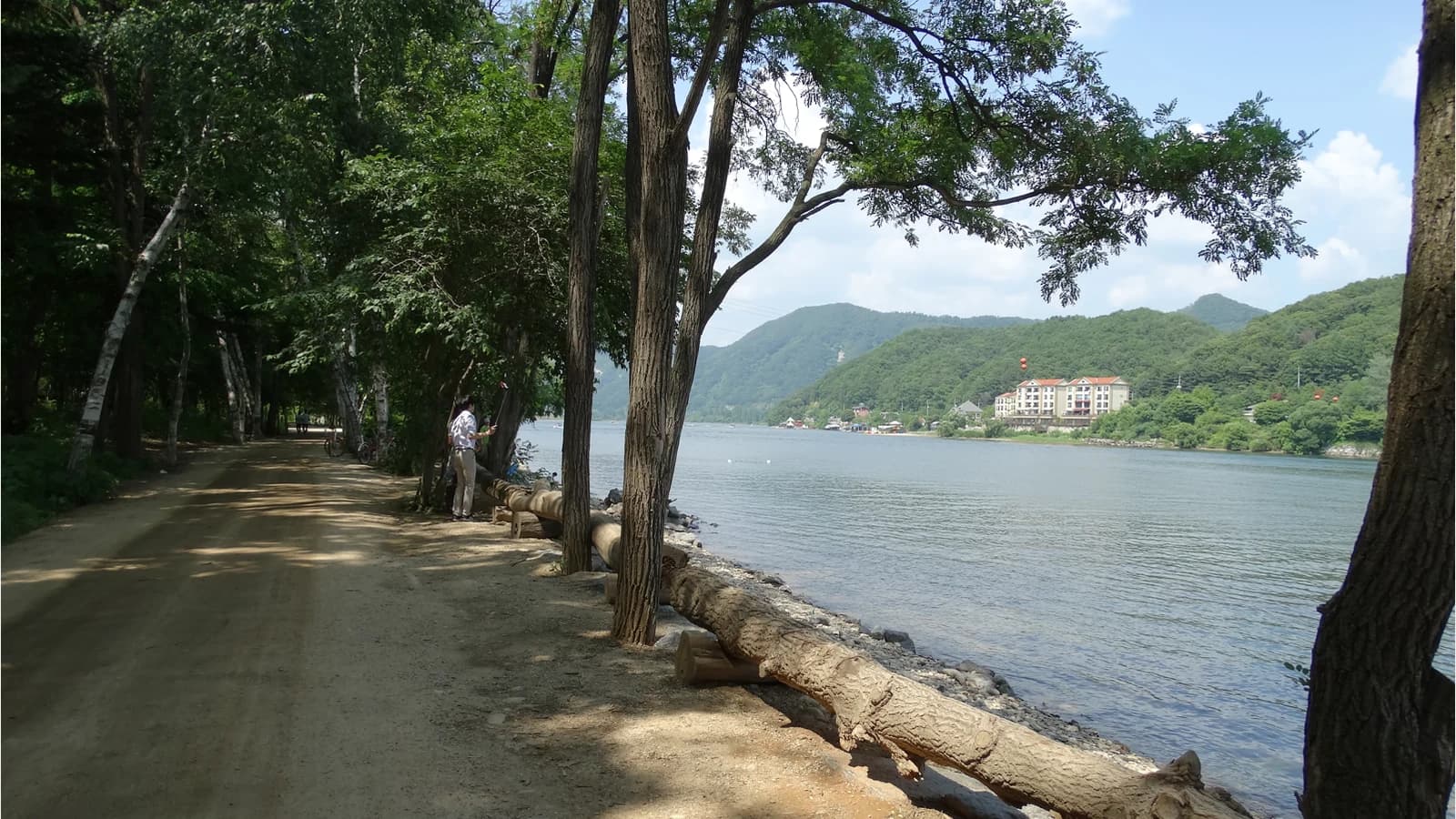
After lunch, consider a short stretch of the open riverside walking route instead of adding another exhibition. Water and the hills beyond let your eyes move further than an illustrated page or a display case. In the riverside photograph, trunks and water define one edge of the path. Stay on the designated route rather than stepping down towards the river to recreate a view. In late autumn, keep an extra layer accessible and watch your footing on wet leaves. Let the actual weather and colours determine the length of the walk. A brief look across the water may be enough after a satisfying time with books and objects.
For a companion using a wheelchair or pushchair, ask separately about boarding the ferry and entering the chosen exhibition. The official facilities page lists free wheelchair rental at the tourism office and accessible toilets, but those provisions do not establish that every connection in this suggested outing will be suitable. Check equipment availability, surfaces, entrances and resting places before travelling. A longer indoor visit might work in rain, yet a list of indoor attractions does not remove the outdoor transfers. If weather worsens, check ferry operations and the mainland journey first, then decide which viewing stop to omit.
Before the return boat, choose one colour from a book and one instrument shape to remember. Being able to describe a shared object gives this cultural walk a clear centre, even without a large collection of photographs. Carry that interest to the ceramics and art spaces at Chiong Art Center. After considering how an illustration or instrument joins form to purpose, bring a similar question to the mouth and body of a ceramic vessel and the lines of a nearby hanok window. The connection is the attention given to things people make in different settings. Consult Chiong’s introduction and visiting information before adding that separate transfer and visit.