Journal
Pinocchio and Da Vinci: Imagining Movement in Gapyeong
What might make it move? Begin with a puppet’s pose, a workshop’s tools and the connections within a wing.
Why put Pinocchio and Leonardo da Vinci in the same village? At Gapyeong’s Italian Village, use that pairing as a question to carry through the displays. A wooden character invites you to imagine a person moving; a flying-machine model invites you to imagine how movement might be achieved. One is read through a story, the other through shape and connections. Give the visit three subjects: the joints of a puppet, the tools around a workshop, and the framework of a wing. Asking what might make each object move gives the two exhibitions a shared thread without requiring you to see every room.
The destination is 이탈리아마을 피노키오와다빈치 in Cheongpyeong-myeon, Gapyeong County. The operator gives 1073-56 Hoban-ro, while the Korea Tourism Organization’s English listing uses 1063 Hoban-ro. Save the Korean facility name and check the visitor entrance on a map. Neighbouring Petite France is a separate themed attraction. A pin for the French village alone should not settle your arrival arrangements or ticket choice. Chiong Art Center is at 300 Sumogwon-ro in Sang-myeon, requiring a separate journey. For this outing, leave time for the two exhibition subjects instead of adding several lakeside destinations.
Check the current site map and performance board before entering. The operator’s visitor information lists basic hours of 9am–6pm, while noting that closing varies with season and weather. Confirm performance times and applicable admission prices for your visit date. Call 031-5175-8929 to establish opening, last admission and access to the rooms you want. If a show is central to the day, ask about its location and audience admission cutoff too. Browsing exhibitions and waiting for a scheduled performance require different arrangements.
A useful sequence is to establish open areas at the entrance, visit the Pinocchio exhibition, take a break, then continue to the Da Vinci exhibition. Adjust that order around a confirmed performance. This is a sequence of interests rather than a surveyed route through every doorway and staircase. Follow the on-site map for floors and connections. With a wheelchair or stroller, ask about slopes, steps and lifts between your chosen rooms and the toilets. The existence of a lift in a building does not establish a continuous accessible route. If moving between exhibitions would be difficult, the same question can guide a shorter visit to one.
A puppet’s body and story
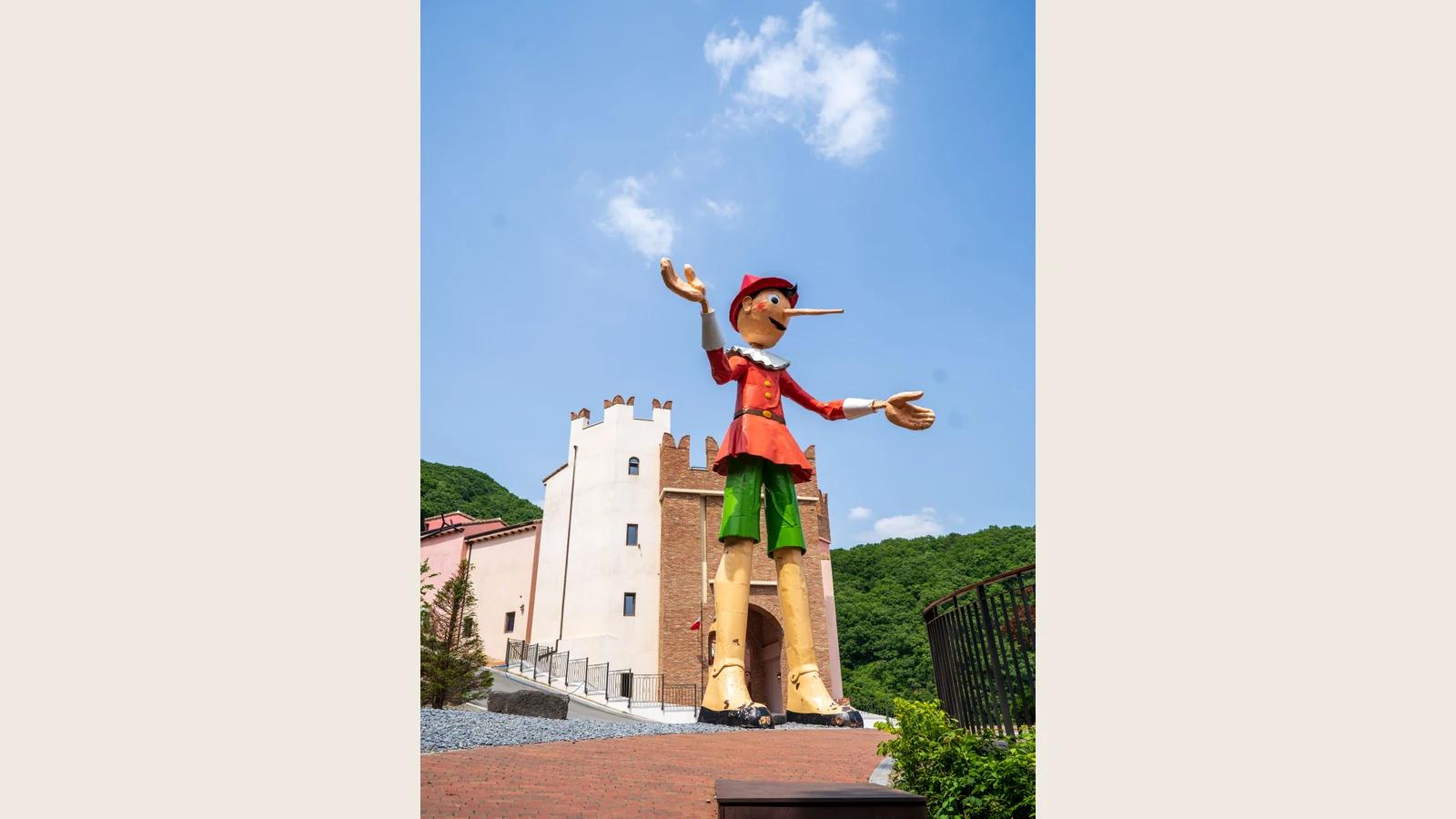
Begin outside with scale. In the photograph, a huge Pinocchio in red and green opens his arms beside a pale tower. Compare the nearby figure with the building behind it: a small wooden character from a story has become a landmark against the sky. A close portrait and a frame including the feet and tower communicate different things. Ask your companions which makes the figure seem larger. You can change your view from permitted ground; climbing steps or sculptures to exaggerate the effect is unnecessary.
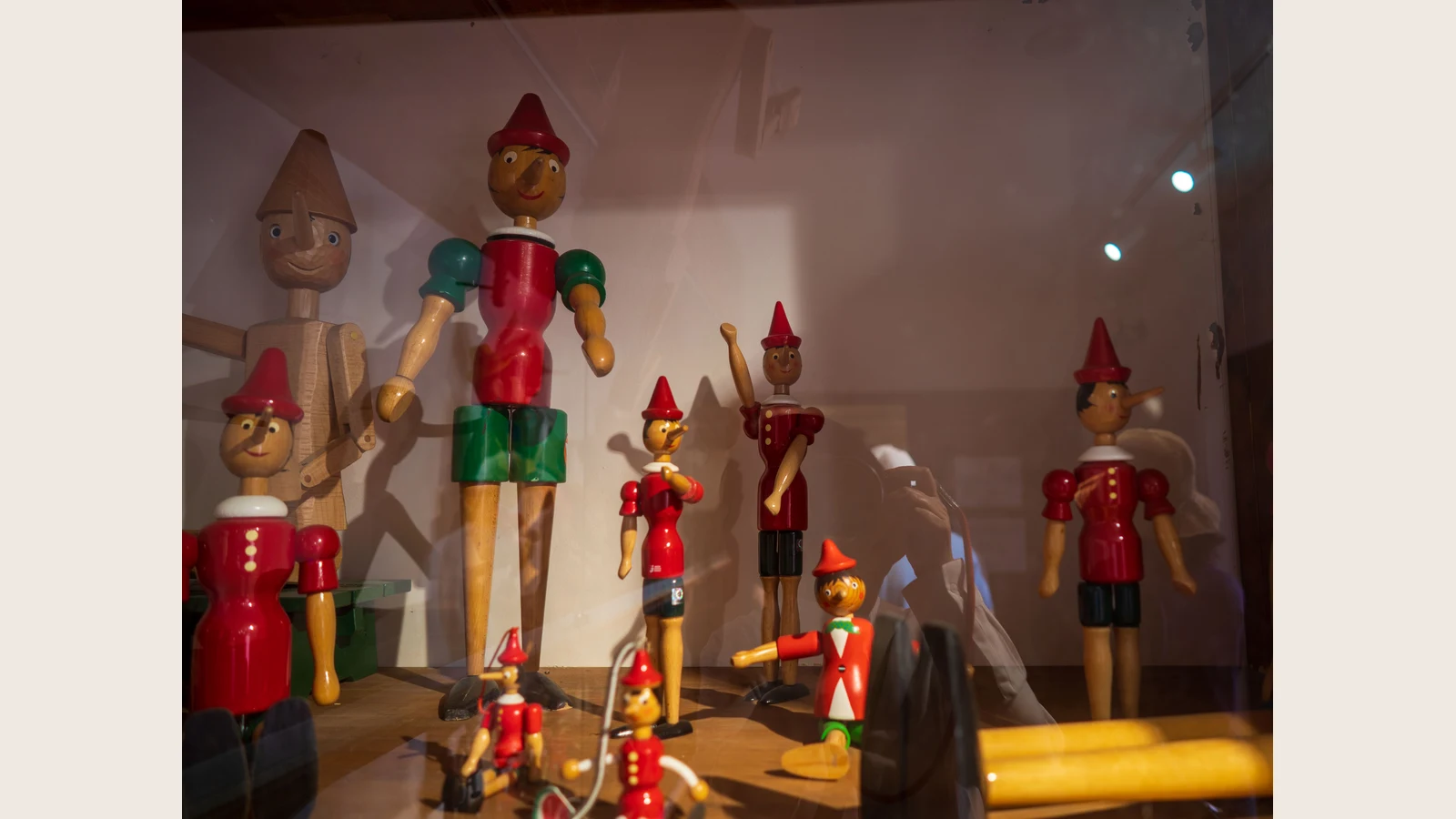
Inside the Pinocchio exhibition, look at bodies before recalling names. The operator describes a setting built around scenes from the tale. One photograph groups wooden figures of different sizes, with rounded heads and clearly divided arms and legs. Find the wrist and knee joints. The resemblance to a person sits alongside the construction of an object. Even a stationary figure suggests possible movements: which way might its arm rise? Look for the joint rather than testing it by hand, and use a small movement of your own body to explain what you imagine.
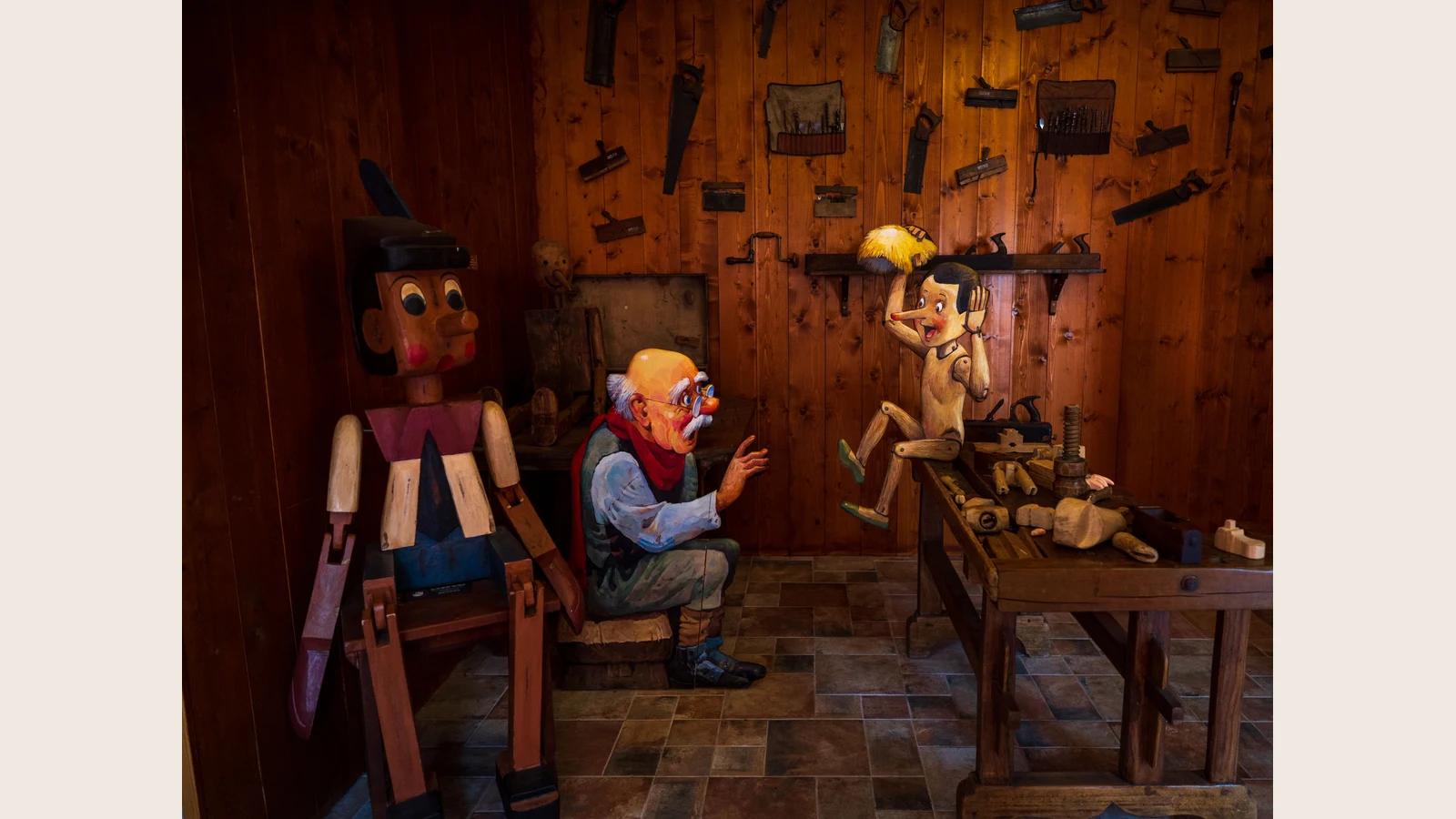
In the workshop scene, read the surroundings before the character. Tools hang across the wooden wall; figures, pieces of wood and a workbench give the room a maker and a task. If you cannot identify a tool or reconstruct a woodworking process, leave that question open. Notice instead the height of the work surface and where materials are placed. With a child, discuss how the room’s story might change before and after the puppet begins to speak. Separate what you remember from the tale from what the display actually shows. That leaves more room for conversation than a quiz with one correct answer.
At the theatre entrance, consider the difference between an image and a performance. Figures painted beneath the arches remain still, yet their arms and postures suggest a next action. If a puppet show is available, watch for one thing: the direction of a character’s gaze or the way a step is conveyed. A visible string or a particular control mechanism is not guaranteed. Without a performance, you can still compare a fixed pose with the movement you imagined. Add a show only when its current arrangements fit; a time printed in an older article is not today’s schedule.
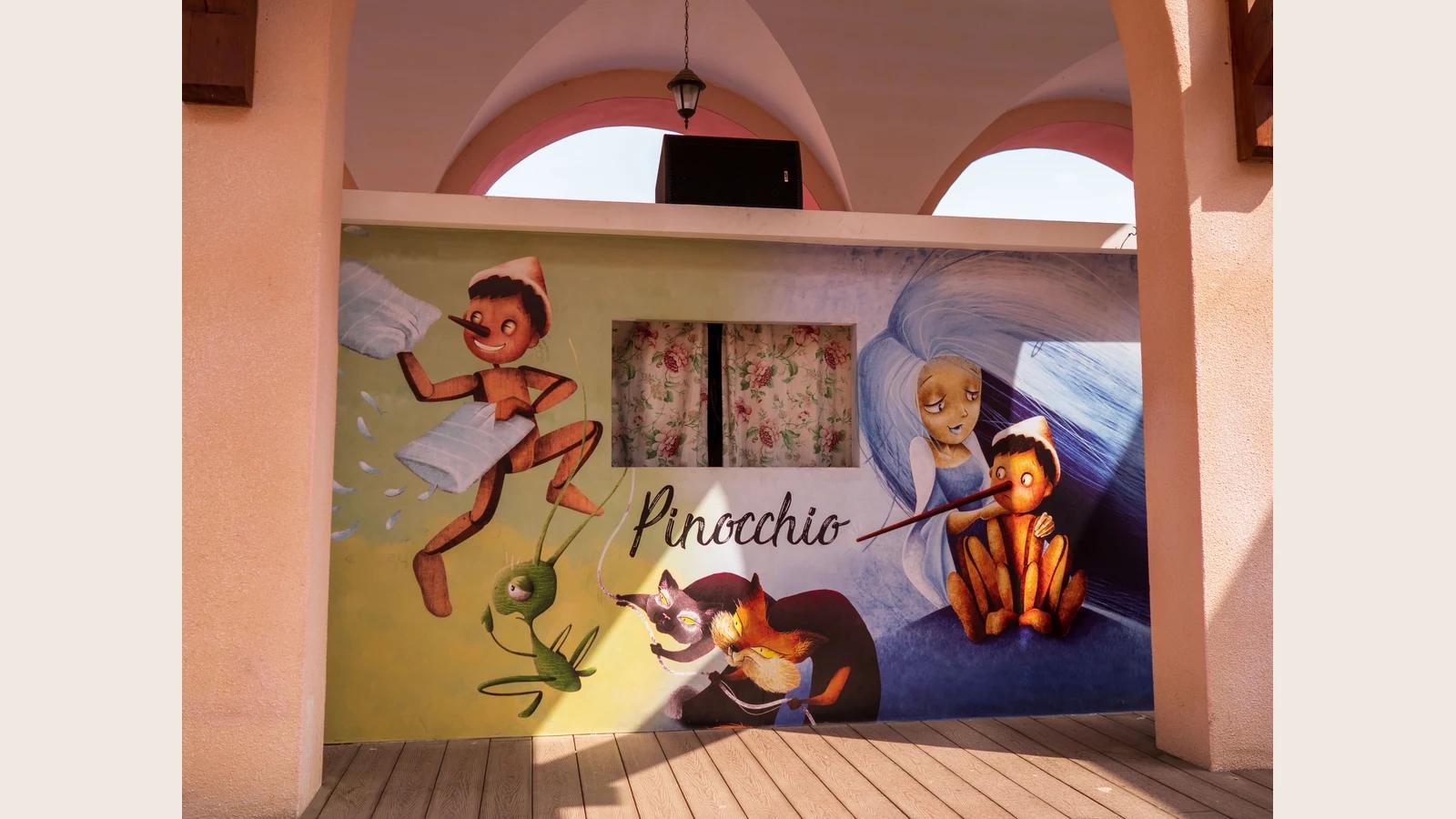
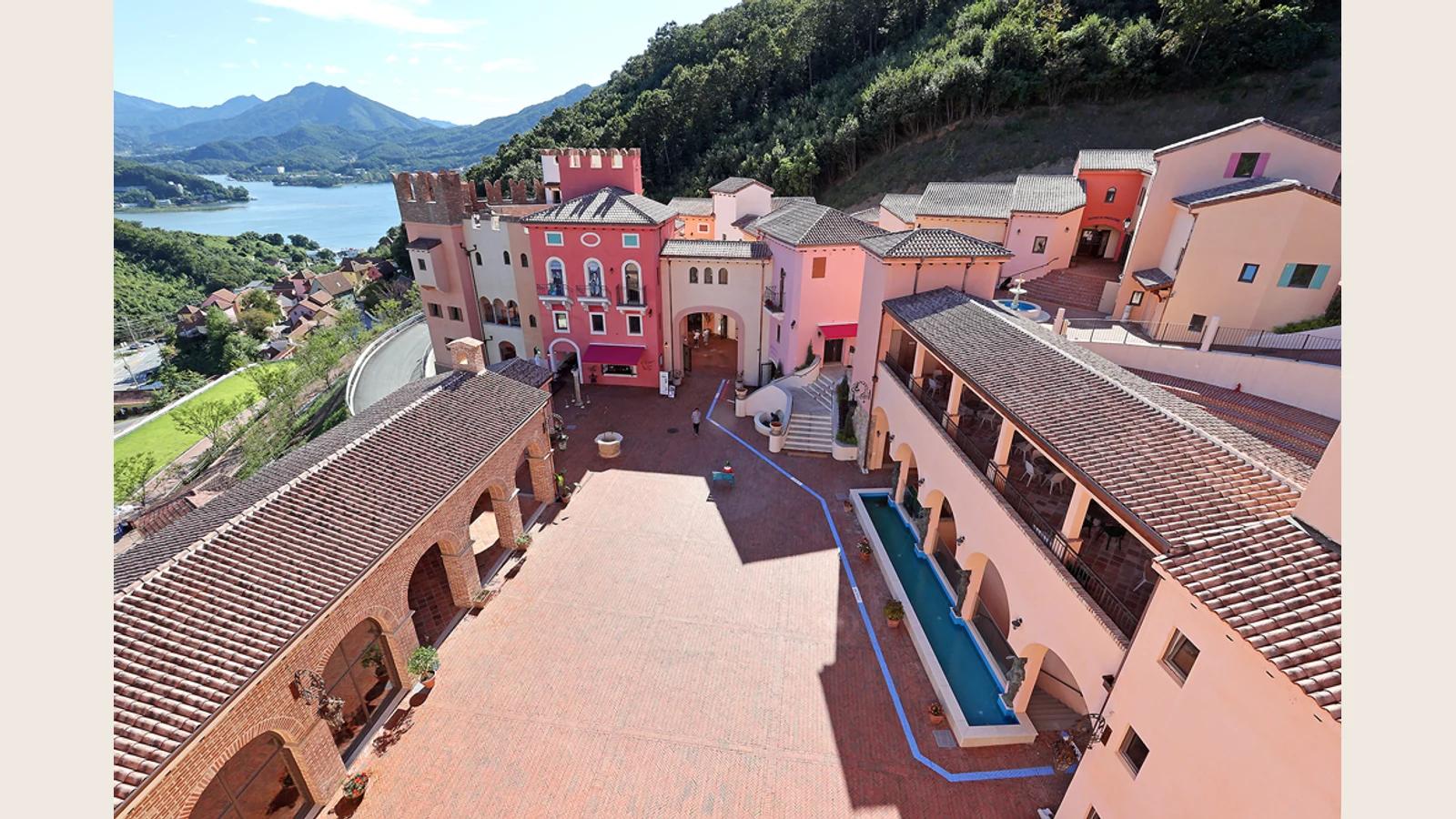
Between exhibitions, pause to recall what you noticed. Did you remember only Pinocchio’s familiar nose, or the joints and workshop tools as well? The broad square and surrounding arcades in the photographs place several building heights within one view. If an appropriate seat is available, use the break to choose a question for the next room: where does a wing join its supporting frame? That is enough to begin with. Check actual seating on arrival and keep circulation clear rather than turning a stairway into a waiting area for the whole group.
Following the lines of a wing
In the Da Vinci exhibition, follow the lines of a three-dimensional model before searching for a famous painting. A photograph shows a broad wing-like framework suspended beneath a pale curved ceiling, its slender members dividing a larger surface. The contrast between an image on a wall and a model occupying space can start a discussion about turning an idea into a form. Read the interpretation to establish which design is represented. The photograph alone does not identify the precise mechanism or prove its performance. Describe what is exhibited as a model, rather than a surviving machine built by Leonardo himself.
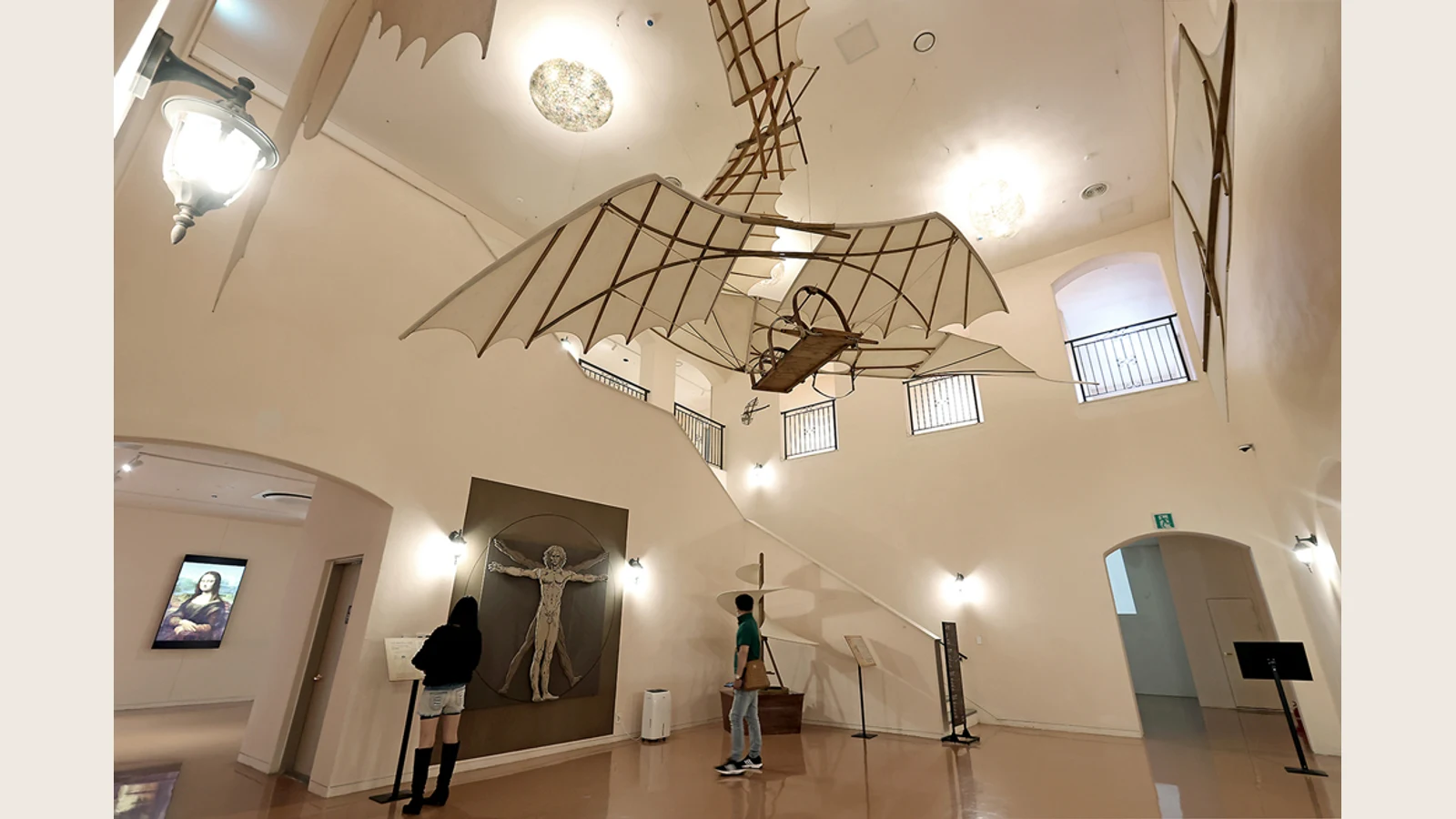
Look towards the centre of the wing before its tips. Where do the fine supporting lines meet? When you shift slightly within the permitted viewing area, do they overlap or open apart? These observations do not establish that the object could fly. Leave exhibits untouched unless staff explicitly identify an authorised interactive activity. If the label contains unfamiliar terms, try describing the broad surface and the supporting structure in one sentence each. The possible movement you considered in a puppet’s joints has become a question of form and connection.
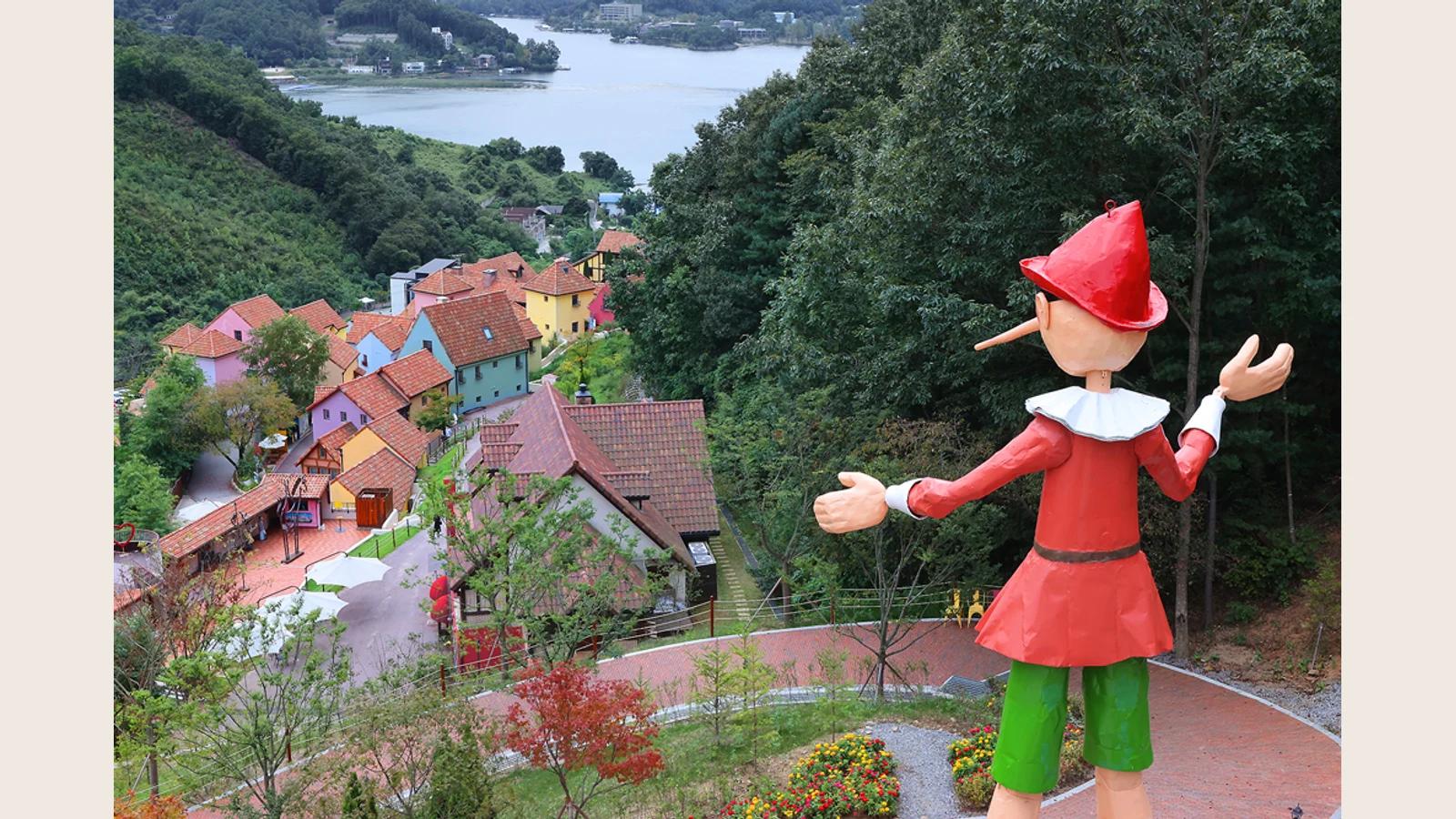
If an open elevated viewpoint is available, finish by looking beyond the exhibits. In one photograph, Pinocchio’s red back stands before a wooded slope, colourful buildings and distant water. The buildings below belong to the neighbouring Petite France setting; they should not be relabelled as Italian Village exhibition halls. Do not seek a closed stairway to reproduce the photograph. From an authorised position, notice what is near, what sits behind it and where the background begins. The attention given to objects inside can expand into an observation of distance and overlapping forms outdoors.
Leaving room for lunch and the return
Keep lunch separate from the exhibition plan. An Italian theme does not establish a particular dish or an open restaurant. If eating inside matters, check current sales facilities, menus and rules on outside food. A seated meal before entering may suit children who will later wait for a performance. Afterwards, choose an open restaurant in Cheongpyeong or along your return route. Use its actual menu to discuss portions, heat and ingredients. At the table, naming one remembered tool can continue the conversation without pretending you have tasted a meal before ordering it.
Resolve the return before a show ends. Rail travellers should distinguish the journey to Cheongpyeong or Gapyeong station from the final connection to the attraction. The operator’s transport page lists buses and a sightseeing service, but a list does not confirm departures or connections on your date. Check actual stops and return services through KORAIL and Gyeonggi Bus Information. If taking a taxi, plan how to arrange the return pickup. Drivers should use authorised parking and pedestrian entrances, avoiding an improvised roadside photo stop on Hoban-ro. Decide whether to add Petite France before buying tickets, with the group’s energy and departure time in mind.
After examining a puppet’s joints and a wing model’s connections, bring that interest to the meeting of columns and beams at Chiong Art Center. A connection that permits movement has a different purpose from one that supports a building. Look at where lines of timber continue and where they end. In the garden’s ceramics, the meeting of a handle and a vessel’s body can offer another question about form. Plan the separate visit through Chiong’s introduction and visitor guidance. Carry forward the habit of reading structure with your eyes: an object first encountered as part of a story can lead your attention towards the hands and connections that give it shape.