Journal
Pausing in Yumyeongsan Valley, Saving the Summit for Another Day
From water beside a boulder to overlapping mountain ridges, choose your distance of looking at Yumyeongsan.
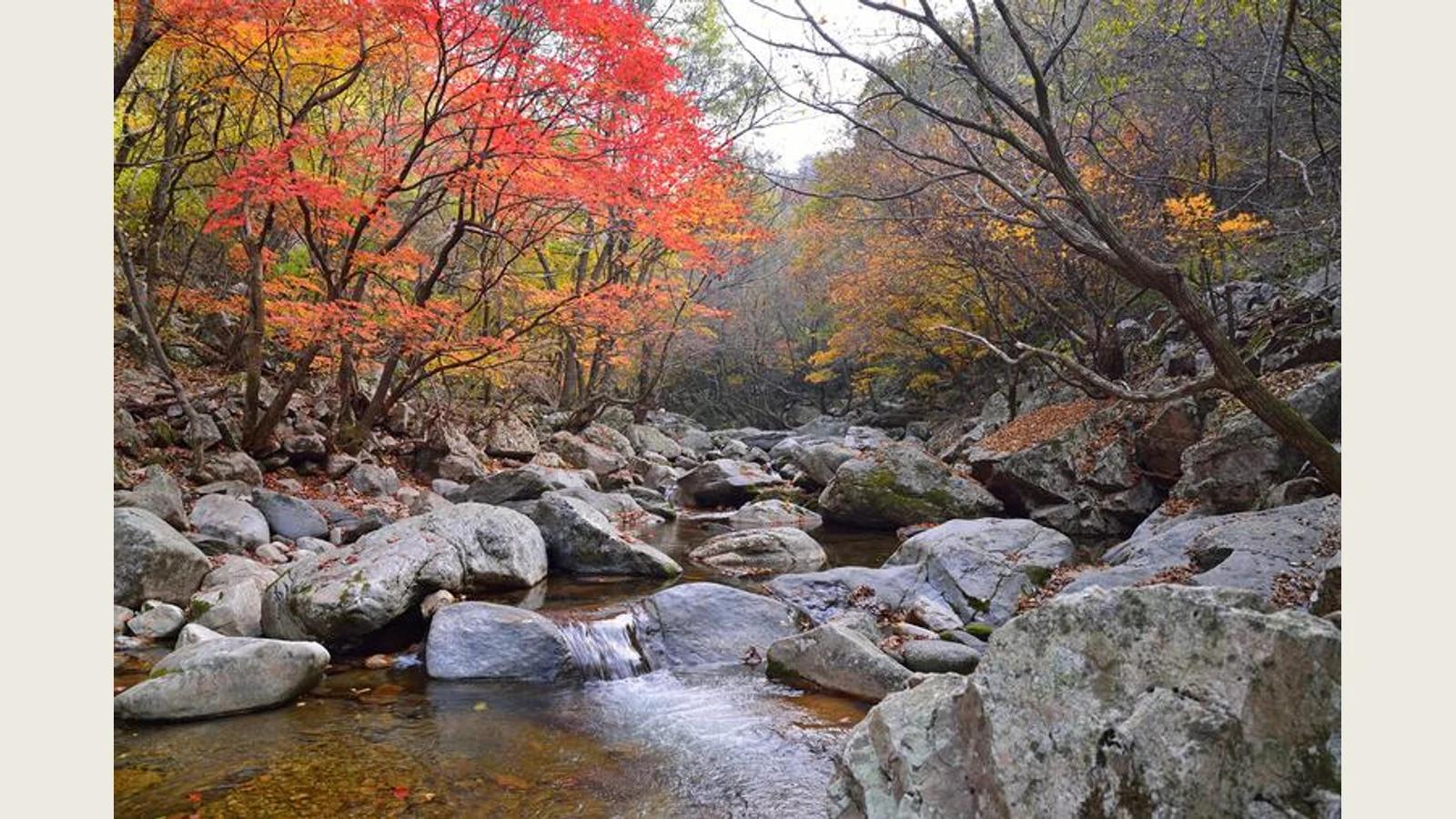
At Yumyeongsan, decide where you want to pause before deciding how high to climb. The mountain offers two very different distances of looking. Within the valley, a boulder can fill the view while water threads through the space beside it. At the summit, overlapping ridges draw the eye much farther away. This outing centres on the valley’s stone and water. A summit hike remains a separate undertaking. Begin by checking which pedestrian areas are open, choose a few places to stop along permitted paths, and return to your starting point with time to spare.
Save the Korean name 국립유명산자연휴양림 and the address, 79-53 Yumyeongsan-gil, Seorak-myeon, Gapyeong County. The Korea Tourism Organization describes the mountain as spanning Seorak-myeon in Gapyeong and Okcheon-myeon in neighbouring Yangpyeong. A search for the mountain alone may direct you to a different trailhead. Seorak-myeon is a local district, distinct from Seoraksan, the mountain in Gangwon Province. Chiong Art Center, at 300 Sumogwon-ro in Sang-myeon, requires a separate journey. Share the forest’s name and full address with your companions rather than a mountain pin alone.
The official Forest Trip website checked on November 11, 2026 lists day opening from 9am to 6pm and a regular Tuesday closure. The forest office number is 031-589-5487. Those are basic visitor hours, not a calculation of the time available to walk into the valley or reach the summit. Confirm admission arrangements and applicable entry and parking charges separately. If arriving late, ask when you must return from the particular area you intend to use. Closing time should never become your planned time to start descending.
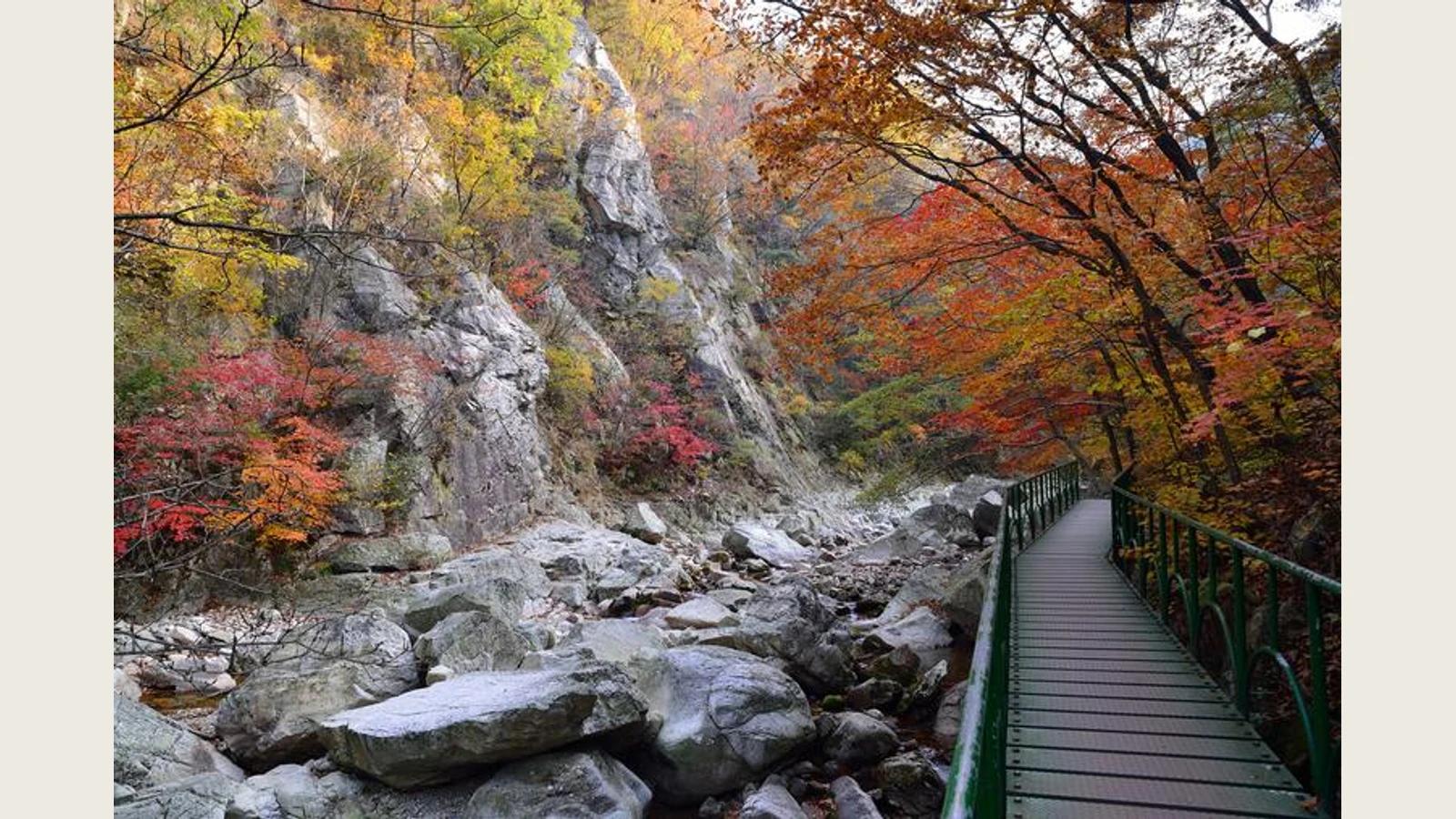
One notice changes how to use the photographs. The operator announced removal of the ageing hybrid deck road, giving April 15–May 13, 2026 as the work period. Do not plan to reproduce a photograph showing a railed walkway beside the gorge. This guide does not route you across that deck, and a reopened replacement route has not been established. At the entrance, ask staff to identify the valley sections currently open, an appropriate turnaround point and whether the native plant garden can be visited. If a section is closed, shorten the outing within permitted areas.
Four pauses with water and stone
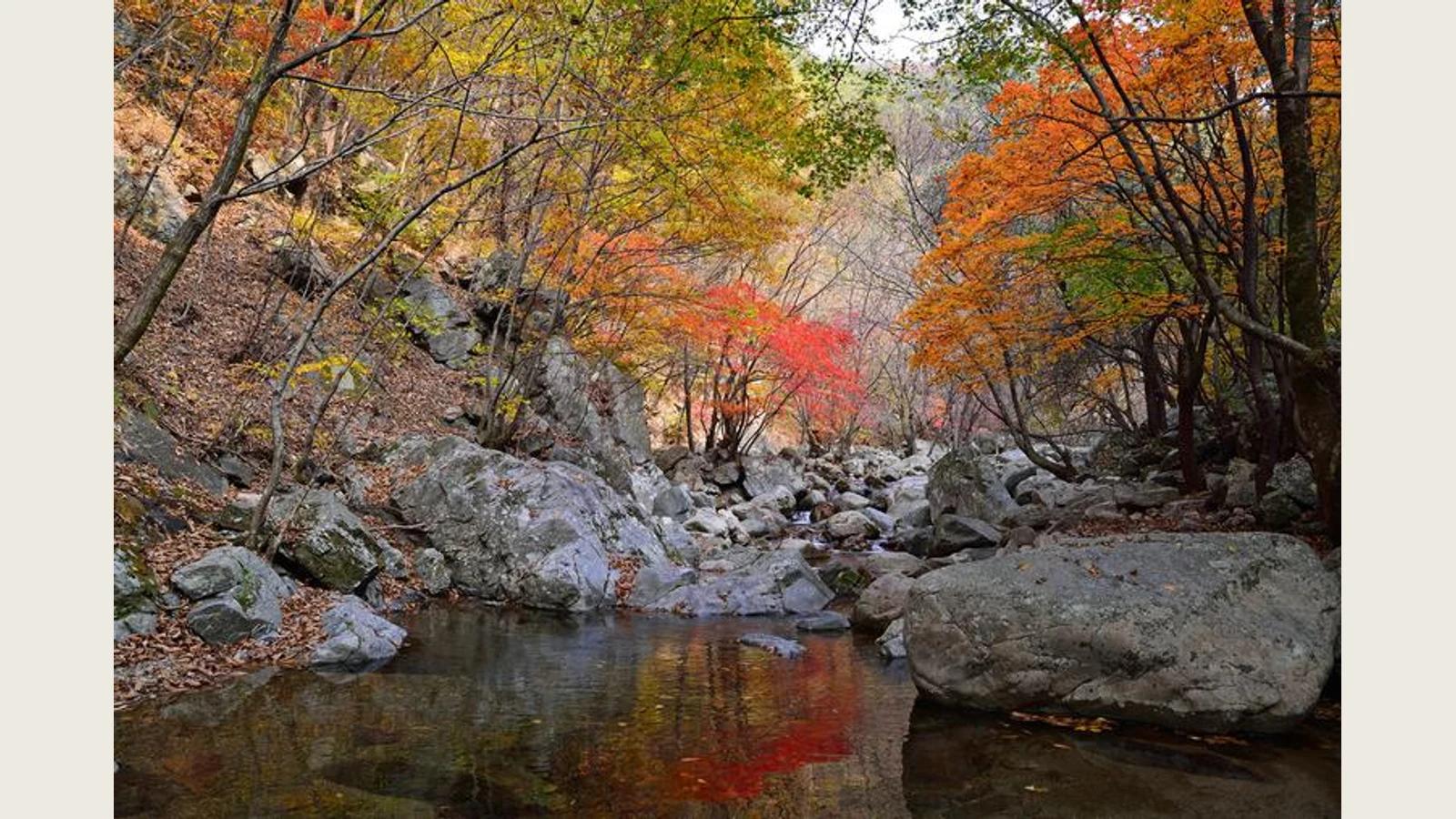
If water is visible from an authorised stopping place, give your first pause to the shape of a pool. In one photograph, yellow leaves are reflected in dark water held between grey rocks. Follow the apparent way into and out of the pool with your eyes. The gaps between stones may become more noticeable than the stones themselves. Without an identifying sign, do not assign the photograph a particular named pool such as Bakjiso or Yongso. A useful observation is simply the difference between a broad place where water gathers and a narrow passage through which it travels.
Next, narrow your attention to the relationship between one large boulder and the smaller stones beneath it. A tall grey mass, broad slabs, smaller fragments and a divided channel create several scales within a single scene. Compare the bright face with the shaded face to read its direction. You can begin this exercise from a stable position on the designated path; reaching the water is unnecessary. Leave stones and branches in place. The purpose is to notice an arrangement you have encountered, rather than improve it for a photograph.
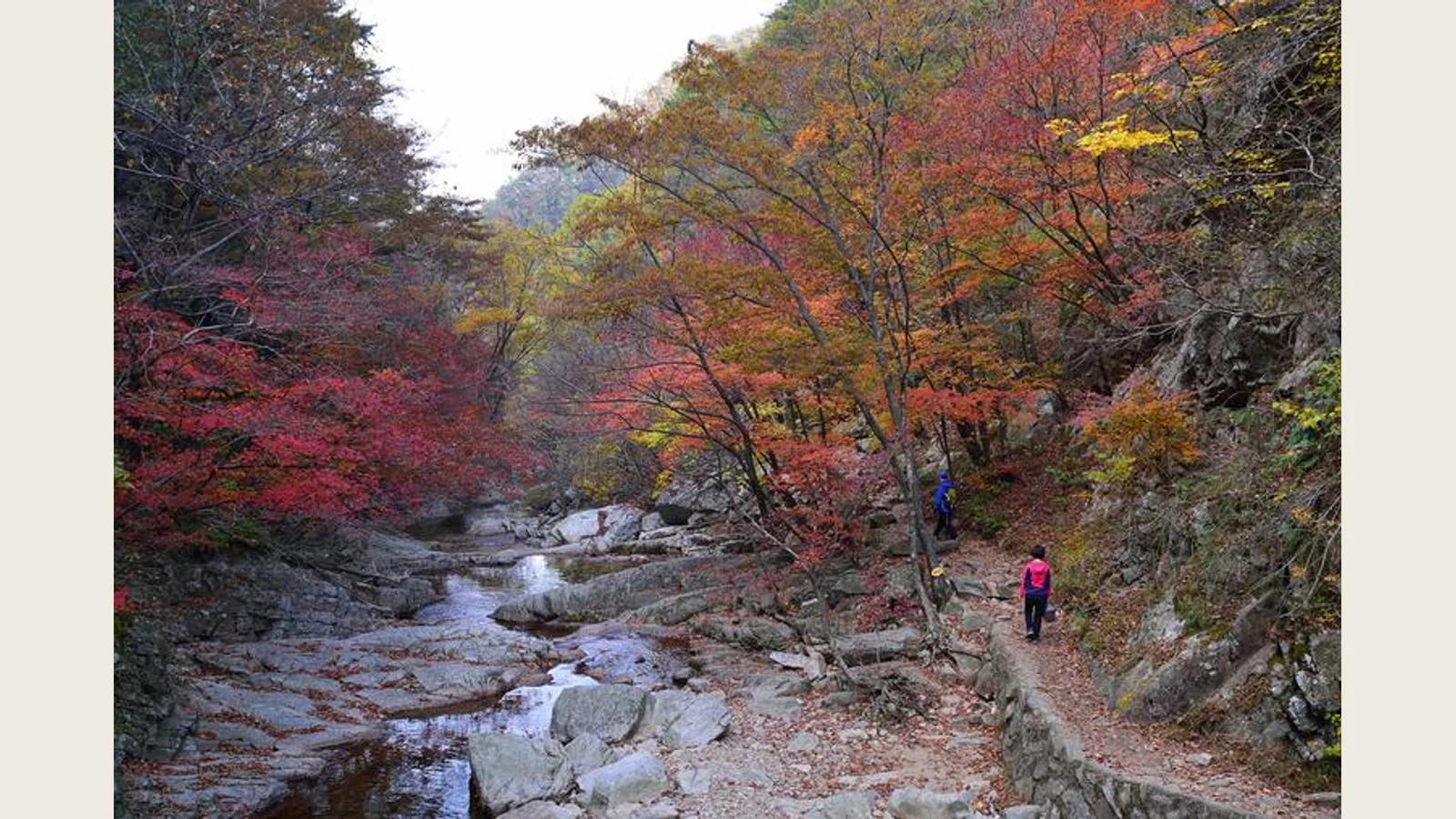
Where the trees close around the valley, look at the width of the sky. A photograph places red leaves and dark trunks above grey stones, with a small person on the path to one side. That figure helps convey the scale of the surrounding rocks. Their position is not a destination to copy: follow current access instructions from where you stand. Ask your companions where they could see water and trees together. People looking from the same place may remember quite different elements, giving a short stop more substance than a count of how far everyone walked.
A view down towards the water changes the arrangement again. Dark water lies between pale rocks; a long branch crosses above it and red leaves occupy an edge of the frame. Compare this with a view facing into the valley. Which makes the water seem broader? On an actual visit, keep your footing secure and remain behind any barrier. A child need not stand on a rock to recreate the composition. Distinguish the observations you can make safely on site from those you can discuss through the photographs.
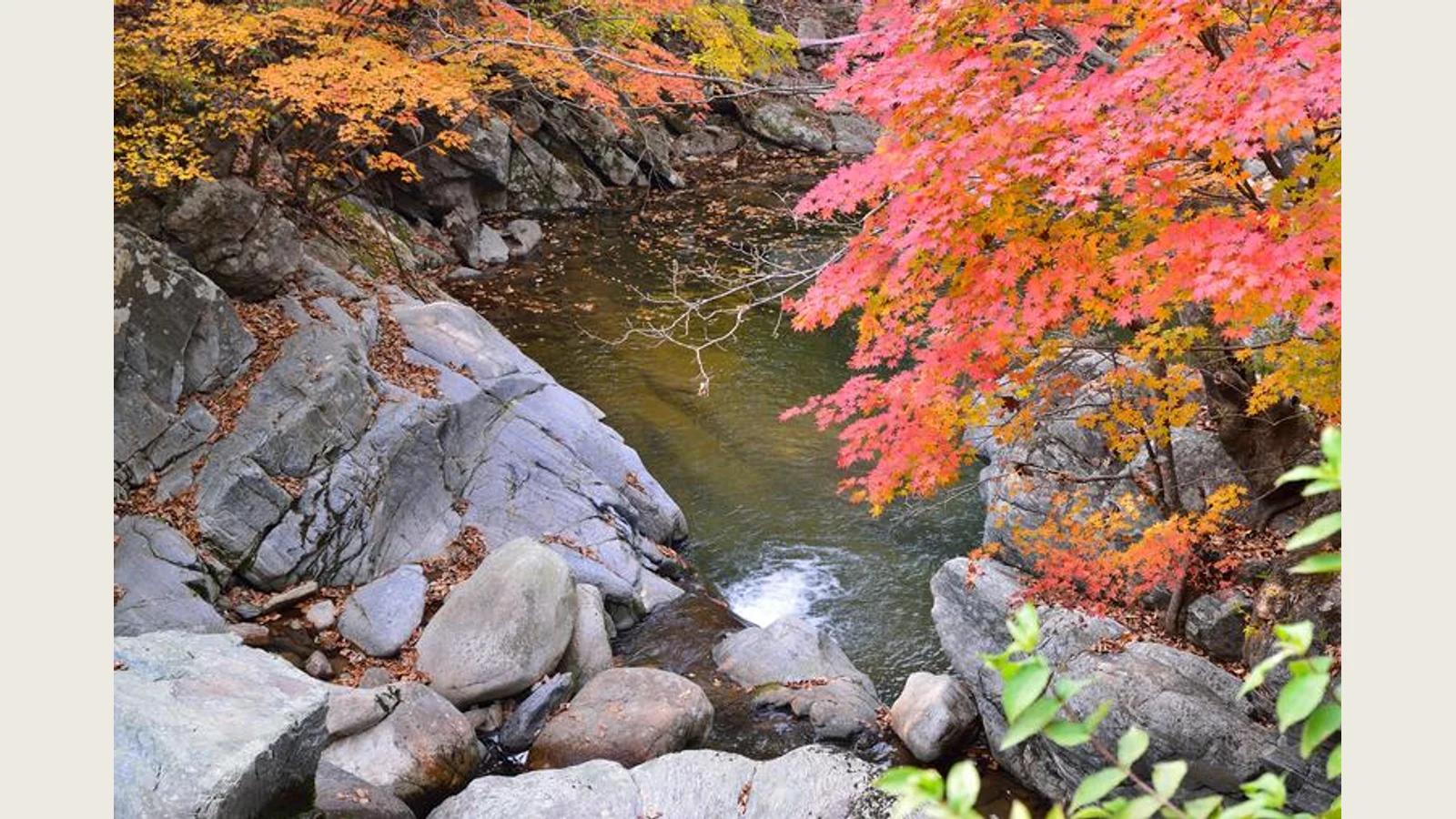
Choose the turnaround point for everyone’s comfortable return. Walking a short distance into the valley does not commit the group to a summit. Wet ground, leaves or slopes may slow progress, and transport imposes its own limit. Reduce the route accordingly. Omit valley access entirely during high water or a closure. Even a lower area open to pedestrians is not automatically suitable for a wheelchair or stroller. Ask about gradients, steps and the route to toilets. The person who arranged the outing should not set its length solely by their own stamina.
The native plant garden offers another possible focus when valley walking is reduced. A Korea Forest Service cultural-asset record dates its opening to September 2002 and explains its educational role in introducing native plants. If access is permitted, consider where planting meets the visitor path rather than heading for a summit marker. Match labels to the plants they identify and leave flowers and fruit in place. An advertised education programme does not establish a session for individual visitors that day. Reading one interpretive panel carefully can give an unhurried visit a subject of its own.
Prepare separately for the distant view
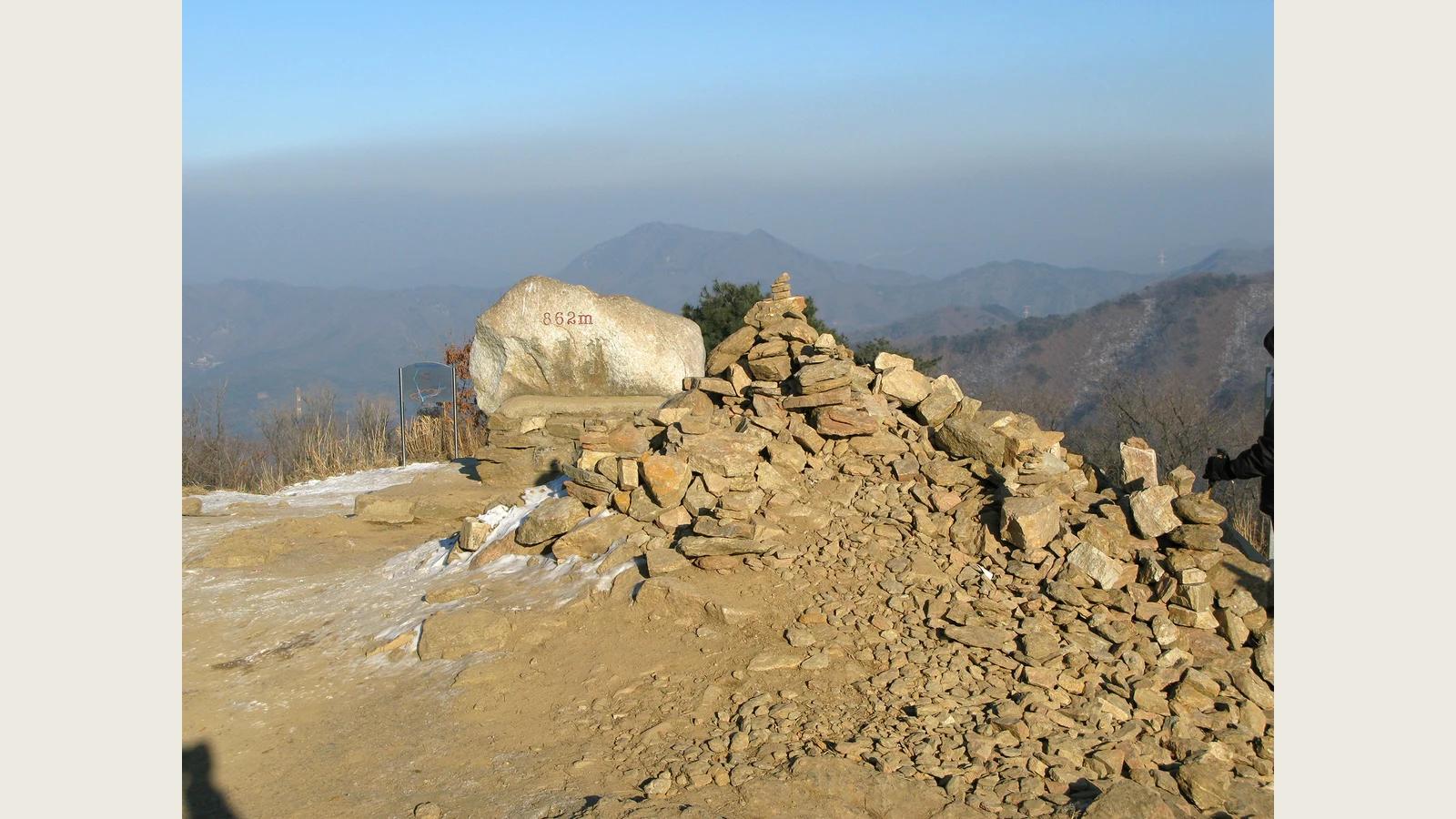
Anyone wanting the summit should prepare a separate hike. The Korea Tourism Organization describes an approach from Yangpyeong, open grassland and connections to other mountains. A shared mountain name does not imply one start or finish. Establish trail openings, entry restrictions, weather and a return in daylight for the actual hiking date, with appropriate equipment and water. This article does not guarantee a ridge ascent followed by a valley descent. In the summit photograph, a marker and piled stones occupy the foreground while mountains spread behind them. If that wider view is your goal, reserve a properly prepared day for it.
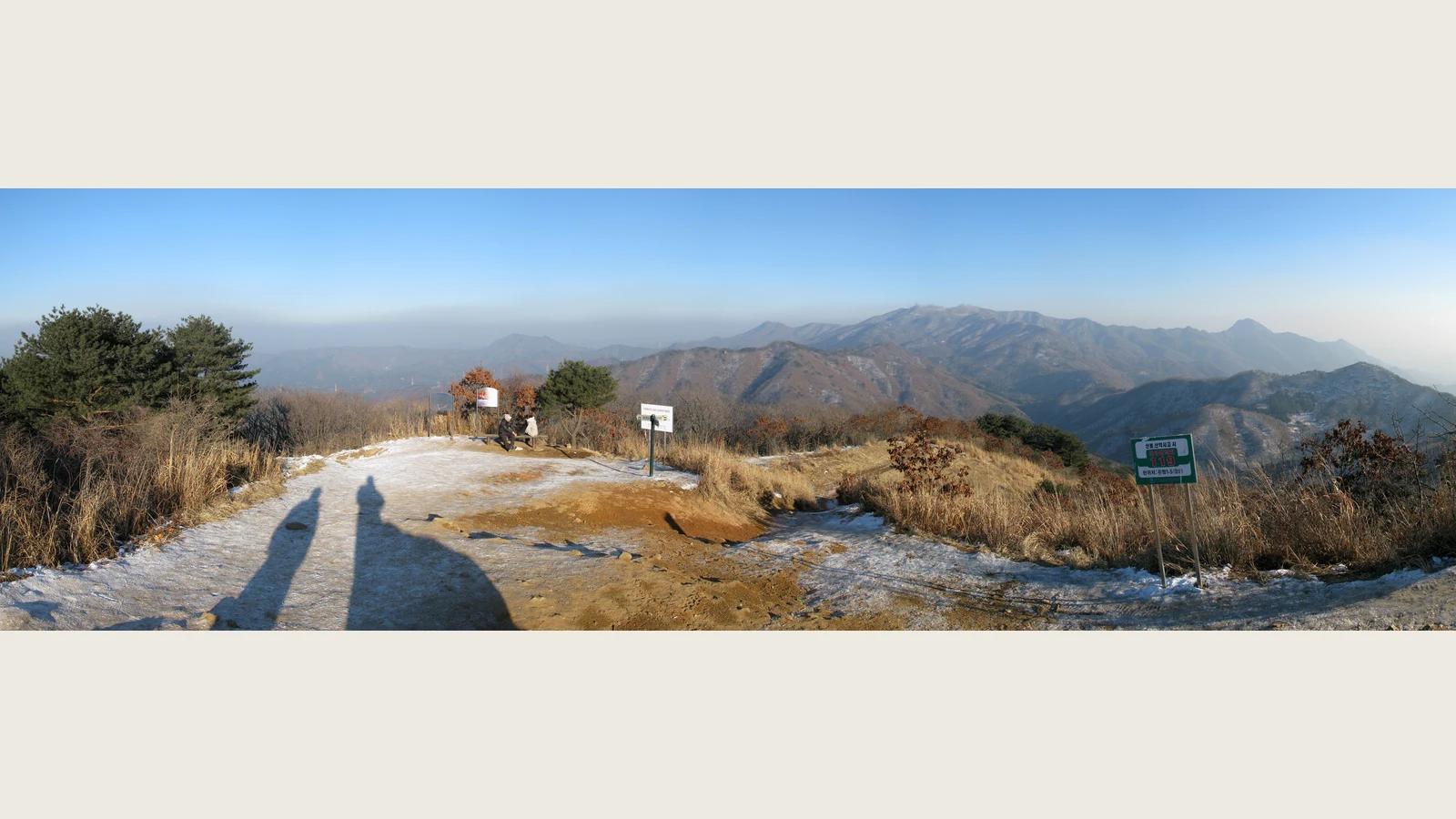
The summit panorama reverses the valley’s distance of attention. Earth, pale snow and dry grasses lie close to the camera, with successive ridges beyond. In the gorge you were looking between stones; here you look between mountain profiles. Identifying individual peaks requires a known direction and reliable interpretation, rather than a guess from a photograph. Neither clear visibility nor snow on a chosen date is promised. Consider whether your companions want a near view or a distant one. The summit need not be the final stage of an outing whose purpose is water and boulders.
Plan transport backwards from the return. Public transport users should check the actual connection to the forest entrance and their final boarding point through Gyeonggi Bus Information. A train to Cheongpyeong does not settle the onward leg. Older county descriptions of terminals and routes should not be treated as current departures. Drivers should distinguish the authorised parking area from the start of the pedestrian route. Roadside stopping is no substitute for permitted access to the water. Leave time outside the forest to decide whether the day needs another destination.
Place your meal around the entrance and your return direction. Eat in Seorak-myeon beforehand or choose an open restaurant afterwards, according to the group’s needs and transport. Carry drinking water and any necessary snack without assuming hot food will be sold inside. Follow on-site rules about eating areas. With children, find a separate place to sit rather than making a snack on waterside rocks the centre of the plan. At a restaurant, use the actual menu to ask about ingredients, heat and nuts where relevant. Flavour and portion size remain matters for those who order and eat the food.
After looking between large boulders and small stones at Yumyeongsan, carry your interest in surfaces to the ceramics beside stone in Chiong Art Center’s garden and hanok setting. Consider the difference between a rough outline surrounded by water and a rounded surface shaped by a maker. Courtyard stones can form a background while a vessel gives the eye a nearer subject. You need not equate the valley’s geology with ceramic materials to discuss the textures you notice. Plan that separate visit using Chiong’s introduction and visitor guidance. A deliberate pause, with one surface given your attention, can connect the two places.